I am an avid follower of Y’s 365 days of art and sometime ago she inspired me to try an art post. So here I am, with a couple of paintings that we have at home. Photography turned out to be quite tricky – flash, shadows, reflections and other amateur issues. Nevertheless I hope you will like them. Taking cue from Y, I added a little bit of background to make it more interesting.
Indian paintings can be broadly classified as murals and miniatures. Murals are large works executed on the walls of solid structures, such as in the Ajanta Caves. Miniature paintings are executed on a very small scale for books or albums on perishable material such as paper and cloth. The Palas of Bengal (in the eastern part of India) are believed to be the pioneers of miniature painting in India.
Miniature paintings developed during the 10th century in Rajasthan (western part of India). The subjects of these miniature paintings are in relation to the subjects of the manuscripts mostly religious and literary. The painting below is of the life of Lord Krishna and his Gopies. These paintings were created on leaf of the palm tree and later paper.
In these paintings, most of the human characters are seen with side profile. Big eyes, pointed nose and slim waist are the distinctive features of these paintings. The skin colors of human being are brown and fair. The skin color of the Lord Krishna is Blue. Human characters are adorned with a lot of jewellery and wear traditional Indian dresses. Mostly natural colors were used in these paintings.
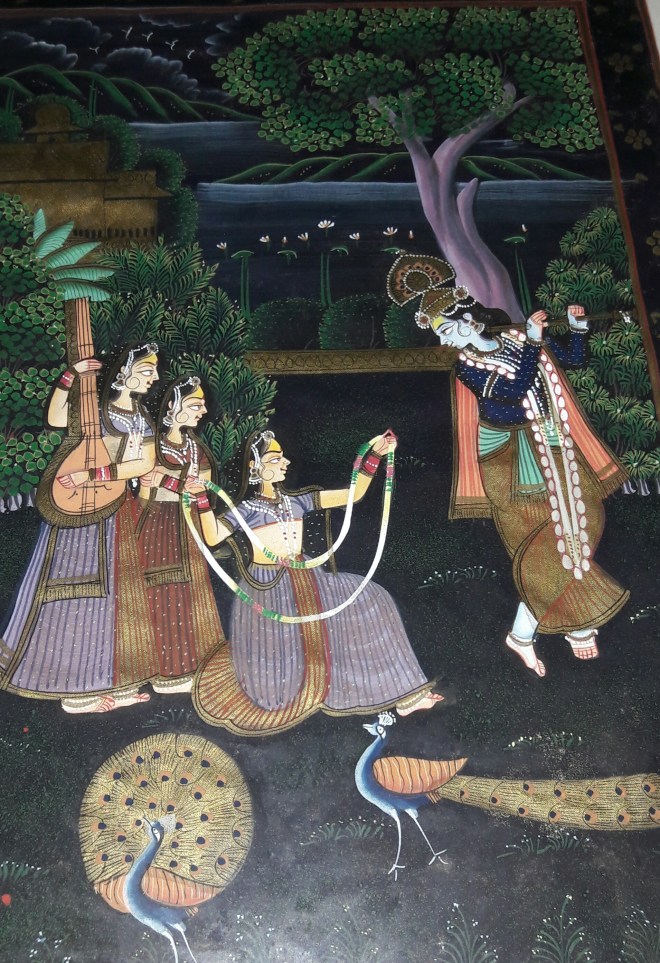 Sorry about the flashlight at the bottom 😦 No fault of the artist!
The second painting is known as Madhubani art and belongs to the region that is now Bihar. It is locally believed that Madhubani painting tradition started when Raja Janak of Videha commissioned local artists to paint murals in his palace in preparations for the marriage of his daughter Sita to Lord Ram (who is believed to have been born in 5114 BC). Painting is done with fingers, twigs, brushes, nib-pens, and matchsticks, using natural dyes and pigments, and is characterized by eye-catching geometrical patterns. There is ritual content for particular occasions, such as birth or marriage, and festivals.
These paintings were done only by women and only on occasion of marriages. Madhubani art has five distinctive styles and their themes were mainly religious and they depicted Gods and Goddesses, flora and fauna in their paintings.
The painting was traditionally done on freshly plastered mud walls and floors of huts, but now they are also done on cloth, handmade paper and canvas. Madhubani paintings are made from the paste of powdered rice. Madhubani painting has remained confined to a compact geographical area and the skills have been passed on through centuries, the content and the style have largely remained the same. Madhubani paintings also use two dimensional imagery, and the colors used are derived from plants. Ochre and lampblack are also used for reddish brown and black respectively.
Mithila painting (as Madhubani art is also known as) was hidden from the world until the India-Nepal border earthquake of 1934. While inspecting the damages, the then British colonial officer in Madhubani District, William G. Archer, “discovered” the paintings on the newly exposed interior walls of Mithila homes. He took black and white photos of some of these paintings, which today are the earliest images of the art.
I also bring a black and white painting for you. For more images you can click on the links given above.
 If you look carefully, no two image is same – sort of like spot the difference.
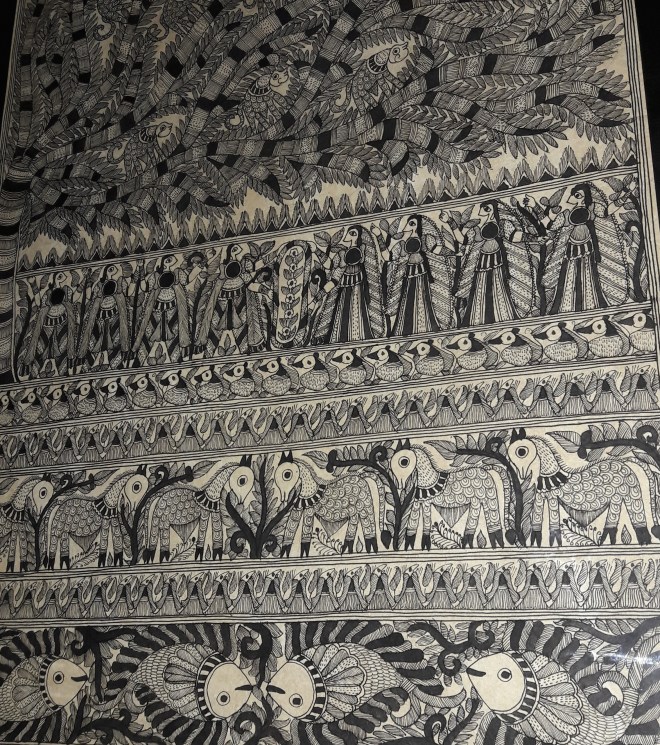 Here’s another angle with a darker focus on the top panel.
So what do you think? Do share your thoughts.
Thanks for visiting and hope you have a super weekend.

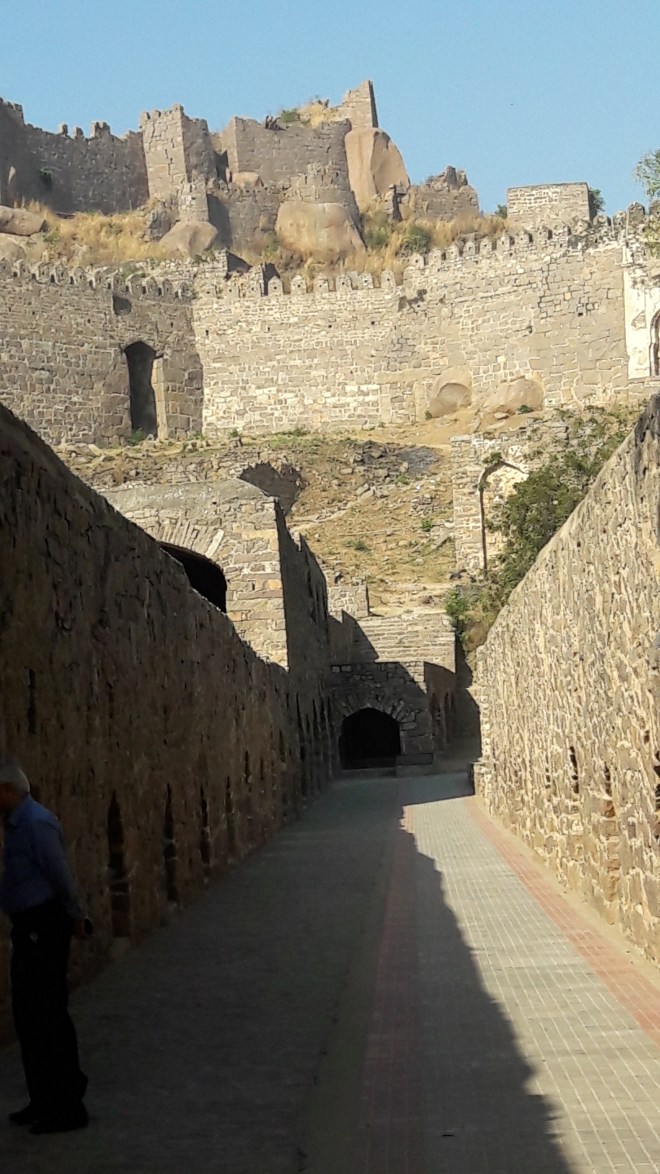
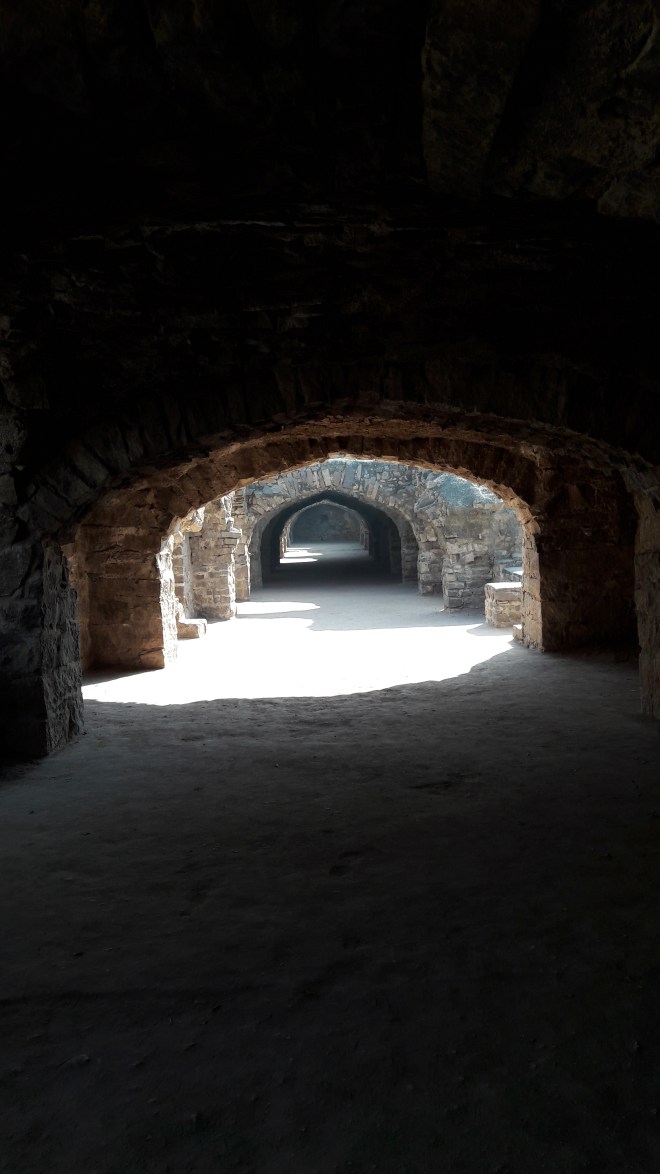
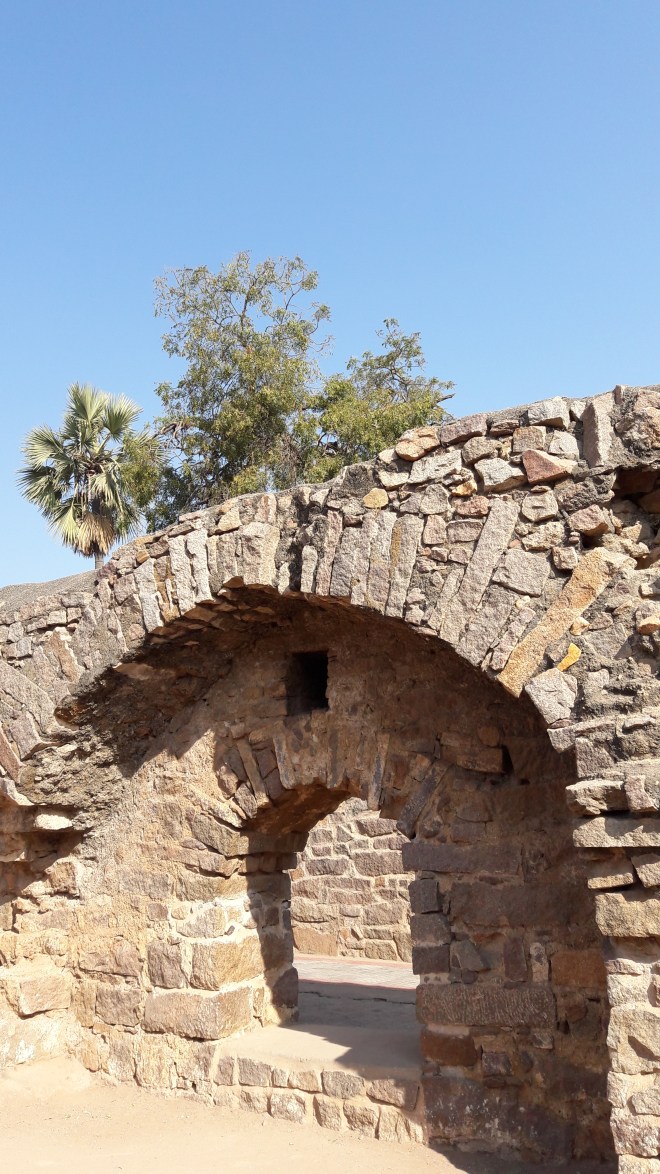 The entrance to the barracks – actually to be honest I took this photo because of the tree 😉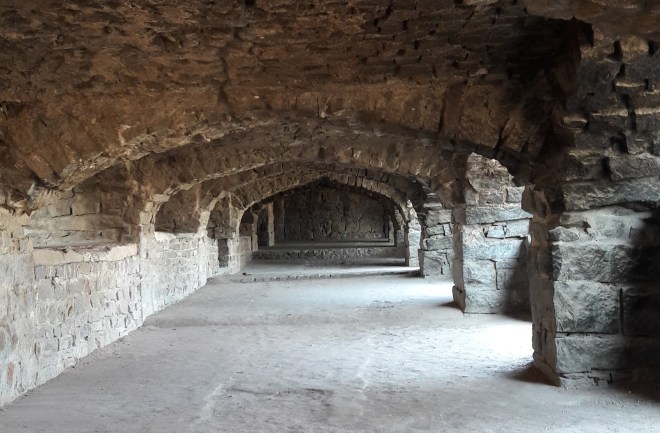
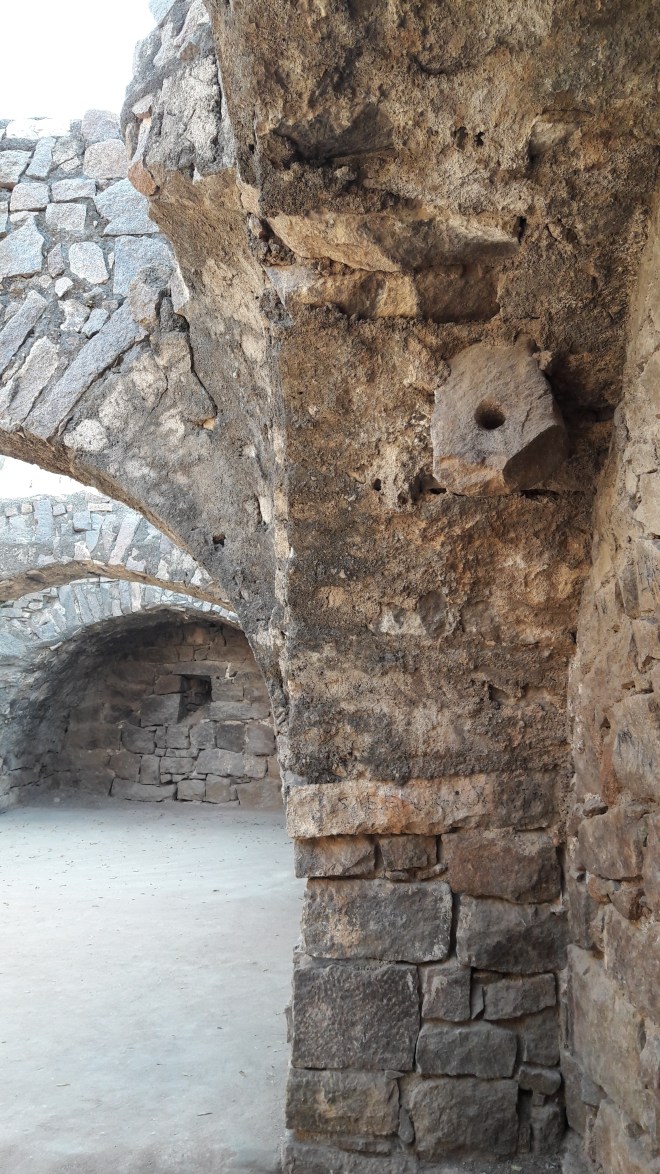 See that protrusion with a hole? That was for holding flame torches for light.
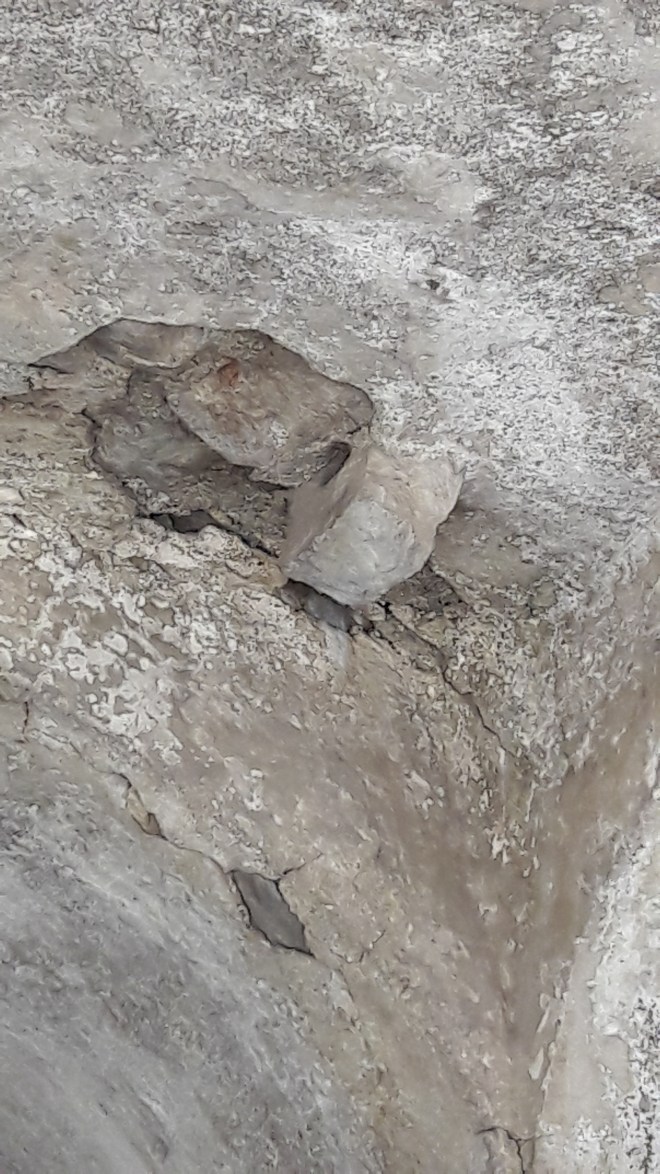 Another flame torch holder on the other side. The walls look rather bare and utilitarian don’t they? As I mentioned, this section was meant for soldiers. The Royalty didn’t much care for the fumes of the flame torches. Besides, the flames charred the walls which again offended their sensibilities. Hence they had other ideas.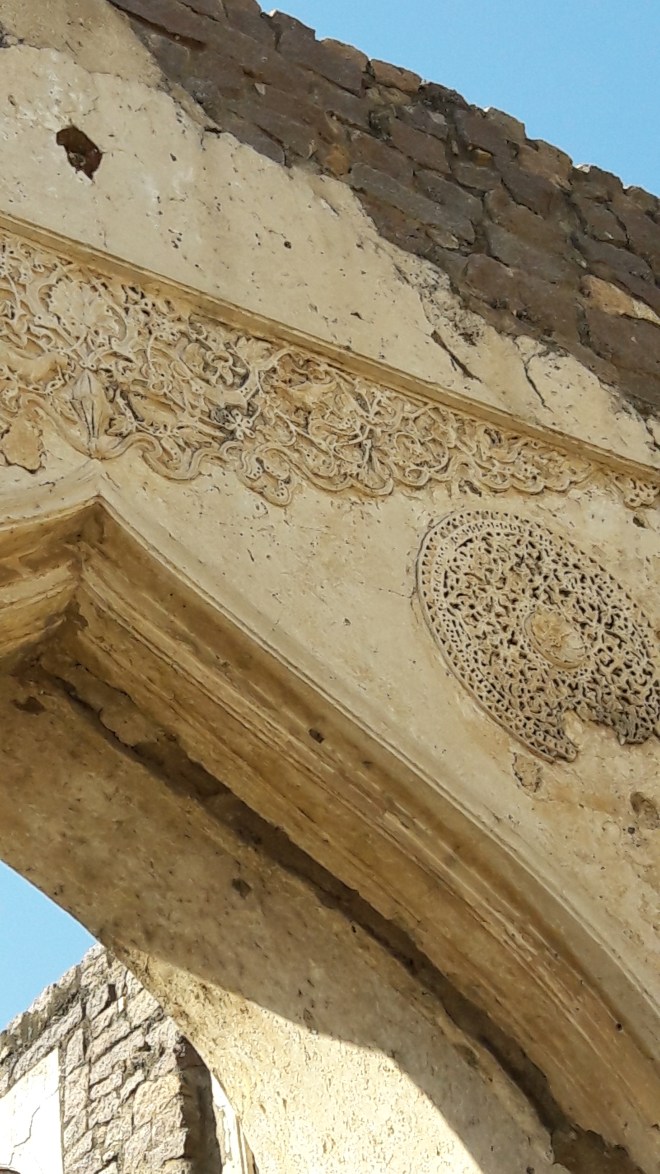
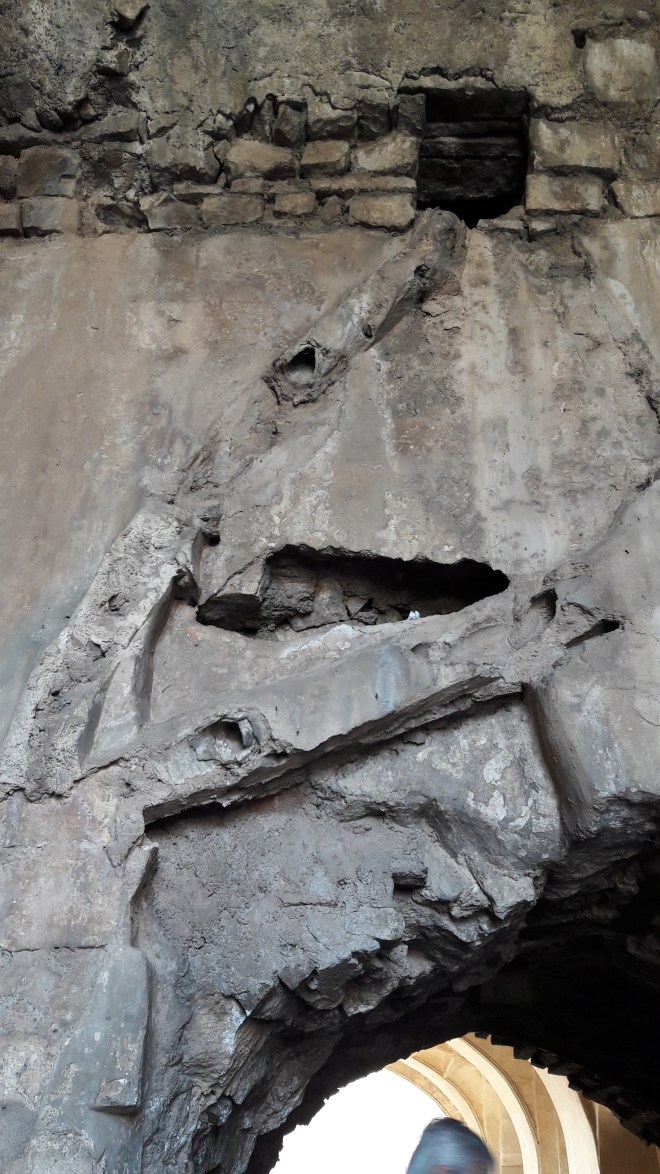
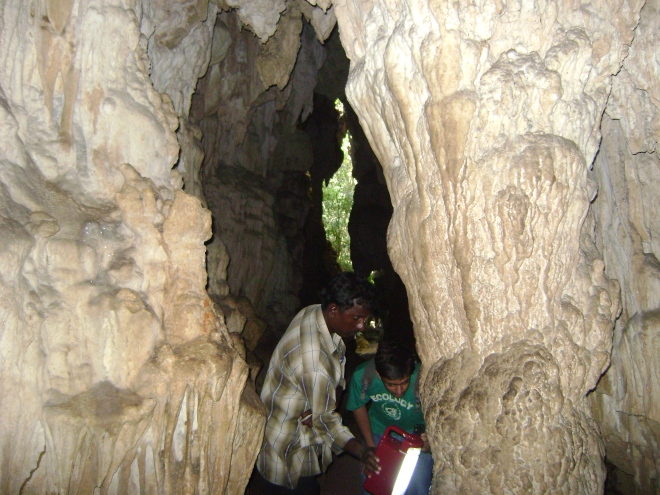 Crawling through the limestone caves.
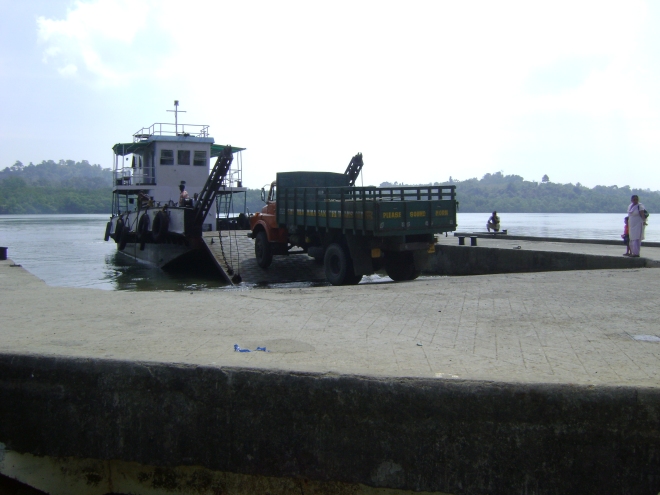 A truck inching its way on to a ferry
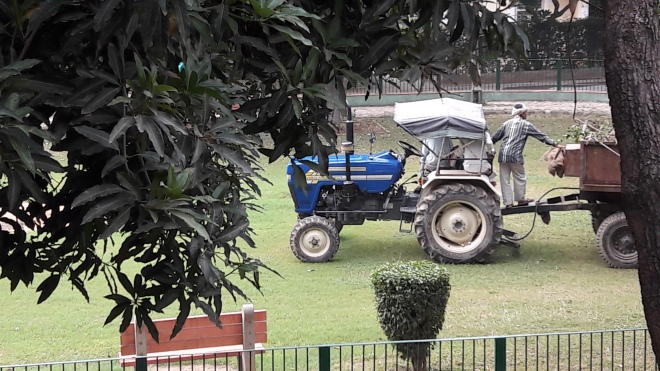 I just love this tractor which haunts our campus. There’s something about it – the shiny bright blue contrasting with the rusty trailer as it rumbles sedately lugging something or the other or as it waits patiently to be loaded…no? Don’t much care for it?
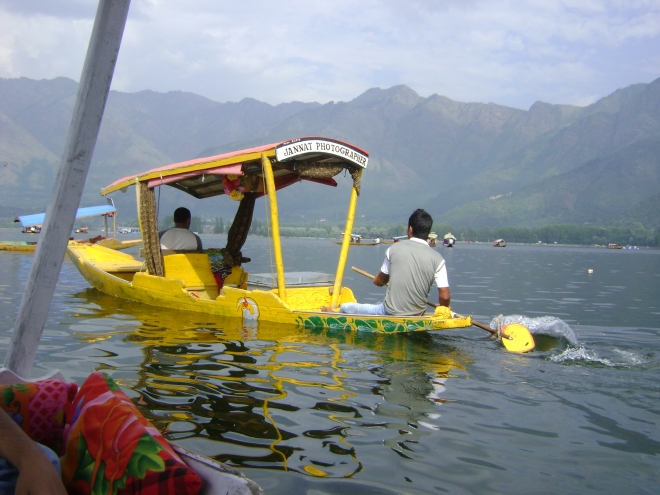 I am sure you would enjoy a leisurely shikara ride on the picturesque Dal lake, Srinagar. Hmm perhaps I have shared this photo before – time to fly 😉
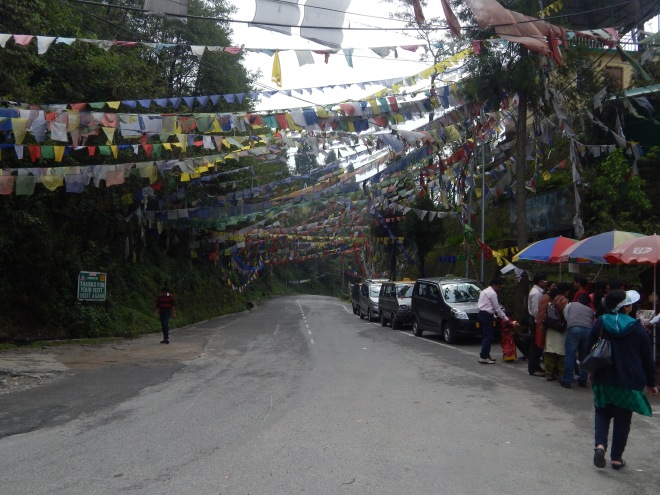 Flying banners decorate the road
 More colorful flags flying in the wind (and the green T-shirt guy’s hair too 😀
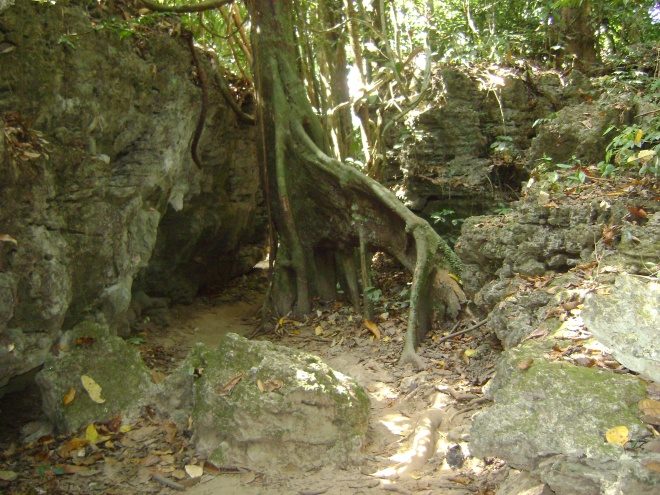 I saved this one for the last. Doesn’t the tree look as if she is going to leg it any moment?
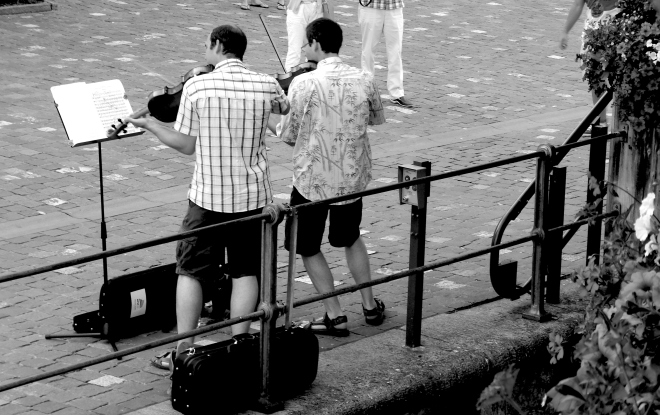 I wonder if these guys have mustaches?
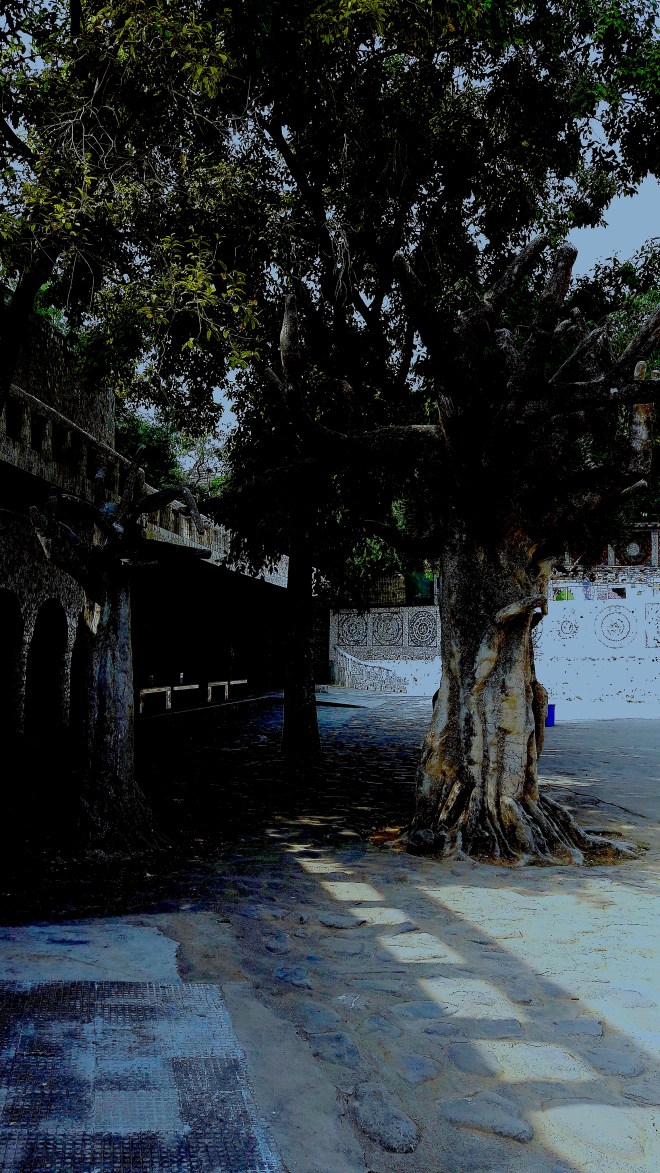 Yep this is at the Rock Gardens in Chandigarh. I have to confess I didn’t mean to capture the shadows. I was too busy focusing on the artificial tree 😀 Anyhow I fooled around a bit with the photo to highlight the shadow of the railings – they look cool don’t they?
 This one I took because of the shadows.
 Stories and more