APWC: Zoom In

We recently visited the Golconda Fort near Hyderabad, India where we had glimpses and insights into the lives of people who lived centuries ago. Nancy’s A Photo A Week theme this week is of Details – exactly what I was looking for to showcase some of the interesting things we saw:)

entry

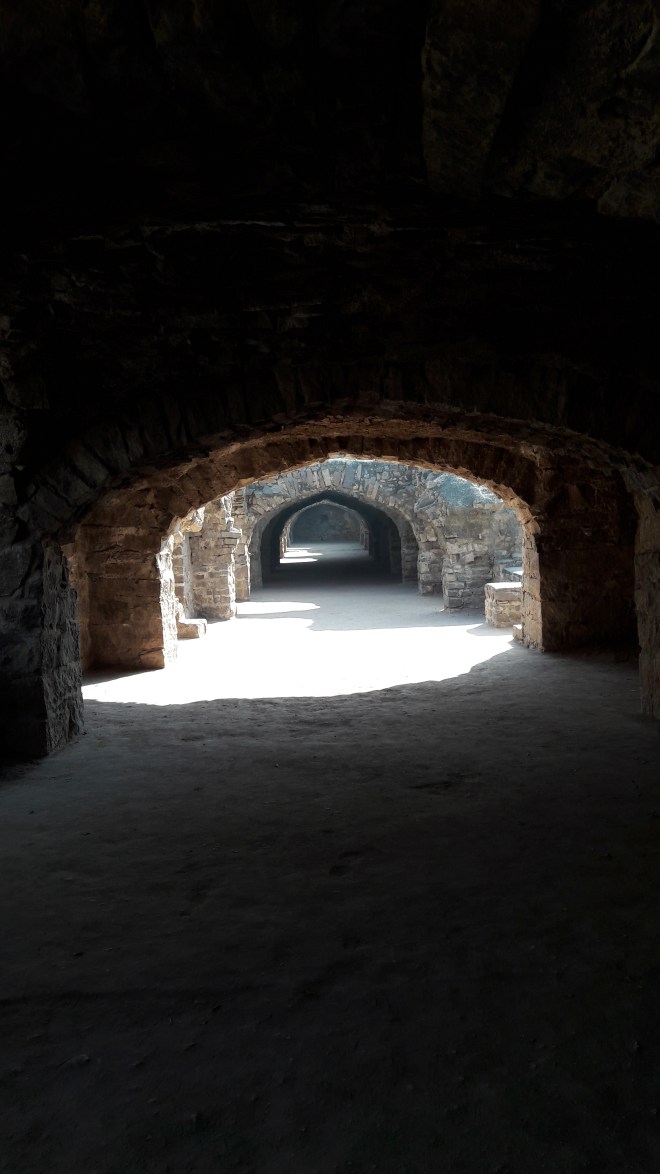
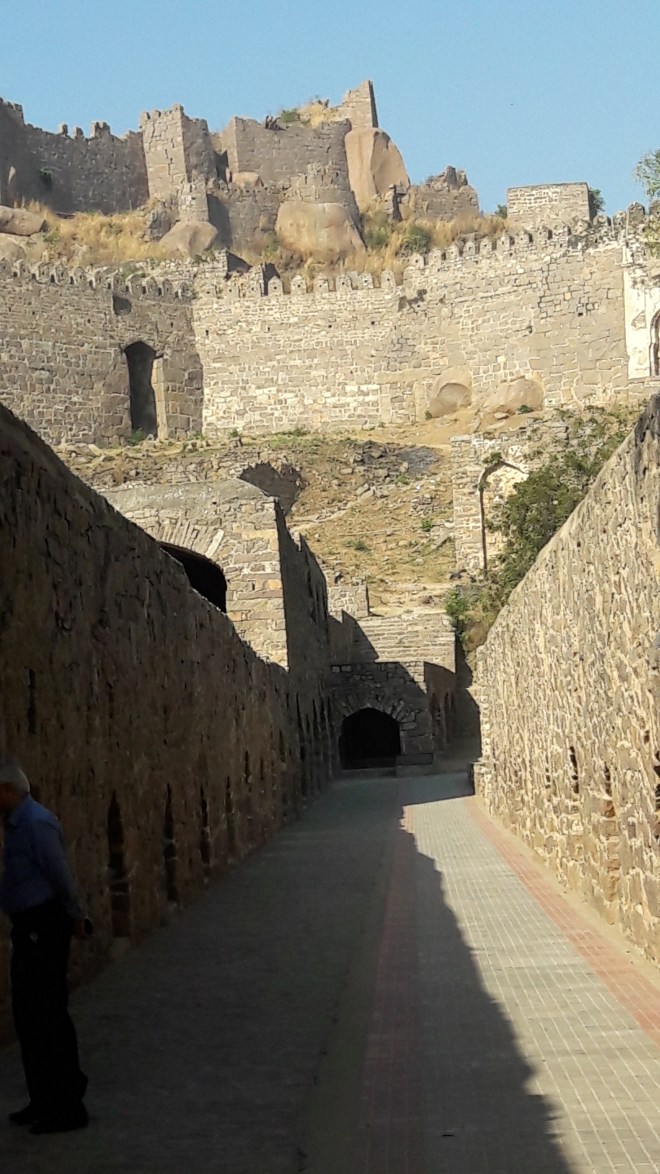
This is the entrance to the Golconda Fort (of Kohinoor diamond fame). This path was meant for kings and nobles but our path lies elsewhere. Just alongside (on the left to be precise):

barrack

A view of the barracks where the soldiers were housed. Pretty barren and lackluster do you think? Let’s look around.

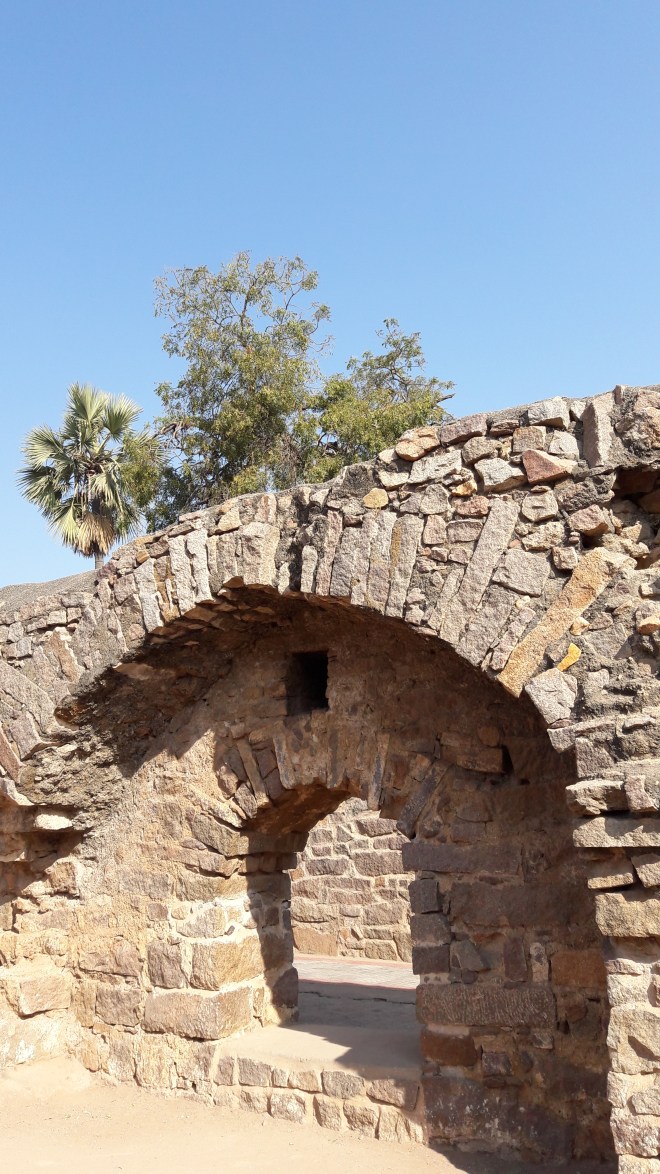
entranceThe entrance to the barracks – actually to be honest I took this photo because of the tree 😉

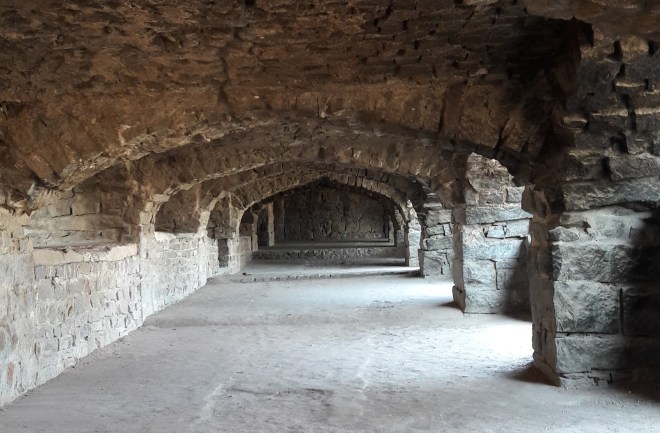
shelves

On the other side are the shelves for soldiers to keep their artillery and other stuff.

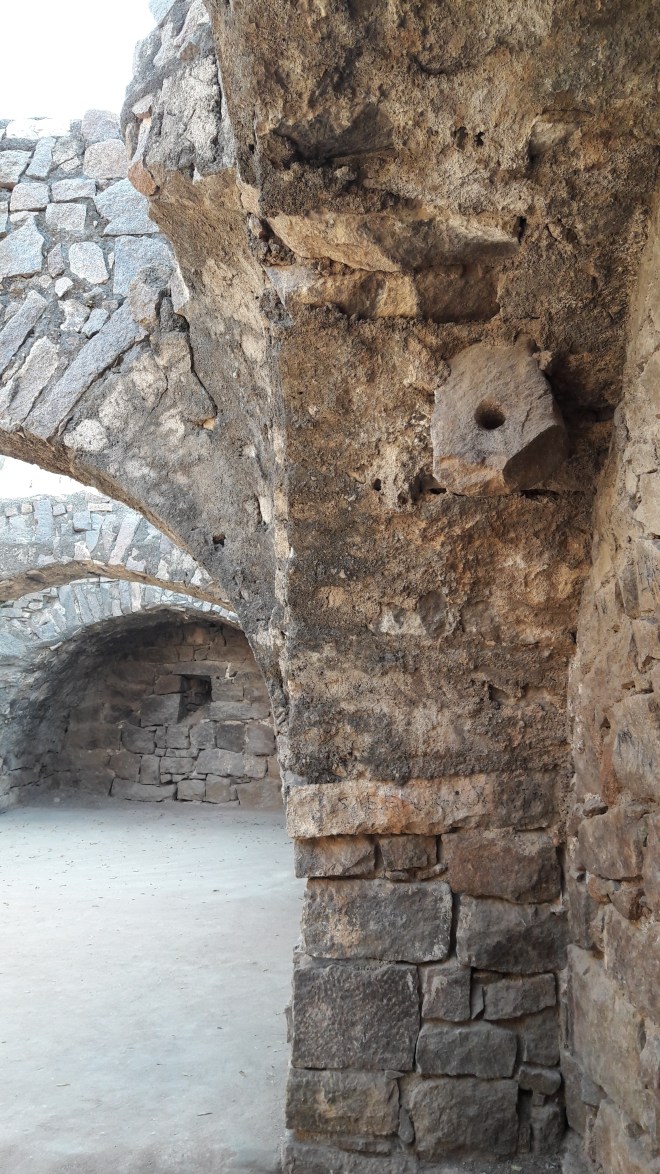
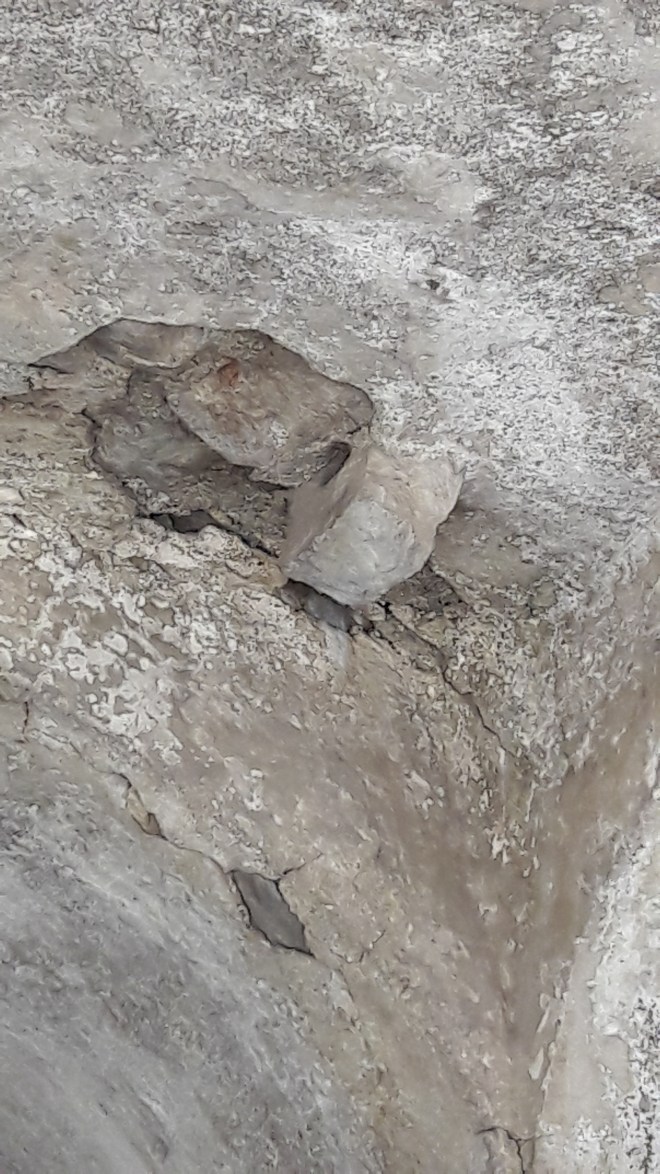
holder1See that protrusion with a hole? That was for holding flame torches for light.

holder2Another flame torch holder on the other side. The walls look rather bare and utilitarian don’t they? As I mentioned, this section was meant for soldiers. The Royalty didn’t much care for the fumes of the flame torches. Besides, the flames charred the walls which again offended their sensibilities. Hence they had other ideas.

diamond

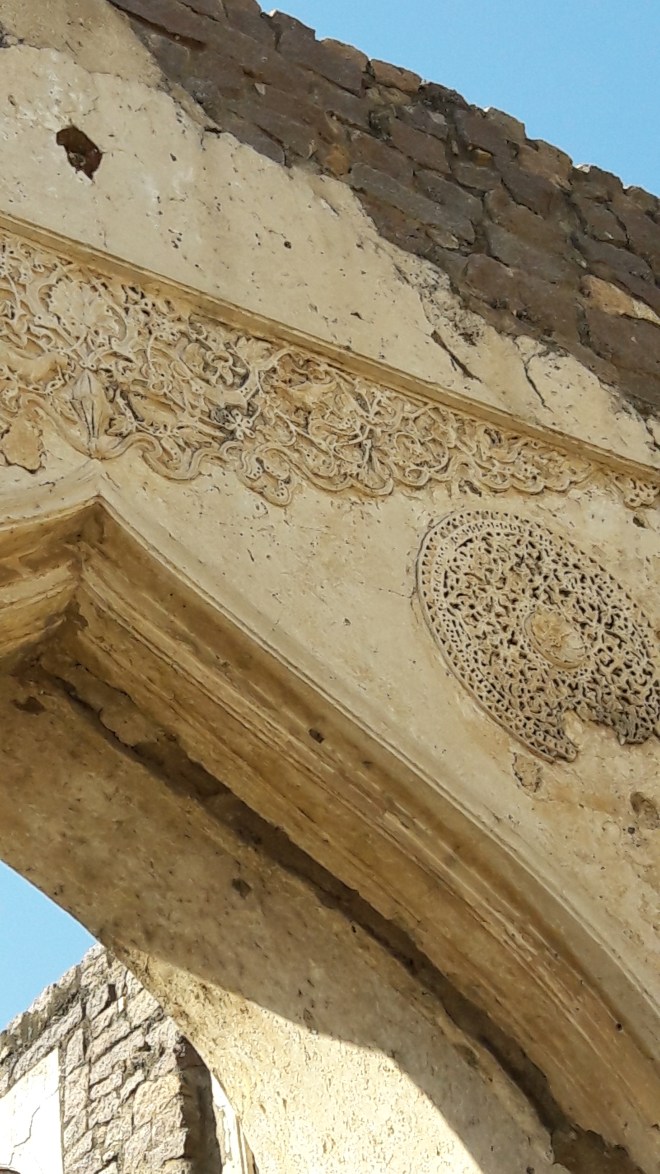
The intricate decorations on the inner palace walls – which was originally diamond studded. A single candle was enough to light up the whole room.

wall

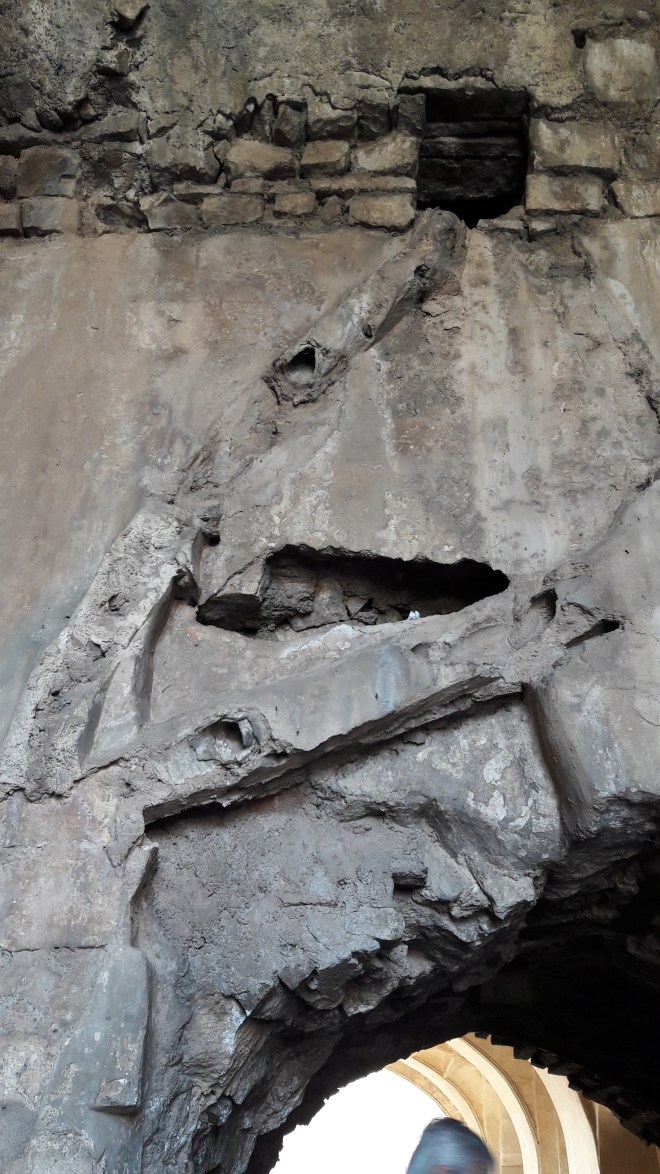
The Royalty lived in luxury and left no stone unturned their comfort. This came to light when the walls broke revealing water pipes for carrying hot and cold water to the city and fortress built on a granite hill that is 120 meters (480 ft) high.

The water was heated in a wood furnace and pumped up using hand cranks. Phew!

Hope you enjoyed the detailed tour.

Thanks for visiting and sharing your thoughts.

Have a super week.

Bindi Tree

bindi-tree
Photo (c) Punit Kaur

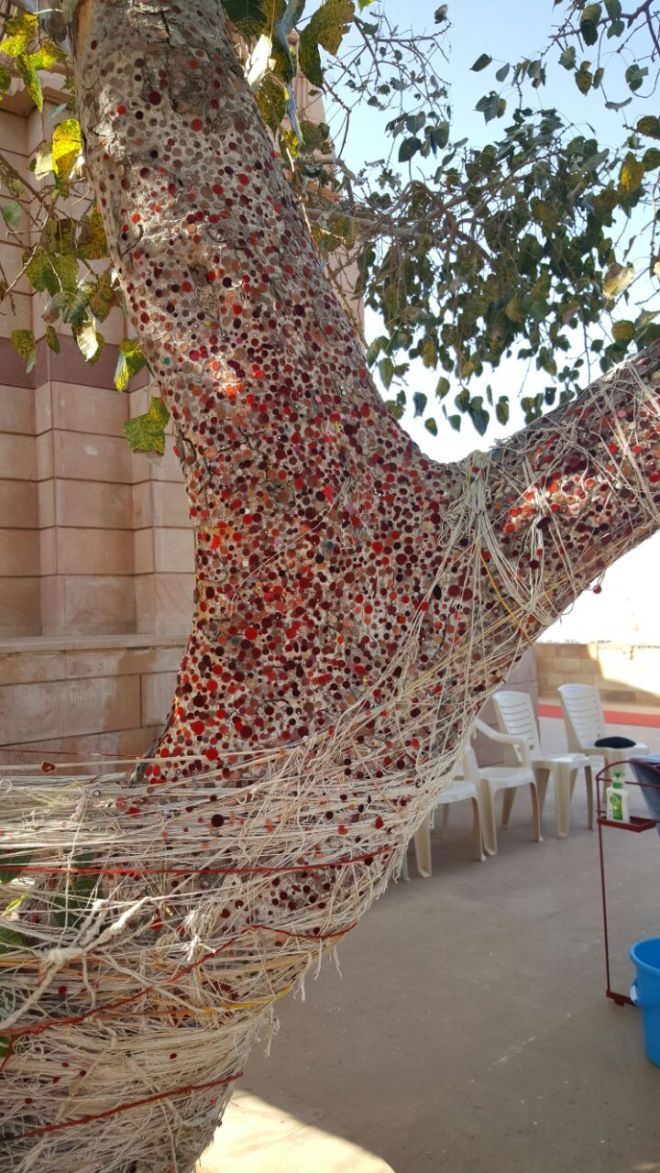
In India, trees are very much revered and it is a common sight to see the Banyan tree or the Bodhi tree entwined with red strings. But this particular tree covered with bindis is a rare sight and one that I have never seen before. This tree stands outside the Koteshawar temple, Kutch in Gujarat. The temple overlooks the Arabian Sea and is the western-most Shiva temple of India.

Bindis are traditionally red in color and round in shape. Married women wear them on the center of the forehead as a symbol of their marital status. Married women put a bindi on this tree to ensure the long life of her husband. I believe glass bangles are also offered to the tree. I hope to see it for myself one of these days, until then the photo will have to do 🙂

For Becca’s Sunday Trees – 274


An Art -Y Post

I am an avid follower of Y’s 365 days of art and sometime ago she inspired me to try an art post. So here I am, with a couple of paintings that we have at home. Photography turned out to be quite tricky – flash, shadows, reflections and other amateur issues. Nevertheless I hope you will like them. Taking cue from Y, I added a little bit of background to make it more interesting.

Indian paintings can be broadly classified as murals and miniatures. Murals are large works executed on the walls of solid structures, such as in the Ajanta Caves. Miniature paintings are executed on a very small scale for books or albums on perishable material such as paper and cloth. The Palas of Bengal (in the eastern part of India) are believed to be the pioneers of miniature painting in India.

Miniature paintings developed during the 10th century in Rajasthan (western part of India). The subjects of these miniature paintings are in relation to the subjects of the manuscripts mostly religious and literary. The painting below is of the life of Lord Krishna and his Gopies. These paintings were created on leaf of the palm tree and later paper.

In these paintings,  most of the human characters are seen with side profile. Big eyes, pointed nose and slim waist are the distinctive features of these paintings. The skin colors of human being are brown and fair. The skin color of the Lord Krishna is Blue. Human characters are adorned with a lot of jewellery and wear traditional Indian dresses. Mostly natural colors were used in these paintings.
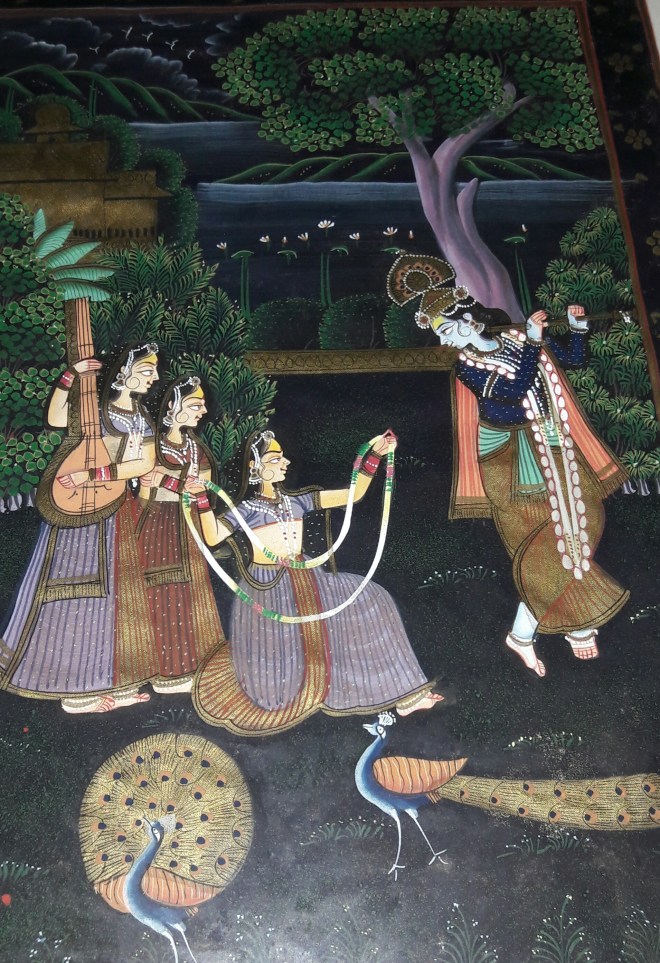
miniatureSorry about the flashlight at the bottom 😦 No fault of the artist!

The second painting is known as Madhubani art and belongs to the region that is now Bihar. It is locally believed that Madhubani painting tradition started when Raja Janak of Videha commissioned local artists to paint murals in his palace in preparations for the marriage of his daughter Sita to Lord Ram (who is believed to have been born in 5114 BC). Painting is done with fingers, twigs, brushes, nib-pens, and matchsticks, using natural dyes and pigments, and is characterized by eye-catching geometrical patterns. There is ritual content for particular occasions, such as birth or marriage, and festivals.

These paintings were done only by women and only on occasion of marriages. Madhubani art has five distinctive styles and their themes were mainly religious and they depicted Gods and Goddesses, flora and fauna in their paintings.

The painting was traditionally done on freshly plastered mud walls and floors of huts, but now they are also done on cloth, handmade paper and canvas. Madhubani paintings are made from the paste of powdered rice. Madhubani painting has remained confined to a compact geographical area and the skills have been passed on through centuries, the content and the style have largely remained the same. Madhubani paintings also use two dimensional imagery, and the colors used are derived from plants. Ochre and lampblack are also used for reddish brown and black respectively.

Mithila painting (as Madhubani art is also known as) was hidden from the world until the India-Nepal border earthquake of 1934. While inspecting the damages, the then British colonial officer in Madhubani District, William G. Archer, “discovered” the paintings on the newly exposed interior walls of Mithila homes. He took black and white photos of some of these paintings, which today are the earliest images of the art.

I also bring a black and white painting for you. For more images you can click on the links given above.

madhuIf you look carefully, no two image is same – sort of like spot the difference.
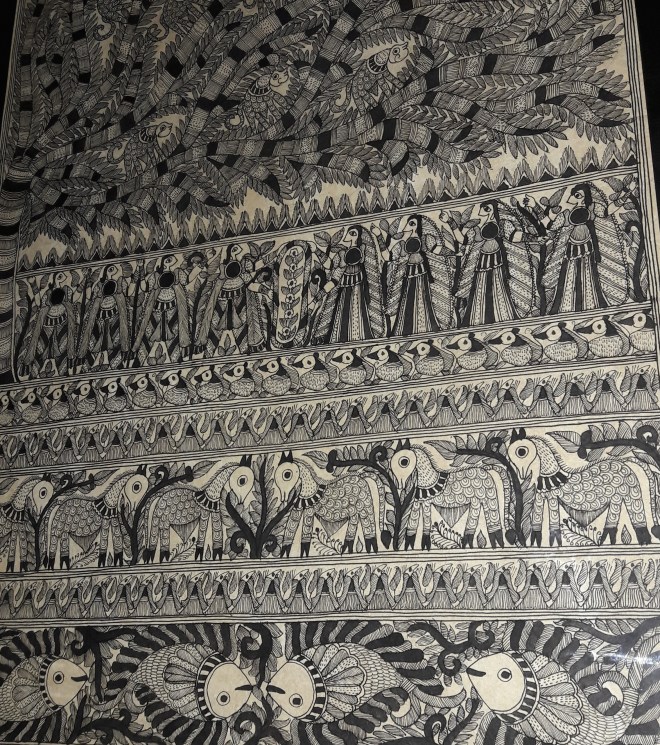
madhubaniHere’s another angle with a darker focus on the top panel.

So what do you think? Do share your thoughts.

Thanks for visiting and hope you have a super weekend.
CB&W: A Musical Story

Cee’s black and white photo challenge theme for last week was Music. I am worse than late this week, but in my defense it’s been a super busy week plus I was traveling. Hunting through my archives I could find only one photo, which fit the bill. Ironical since my house is littered with musical instruments – guitar, Mohan veena, sitar, piano, tabla and I distinctly remember buying a mouth organ too.

Before you get the wrong idea I must add that I am quite tone-deaf but my son has the ‘feel’ for music – and I think he plays very well. 🙂 Well no, I am not really being partial – he won a music scholarship during his school days. But what I really wanted to share with you was the way he was introduced to music. Since I am not really musically inclined, I would have never thought of pushing him towards music. But fate has a way of taking the right turns and sort of forcing your hand.

When my son was about seven years old, he suddenly turned obsessive about me. It was winter days and it would get dark by 5 pm. Quite all of a sudden, he started calling me up at the office demanding that I come home immediately. Once he even dragged his octogenarian grandfather to the campus gate to escort me home. I tried to get to the bottom of the matter and set up a minor grilling session.

I saw the glimmerings of light when he muttered, “Bad things happen in car parks.”

Darn it – that’s what comes out of encouraging children to read the newspaper.

Some urgent damage control was needed so I began hunting for some suitable distraction. But what? I had not time to take him anywhere for anything. It would have to be something at home.

“Would you like to learn music?” I asked having bumped into a music teacher at a friend’s house.

He wore a thoughtful look. “Does he have a mustache?”

Of all the things!

“Hmm. Not sure. I think so.”

“Okay.” He went back to his comic. “But only if he has a mustache.”

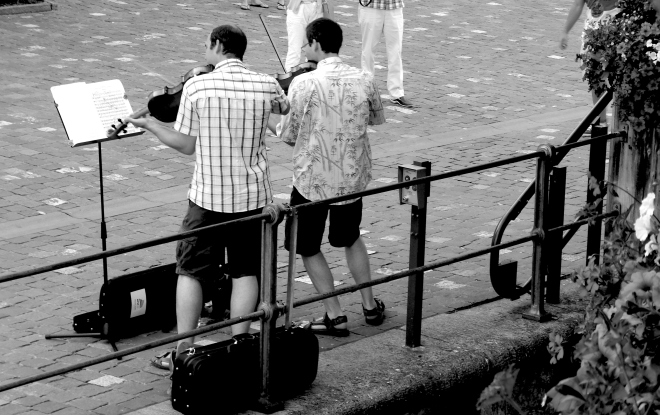
musicI wonder if these guys have mustaches?

Or more importantly did they have any such preconditions before they started learning music 😀 How about you – do you know of any one with peculiar preconditions to do doing something? Do share 🙂

Thanks for visiting!


WPC: Shadows

It’s a double Weekly Photo Challenge bonanza this week – after solitude it’s time for some shadows. I managed only a couple:

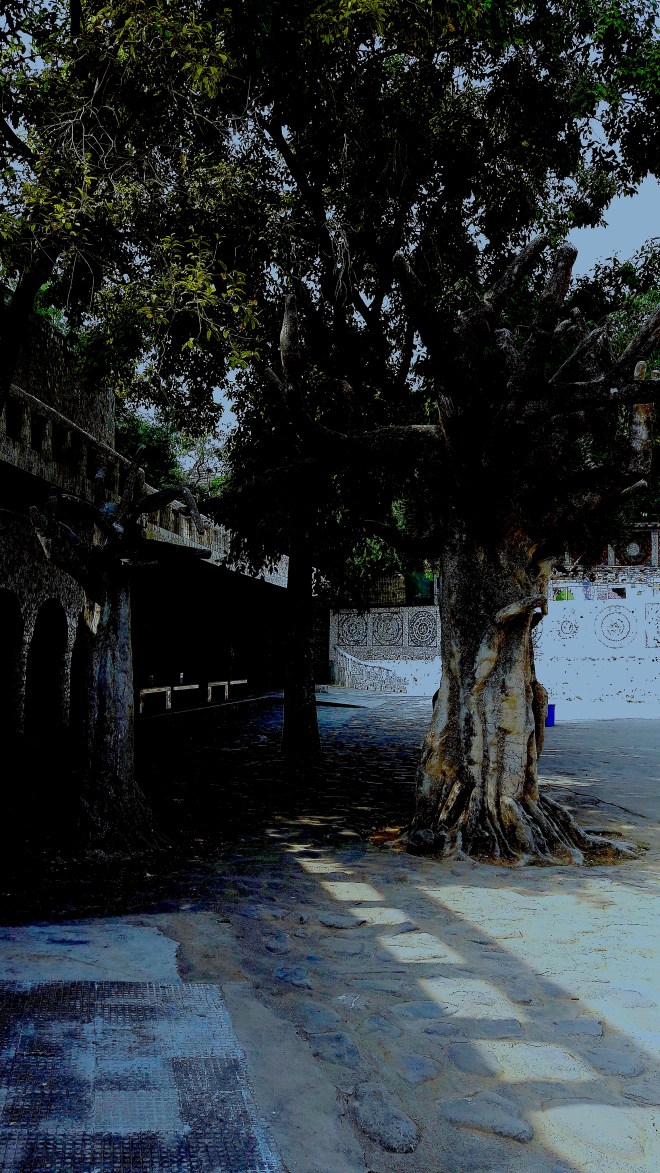
rock-gardenYep this is at the Rock Gardens in Chandigarh. I have to confess I didn’t mean to capture the shadows. I was too busy focusing on the artificial tree 😀 Anyhow I fooled around a bit with the photo to highlight the shadow of the railings – they look cool don’t they?

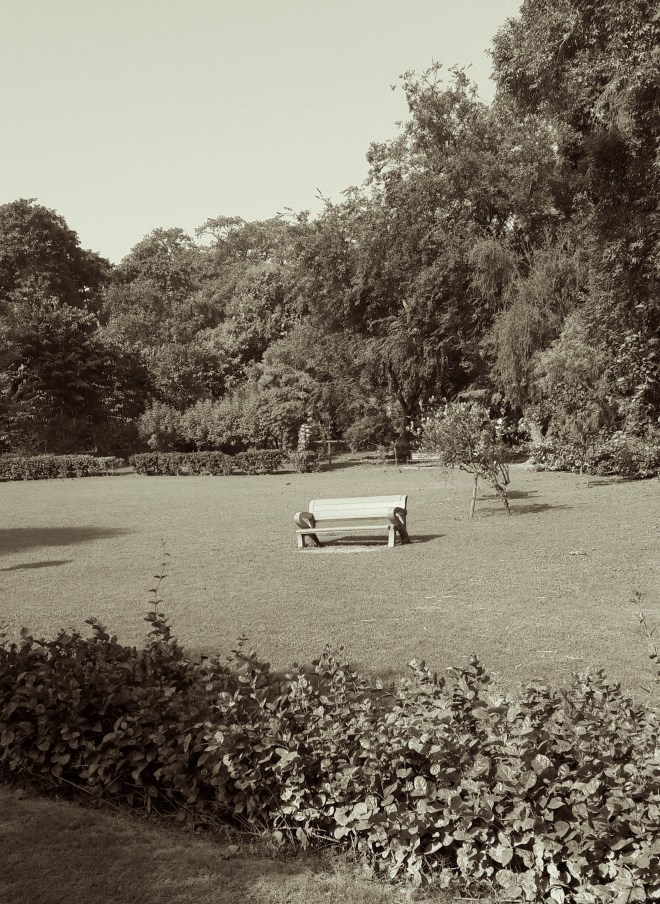
lodhi-gardensThis one I took because of the shadows.

So which one do you like better?

Thanks for visiting and leaving me a note 🙂

For readers of Moonshine, here's Chapter 120

WPC: Solitude

Solitude is a state of being alone without feeling lonely. Solitude is something I crave and find uplifting and relaxing – a state which, to me at least, is almost akin to meditation. The freedom to think or not – the freedom to just be. The Daily Post’s weekly photo challenge theme is about solitude and hence this outburst 😉

Anyway, hunting through my archives, I found this picture which seemed to fit the bill.  Fooling around with the photo, I was reminded of a discussion I had with Ravens regarding BW and color photographs.

I thought I had interesting results with this photo.

bw-benchDoesn’t this picture evoke a sense of loneliness and despair? Of waiting? If only someone would come and say hello?
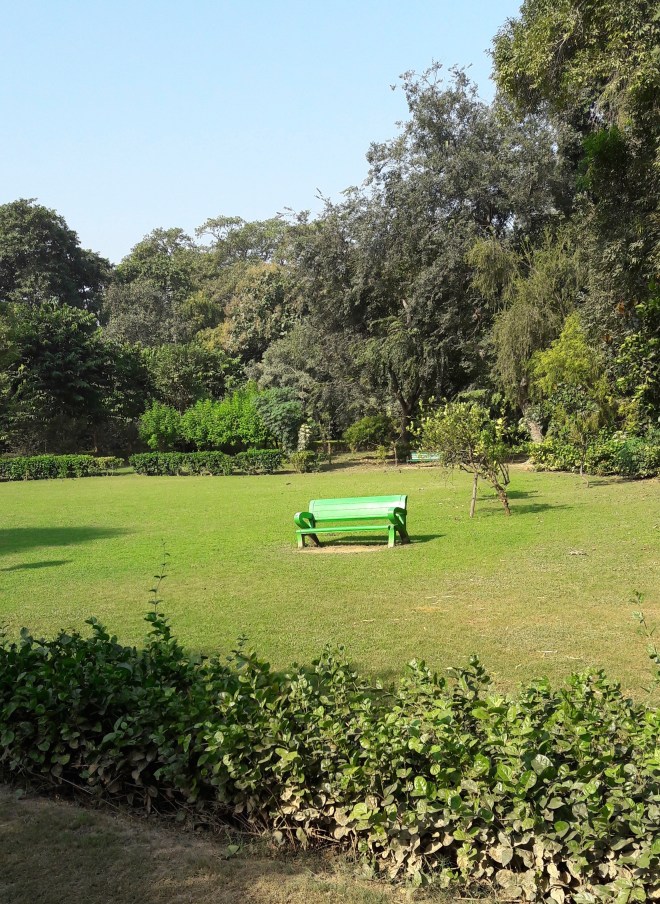
park-bench-2 Yet, doesn’t this scene speaks of utter contentment and relaxation? It is as if the bench is soaking up the sunshine and a few brief moments of blissful respite from the burdens that he knows are sure to come his way all too soon.
I wonder if you agree with me? Or am I being too fanciful? Do let me know which one you like better. I would love to know about your thoughts on the matter…

Thanks for visiting!

Blending In

biding-her-time-2

Doesn’t she look as if she is trying to blend in with her surroundings? Or perhaps Nek Chand  arranged his sculptors to suit her woody nature.

For Becca’s Sunday Trees 273

WPC: Amazing Grace

The Daily Post’s weekly photo challenge is all about being graceful and dance is all about grace. India is a treasure house of dances ranging from regional folk dances to classical dances. As a child I was fascinated with the classical dance forms. I learned a bit of Bharatnatyam and even had the opportunity to give a stage performance in a school competition – mostly because there was no other taker from our house 😉 But I will have you know that I stood second 😀 No there weren’t two competitors (as my dear brother who was late for the performance suggested) – there were five. Yeah and I was just as incredulous as you but what stands out most in my memory is that my dance teacher said that she wasn’t surprised. A lovely cherished memory! There are other memories too associated with that day but perhaps another day, another challenge 😉

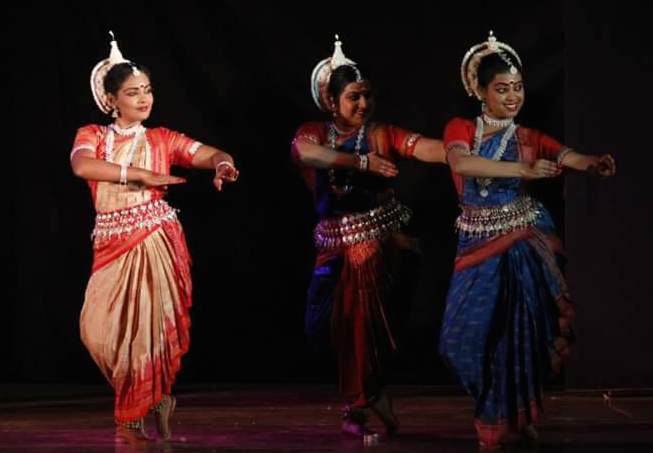
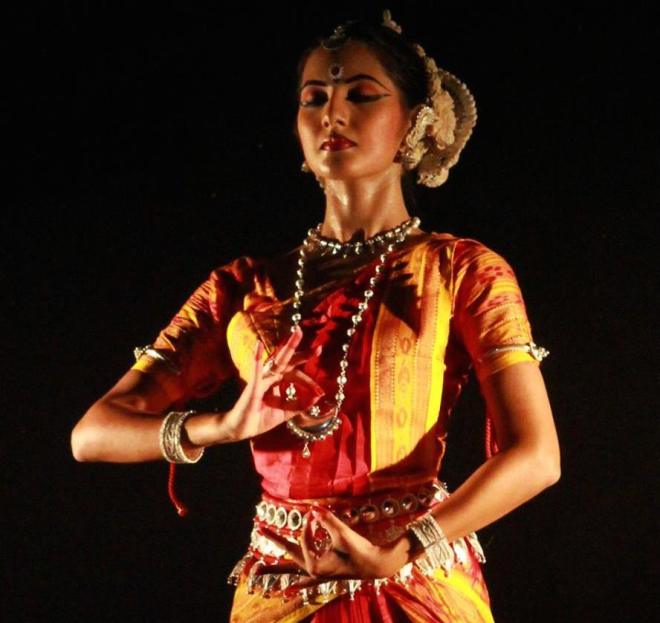
As far as grace is concerned, of all the classical Indian dance forms, I have to confess that I personally find the Odissi dance form to be the most graceful. Odissi is a major ancient Indian classical dance that originated in the Hindu temples of Odisha, an eastern coastal state of India. Here are a couple of my beautiful and graceful friend’s photo – I have shared these before but I couldn’t resist posting them again.

handmudra1Isn’t she stunning?

grace
Odissi dancers

So who’s is your favorite?

For readers of Moonshine, here's Chapter 116 AND for IPK fans/readers of SS here's the first part of A Tangled Web


WPC: Of Eras Gone By

The theme for the Daily Post’s Weekly Photo Challenge is of photographs with exceptional ambience. I take this as an opportunity to share pictures of a few places with unique atmosphere and character.

indus
Photo (c) Punit Kaur

Dholavira, an archeological site at Kutch district in Gujarat, India, contains the ruins of the Indus Valley Civilization or the Harappan city. This was the Bronze Age civilization (3300-1300 BCE; mature period 2600-1600 BCE) extending from what is today northeast Afghanistan to Pakistan and northwest India. It was one of the three old world civilizations (along with ancient Egypt and Mesopotamia) and also the most widespread. During history lessons at school, I remember getting goose bumps thinking about their unimaginable skills and expertise in a time, which existed before the Vedic period.

Inhabitants of the ancient Indus river valley developed new techniques in handicraft and metallurgy (copper, bronze, lead, and tin). The Indus cities are especially renowned for their urban planning, baked brick houses, elaborate drainage systems, water supply systems, and clusters of large non-residential buildings.

stepwell
Photo (c) Amit Ghosal

Rudabai Stepwell, built in 1499 AD at Adalaj, Gujarat, India by Mahmud Begada for his queen Rudabai. The step well nicely depicts fusion of Indian and Islamic architecture. The step well or ‘Vav’, as it is locally known, is intricately carved and is five stories deep.

stepwell2
Photo (c) Amit Ghosal

Such step wells not only provided water for drinking, washing and bathing but were also venues for colorful festivals and sacred rituals. Listen – can you not hear the echoes of laughter, rush of feet with tinkling anklets and bangles amidst a rustling swirl of colors on the backdrop of love, lust, oppression, greed and intrigues? Or am I being fanciful?


haunted
Photo (c) Papia Chatterjee

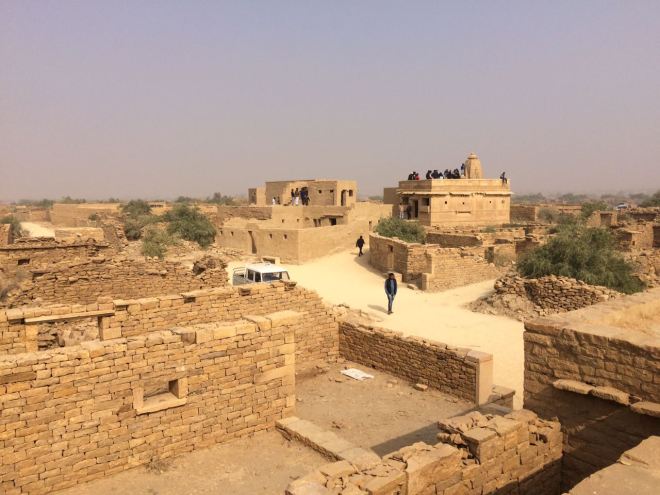
For a spooky ambience, visit the abandoned and haunted village of Kuldhara, Rajasthan, India. Kuldhara was established around the 13th century and was home to the Paliwal Brahmins till about 200 years ago. Legend has it that the unscrupulous and rogue Diwan of Jaisalmer, Salim Singh fell for the beautiful daughter of the village chief. Determined to have her, he threatened to levy huge taxes upon them unless they toed his line.

Equally determined not to yield, one night, all the residents of the village fled, leaving behind their homes and everything within them. There is no information about the whereabouts of the Paliwals. Before leaving, the Paliwals cursed the village which is why, till date, it remains uninhabited by mortal beings. Instead ghosts roam the deserted streets. I believe night stay facility is available for those who wish to experience moving shadows, haunting spirits and other paranormal activities. Game anyone?

 A big thank you to my friend and family for sharing the pictures 🙂 Thanks to you too for dropping by – where would you like to go first?

Psst I think the curse of Kuldhara is affecting my post as well – I had to redo the whole thing again 😦 Fingers crossed

Waiting for Spring

jaipur

For Becca’s Sunday Trees -270

Oh I almost forgot, it’s time for this month’s Story Club. Sandeep, who writes amazing poems, has very kindly agreed to host it. His choice of story is The Dream of a Ridiculous Man by Fyodor Doestoevsky. Please do read it and join the discussion, which is to be held soon. Perhaps you could also post your own review and link it here so that we can hop over for a read? Thanks!