If you are a regular visitor to my blog you may have noticed that I have already published my photos for this week’s fun foto challenge hosted by Cee on Looking Down on Things. But as I mentioned, I have a few more photos to share on this topic.
I opted for a separate post for these photos because they are an insight into Indian art, thought, philosophy and way of life.
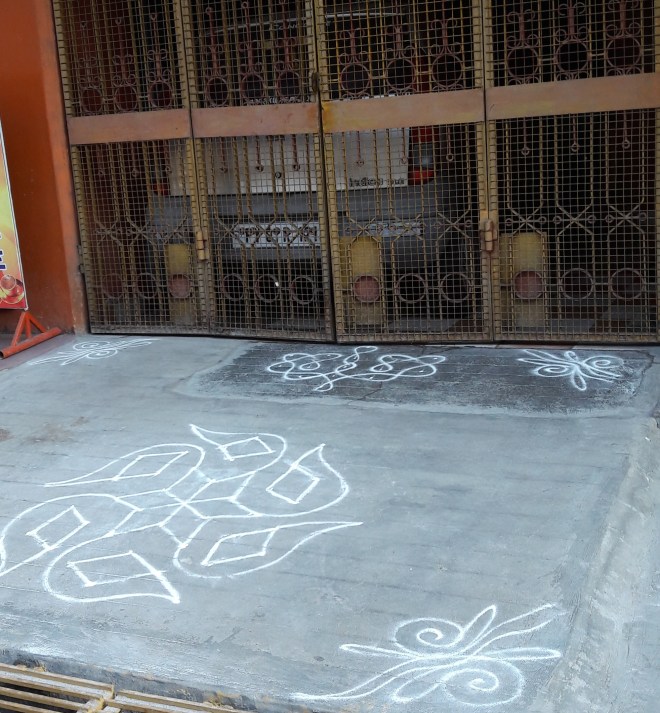
In many parts of India (and Asia), patterns are created on the floor in living rooms or courtyards using materials such as colored rice, dry flour, colored sand or flower petals. Usually these patterns (rangoli or alpana) are made on the occasion of religious festivals and auspicious functions such as weddings. But in South India, these drawings called kolam (among other things depending on region) are made in front of the house, every morning.
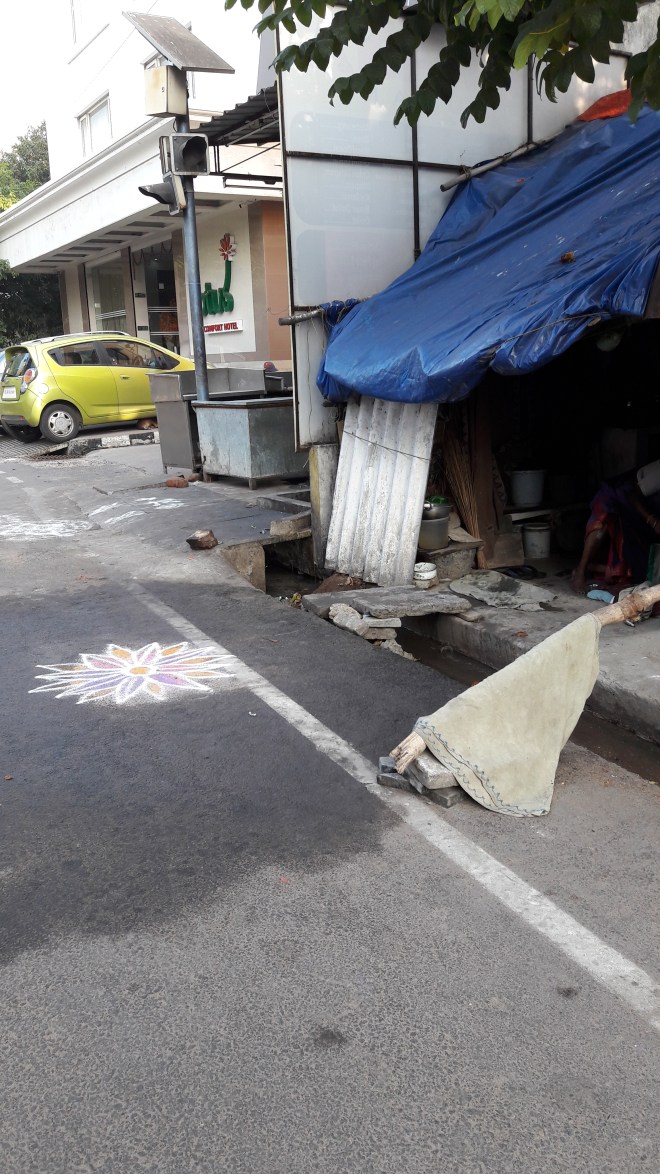 Kolams are not only decorative but are also believed to bring prosperity. Kolams were traditionally made of coarse rice flour – it serves as food for ants so that they don’t have to walk too far for a decent meal. It is also an invitation to birds and other smaller creatures. Kolams symbolize thinking beyond the self; the philosophy that the greatest joy is in giving rather than receiving. Only if you give, will you receive.And no one is too poor to feed another or welcome another.
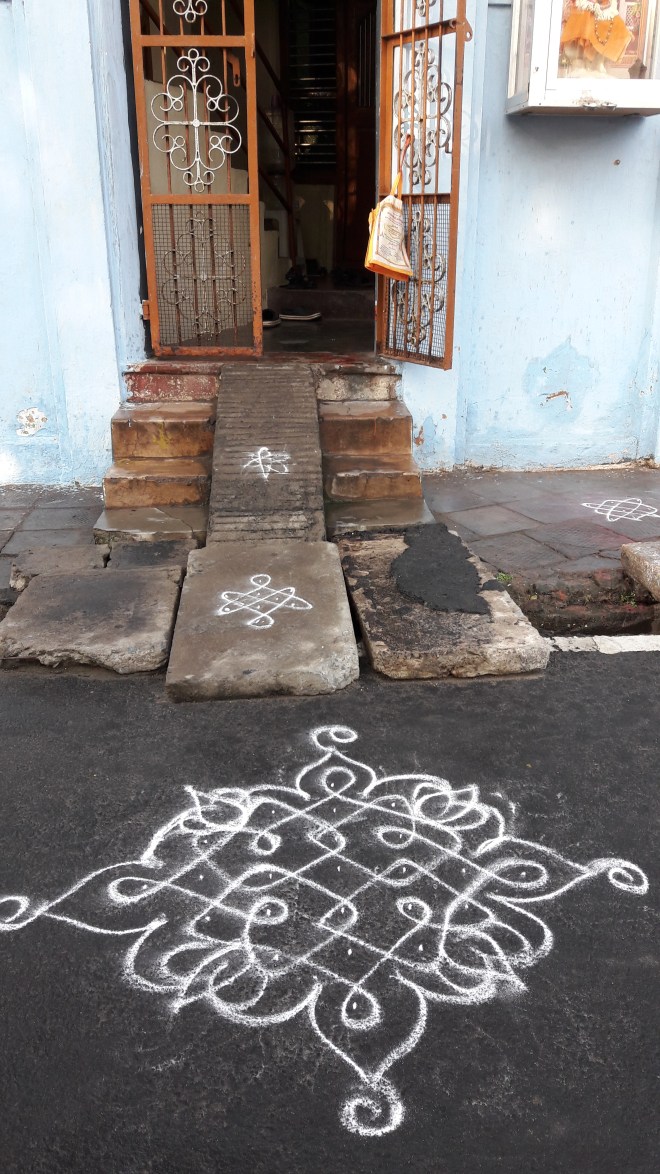 Every morning, women of the house clean their homes, courtyard, road and draw patterns with rice flour. The kolams are generally drawn while the surface is still damp so the design will hold better. As a child I remember watching Aunty as she drew bigger and bigger patterns without moving from her crouched position on the floor with just a flick of her wrist holding the rice powder between her thumb and forefinger. It was like magic.
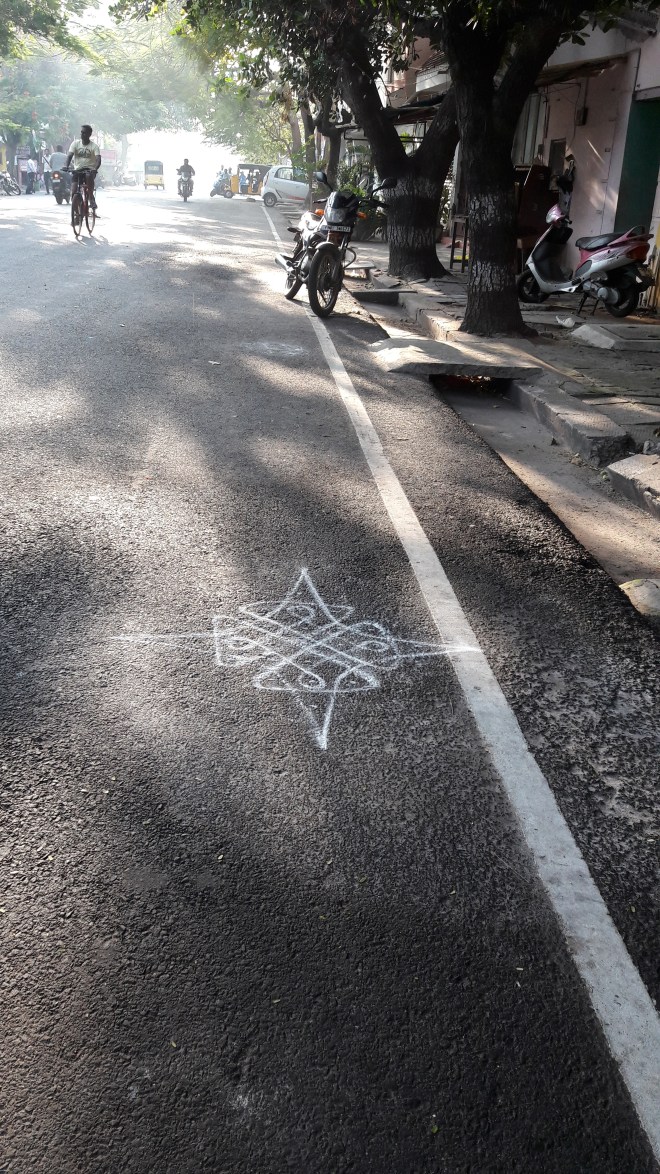 Walking back from the beach after witnessing a breathtaking sunrise, I was taken aback to see kolams on the road. The streets were deserted now but soon they would be bustling with activity. The patterns were sure to be trampled upon – why would anyone deliberately let their work of art be destroyed?
It was only later that I began to see the glimmerings of the deeper philosophy behind this tradition. Kolams on the road symbolize the impermanence of life and everything in it. It is a daily reminder to go ahead with our tasks without being attached to it.
Today’s work won’t last forever, be prepared to do it over and over again, all the days of your life. Be grateful for the new day, this life and another opportunity to create a new kolam, once again.
 This cool bag caught my bleary barely open eyes in the wee hours of the morning.
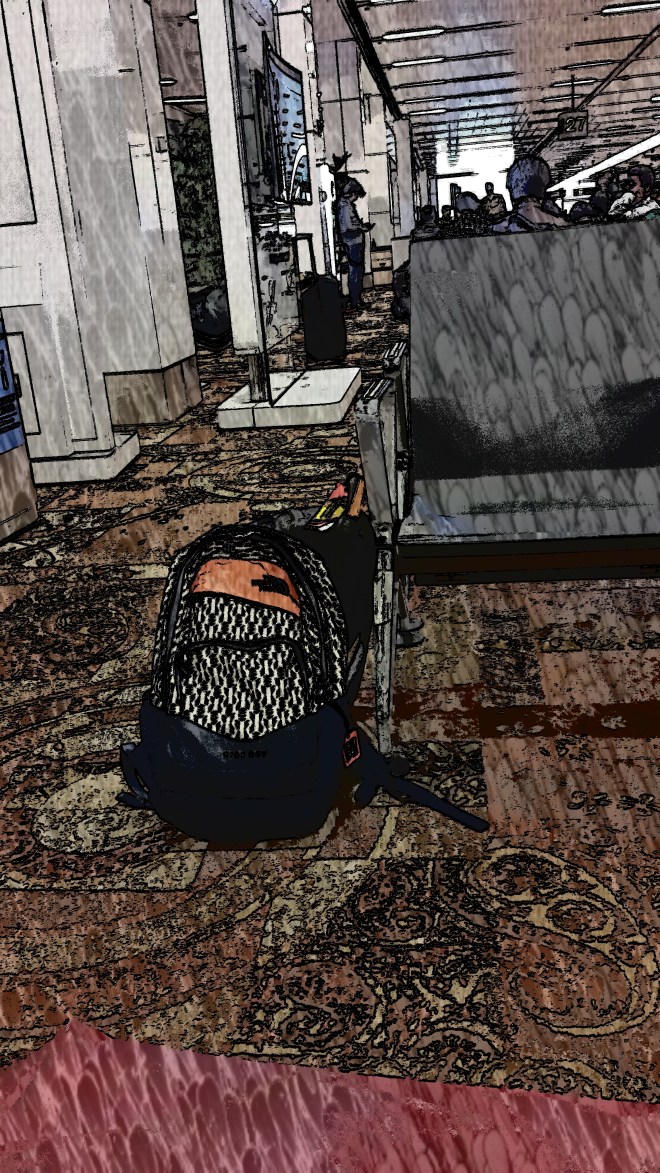 Look what I got fooling around with the photo – cool isnt it? Anyway on with the trip
 Looking down on sunrise was quite an experience
 A glimpse of the hotel lobby on the 6th floor.
 Looking down on the roof tops, I squinted as I tried to decipher where the sky ended and the sea began…
 At the beach, to catch the sunrise – the camera took this shot when I wasn’t looking.
 And finally, we come a full circle – back at the airport. On the floor, a flower arrangement outside a spa.
 Clearly he doesn’t much care for the stone floor, bird feed or the creepy crawlies. 😀
 An ‘otter’ in the woods
 A double mouthed skeleton or perhaps that’s the nose and the mouth is busy eating up the earth…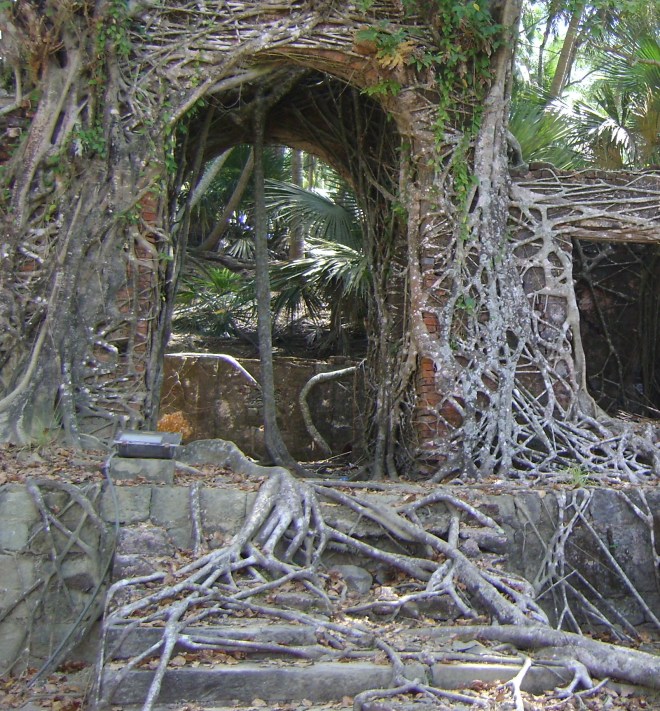
 Can you see the Tree Man standing guard in the distance?
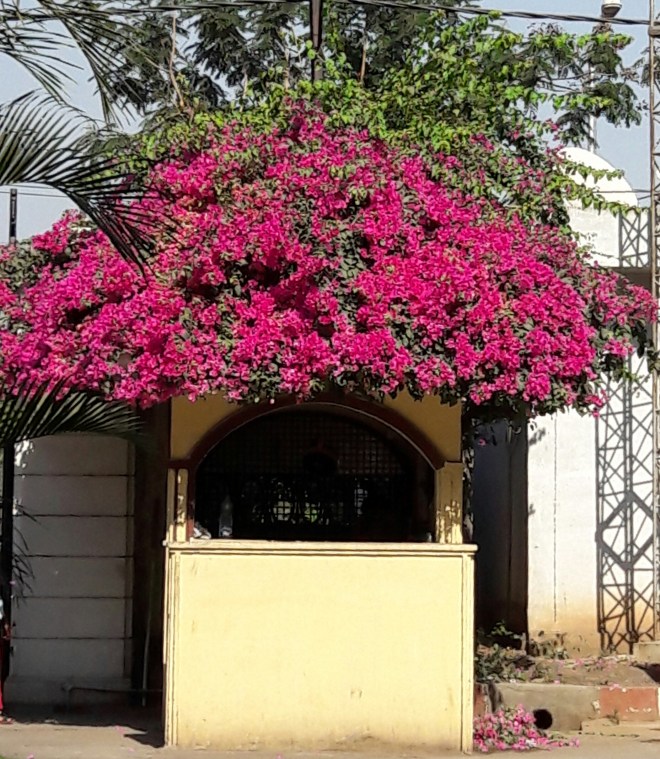 Accessories can do wonders for your looks 😉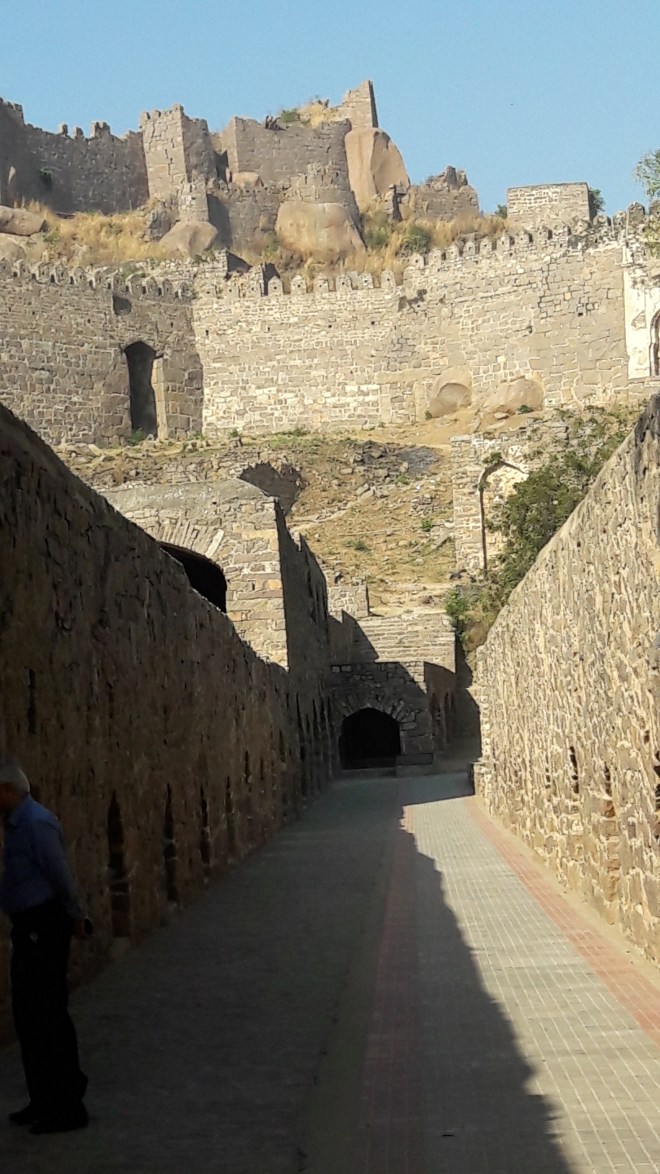
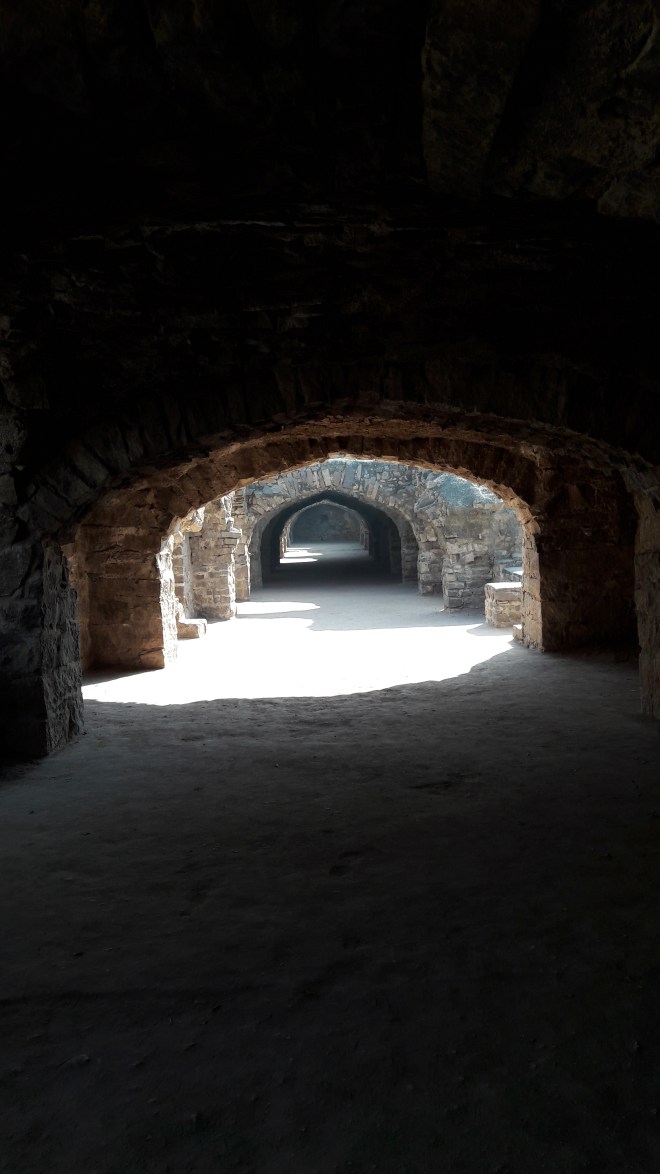
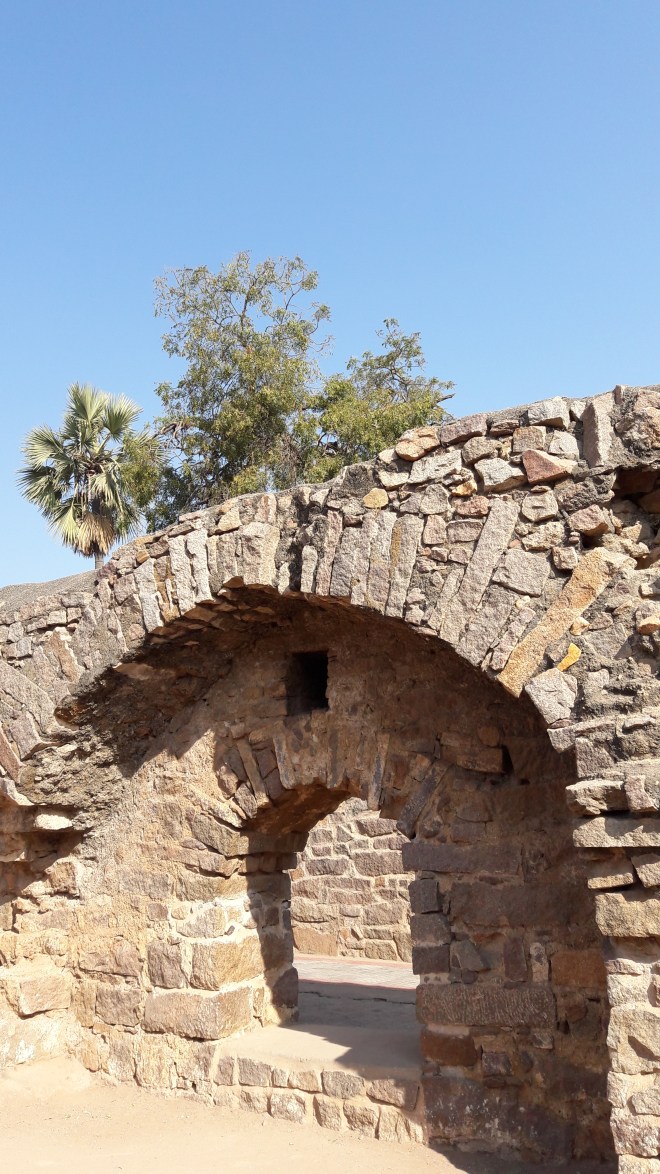 The entrance to the barracks – actually to be honest I took this photo because of the tree 😉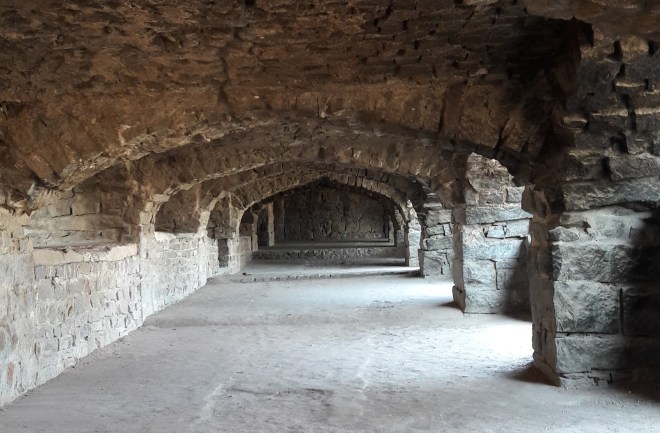
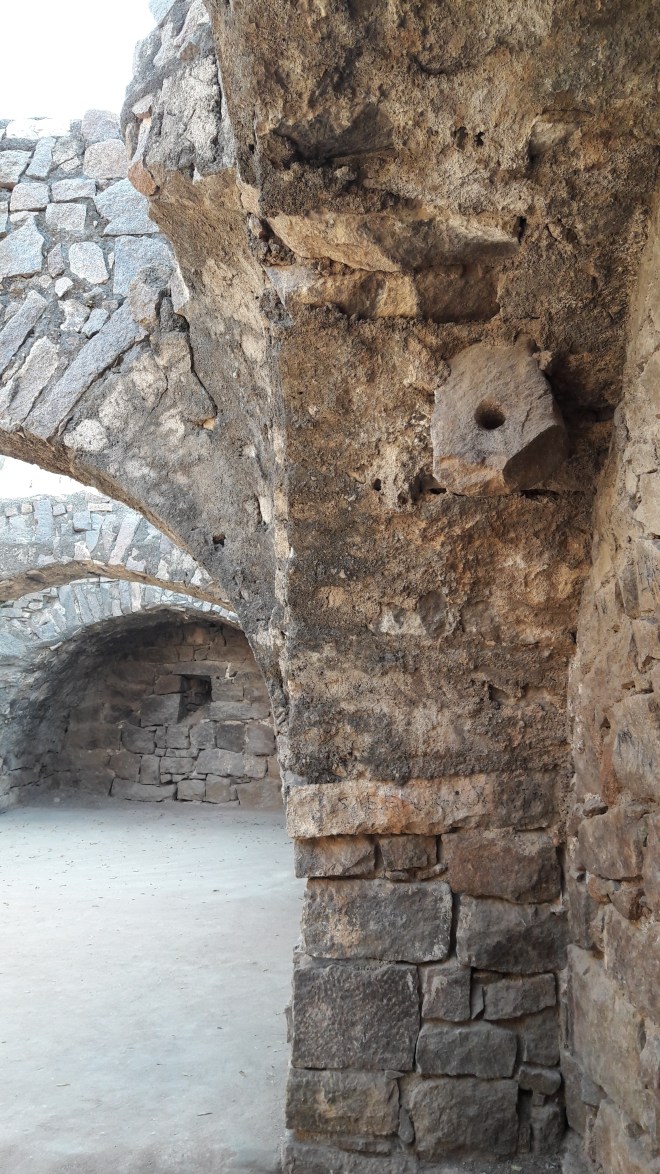 See that protrusion with a hole? That was for holding flame torches for light.
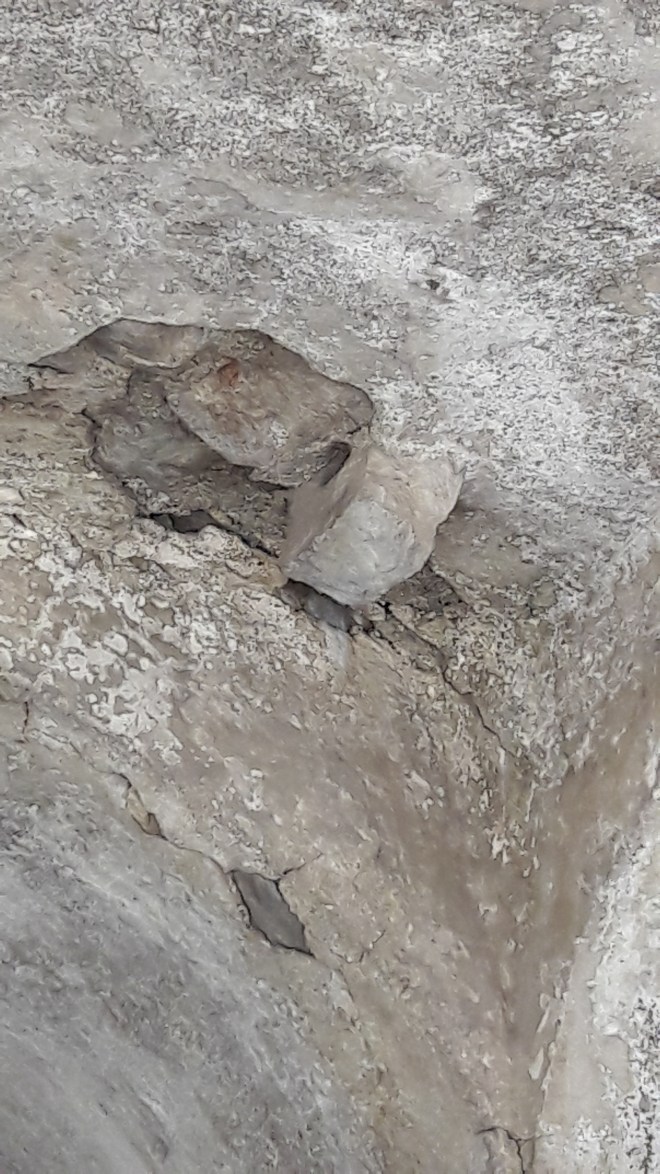 Another flame torch holder on the other side. The walls look rather bare and utilitarian don’t they? As I mentioned, this section was meant for soldiers. The Royalty didn’t much care for the fumes of the flame torches. Besides, the flames charred the walls which again offended their sensibilities. Hence they had other ideas.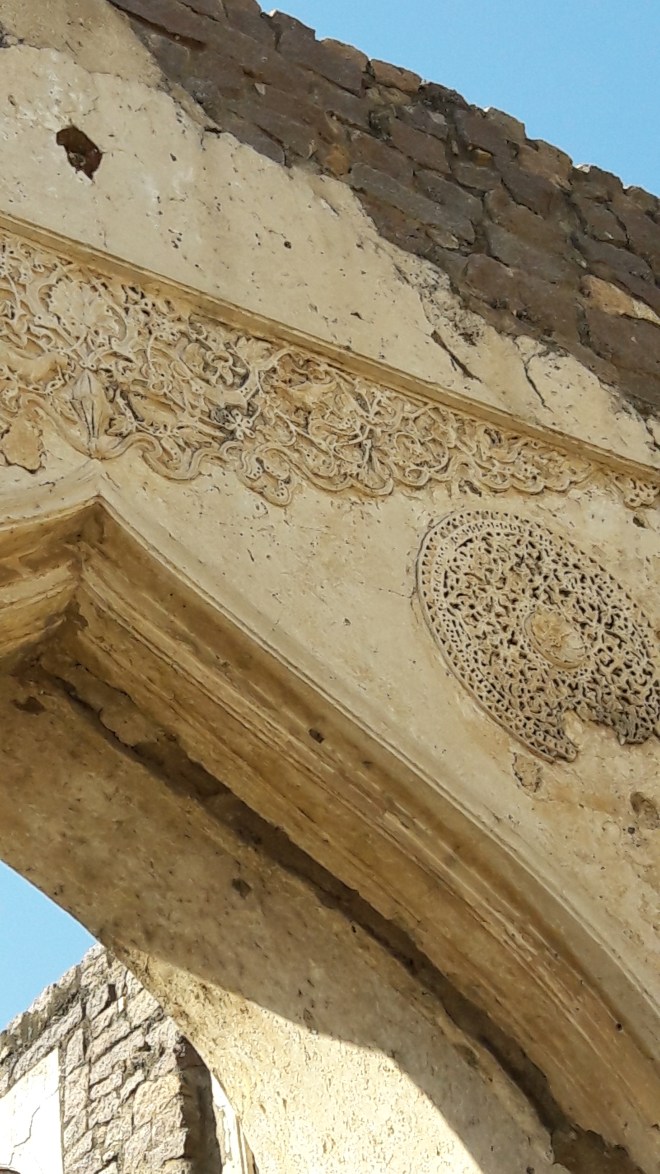
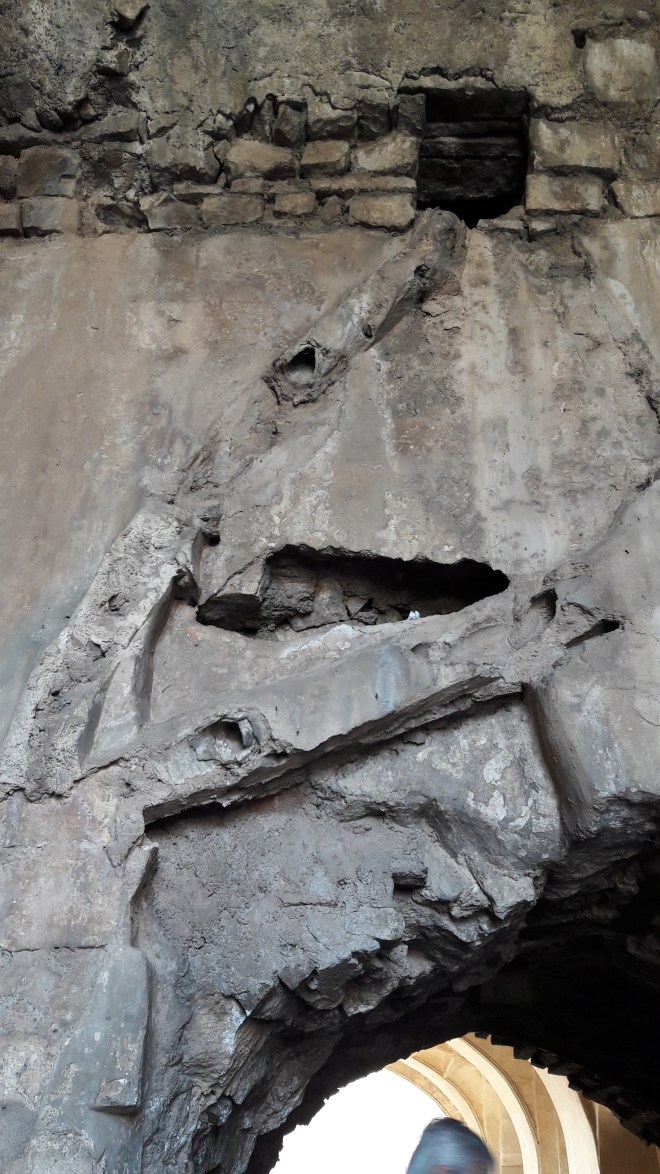
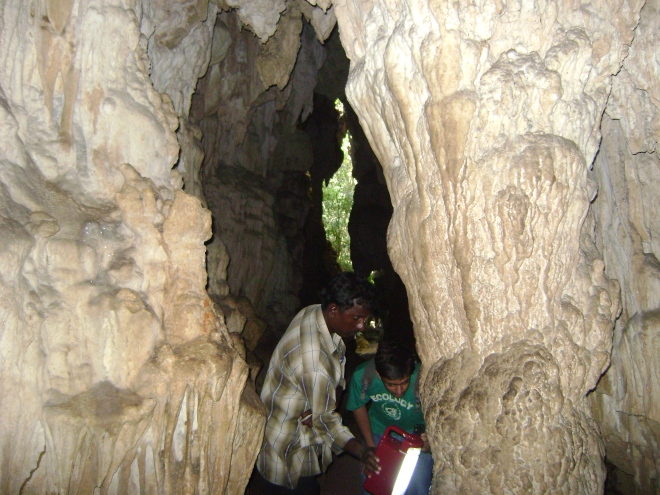 Crawling through the limestone caves.
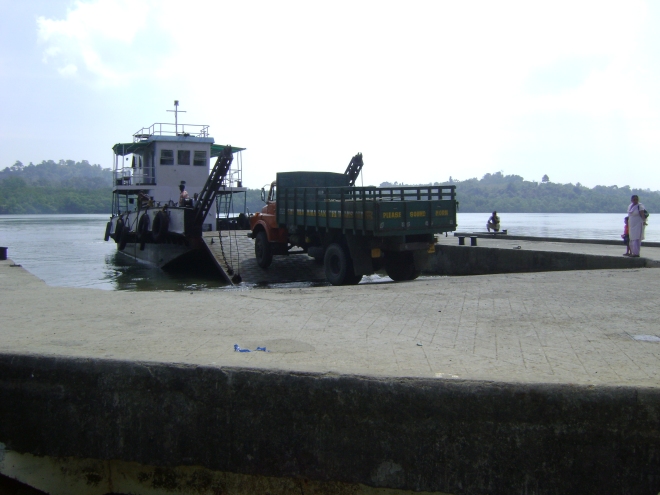 A truck inching its way on to a ferry
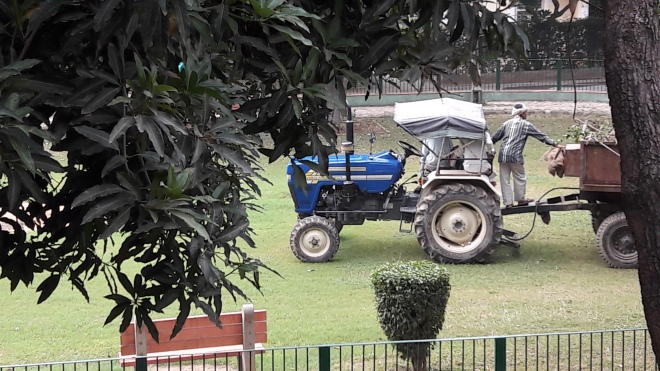 I just love this tractor which haunts our campus. There’s something about it – the shiny bright blue contrasting with the rusty trailer as it rumbles sedately lugging something or the other or as it waits patiently to be loaded…no? Don’t much care for it?
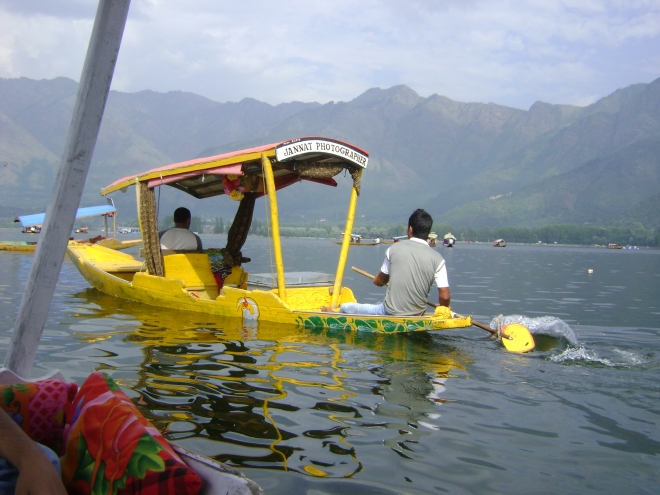 I am sure you would enjoy a leisurely shikara ride on the picturesque Dal lake, Srinagar. Hmm perhaps I have shared this photo before – time to fly 😉
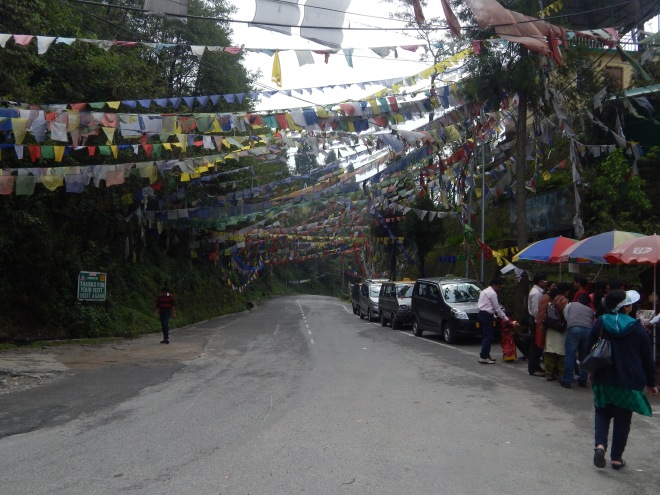 Flying banners decorate the road
 More colorful flags flying in the wind (and the green T-shirt guy’s hair too 😀
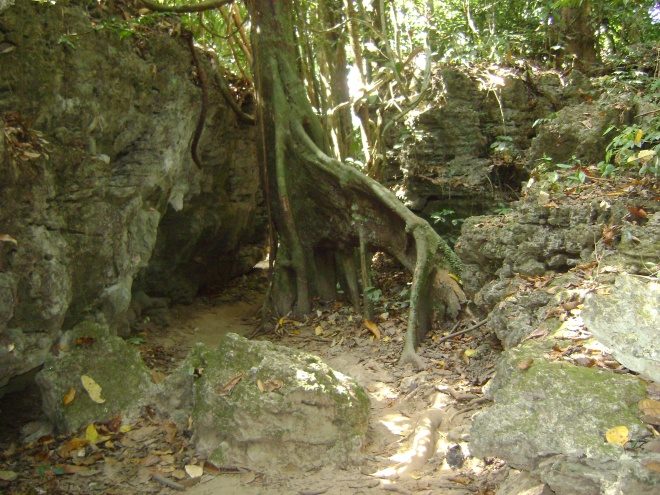 I saved this one for the last. Doesn’t the tree look as if she is going to leg it any moment?
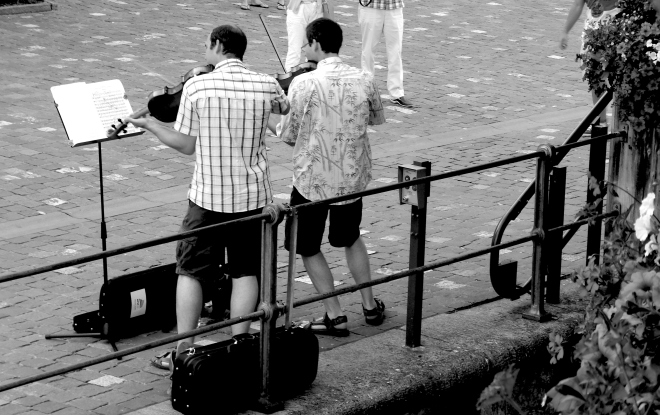 I wonder if these guys have mustaches?
 Inside a hotel suite in Kalimpong, West Bengal
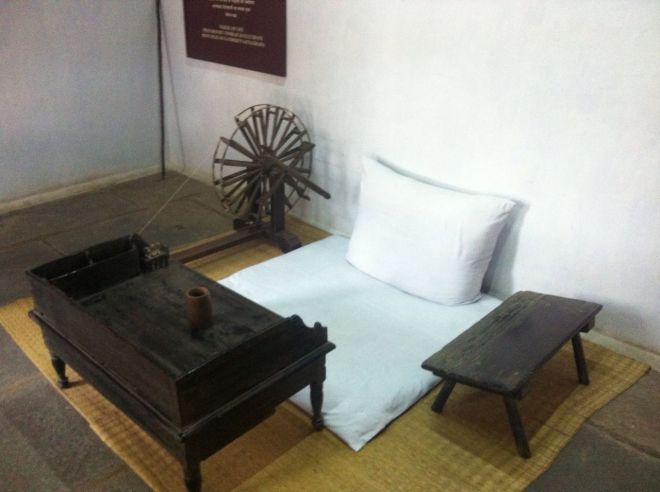 Inside Gandhiji’s room in Sabarmati Ashram, Ahmedabad.
 An insider’s view of the outside of the City Palace, Udaipur, Rajasthan India.
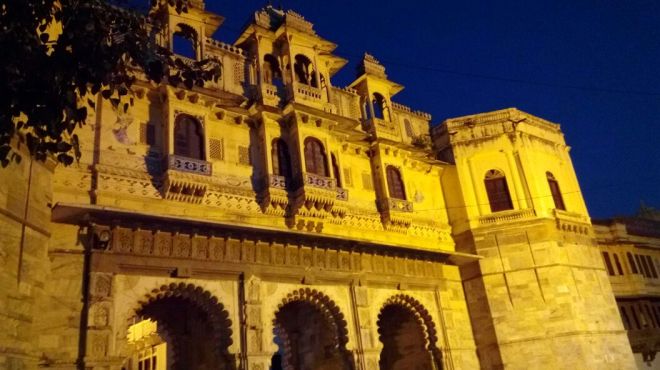 Or would you prefer an evening view?
 Inside view of a bangle shop in Punjab. Newly married girls wear the entire ‘cylinder’ of bangles (comprising of individual rings). If you like you can read more about the custom
  Caught up in the frenzy of Cee’s photo challenges, the termites obligingly nibbled away the outside of this tree to give us an inside view 😉

 Stories and more