Story Club #7: Perchance to Dream

Welcome to another round of the Story Club. As announced earlier, story for this month is “The Dream of a Ridiculous Man” by Fyodor Dostoevsky. If you haven’t read it yet, it’s not too late. Read it here and join the discussion.

Sandeep, who had suggested the story and was supposed to host it is unable to join us due to unforeseen circumstances. I will try to do my best to make up for his much felt absence but I must confess I feel quite out of my depth with Dostoevsky. Hopefully some of you will chime in and complete the picture.

First a few words about the much acclaimed Russian novelist, journalist and short story writer Fyodor Dostovevsky (1821- 1881). Although a military engineer by profession he resigned in 1844 so that he could focus on writing. He published his first novel Poor Folk soon after in 1846. This was followed by The Double.

Dostoevsky was a member of the Petrashevsky Circle who were socialist radical thinkers opposing tsarist autocracy and Russian serfdom. He and other members of this group were arrested and sentenced to death in 1849. Apparently they had all been taken to the square and were waiting to be shot when a messenger arrived with a reprieve. The death sentence was commuted to incarceration and he spent four years in Siberia and four years as a soldier in Semipalatinsk. His later works were influenced by his experiences in Siberia.

Although Dostoevsky was impoverished most of his life due to familial debts (worsened by his habit of gambling) he was lucky enough to be recognized as one of the greatest writers of his country during his lifetime.

Here are some of my favorite quotes:

Power is given only to those who dare to lower themselves and pick it up. Only one thing matters, one thing; to be able to dare!

But how could you live and have no story to tell?

To go wrong in one’s own way is better then to go right in someone else’s.

The cleverest of all, in my opinion, is the man who calls himself a fool at least once a month.

The best definition of man is: a being that goes on two legs and is ungrateful.

Man is a mystery: if you spend your entire life trying to puzzle it out, then do not say that you have wasted your time. I occupy myself with this mystery, because I want to be a man.

The best way to keep a prisoner from escaping is to make sure he never knows he is in prison.

Everybody wants to change the world but nobody thinks about changing himself.

Man is sometimes extraordinarily, passionately in love with suffering.

I say let the world go to hell, but I should always have my tea.

Awesome quotes aren’t they? Any favorites?

The Dream of a Ridiculous Man published in 1877 is a fascinating read. Written in the first person, the story is about a (ridiculous) man who has lost the will to live and is determined to take his own life. Yet a dream changes everything.

Presuming, that you have read this (longer than our usual) short story, I will touch upon just a couple of points that I found of particular interest.

The narrator who is disillusioned with the world cannot find the meaning or the point of his life. With an intention to end his meaningless existence, he buys a revolver yet he cannot gather the will or the gumption to take the final irrevocable step. Then, one day, he decides that tonight was the night.

Hurrying home to undertake the final step, he is accosted by a little girl, demanding, pleading for help but he spurns her. His life is going to end in a couple of hours – what did it matter? Yet he cannot quite shrug of the burden of guilt that nags him. He sits contemplating his actions “I stamped and shouted at the unhappy child as though to say–not only I feel no pity, but even if I behave inhumanly and contemptibly, I am free to, for in another two hours everything will be extinguished.”

For instance, a strange reflection suddenly occurred to me, that if I had lived before on the moon or on Mars and there had committed the most disgraceful and dishonourable action and had there been put to such shame and ignominy as one can only conceive and realise in dreams, in nightmares, and if, finding myself afterwards on earth, I were able to retain the memory of what I had done on the other planet and at the same time knew that I should never, under any circumstances, return there, then looking from the earth to the moon–should I care or not? Should I feel shame for that action or not?”

The above paragraph caught my attention for another reason – it is such a long sentence. Today, writers are exhorted to write short sentences – a sign of our (impatient) times? Or just that not everyone is Dostoevsky and long involved sentences are bound to confuse the reader? But then again, this a translated work – I wonder how it was written in the original.

Coming back to the story – the narrator is so overwhelmed by the questions that arise in his mind that he puts of dying (once again) so that he could find answers to his questions.

Decision taken, he seems to be relieved of guilt as he promptly falls asleep sitting in the armchair, something he has never done before. Perhaps out of sheer relief of having evaded death?

As the narrator falls asleep, he has a vivid detailed dream – and I just loved his description of a dream:

Dreams, as we all know, are very queer things: some parts are presented with appalling vividness, with details worked up with the elaborate finish of jewellery, while others one gallops through, as it were, without noticing them at all, as, for instance, through space and time. Dreams seem to be spurred on not by reason but by desire, not by the head but by the heart, and yet what complicated tricks my reason has played sometimes in dreams, what utterly incomprehensible things happen to it! My brother died five years ago, for instance. I sometimes dream of him; he takes part in my affairs, we are very much interested, and yet all through my dream I quite know and remember that my brother is dead and buried. How is it that I am not surprised that, though he is dead, he is here beside me and working with me? Why is it that my reason fully accepts it?”

Again some very long sentences but nevertheless compelling, don’t you think?

The dream itself is believed to refer to the original sin and the narrator a ridiculous man who has deteriorated to madness. It is believed that Dostoevsky had temporal epilepsy and had several hallucinatory dreams which forms the basis of his story.

But I somehow couldn’t quite accept that this is his ‘madness’ speaking. While reading the story, right from the start I couldn’t help but find parallels with the story of Lord Buddha – not the bit about wanting to end his life of course. But his mental state of the utter meaninglessness of life, seeing no point of it all, introspection via his dream, a churning of his mind of all the knowledge and information he has within his subconscious mind followed by enlightment and clarity of thought culminating in a deep love for his fellow companions and an overwhelming desire to save them and show them the path to eternal bliss.

What do you think? No, I wasn’t talking about the long sentence! Jokes apart, I do feel as if I haven’t managed to do justice to this Story Club. But I still have hope. Perhaps, one of you could chime in!

Thanks for reading. If anyone wishes to join the Story Club (including this one) most welcome. Just post a review and link back to this post. Or you could host the next month’s Story Club.

Rules are simple:

  1. Advance announcement of name of short story, one that is freely available on the net.
  1. Story maybe a folktale or in the local language. But an English translation should be freely available on the net. Or participant could post the translated version along with his or her review.
  1. Bloggers should post on their blog while non-bloggers may email me – mysilverstreaks@gmail.com
  1. The basic idea is to gain from each others rich heritage of literature and be able to understand a little bit more than before.
  1. And of course have fun!

Moo Point

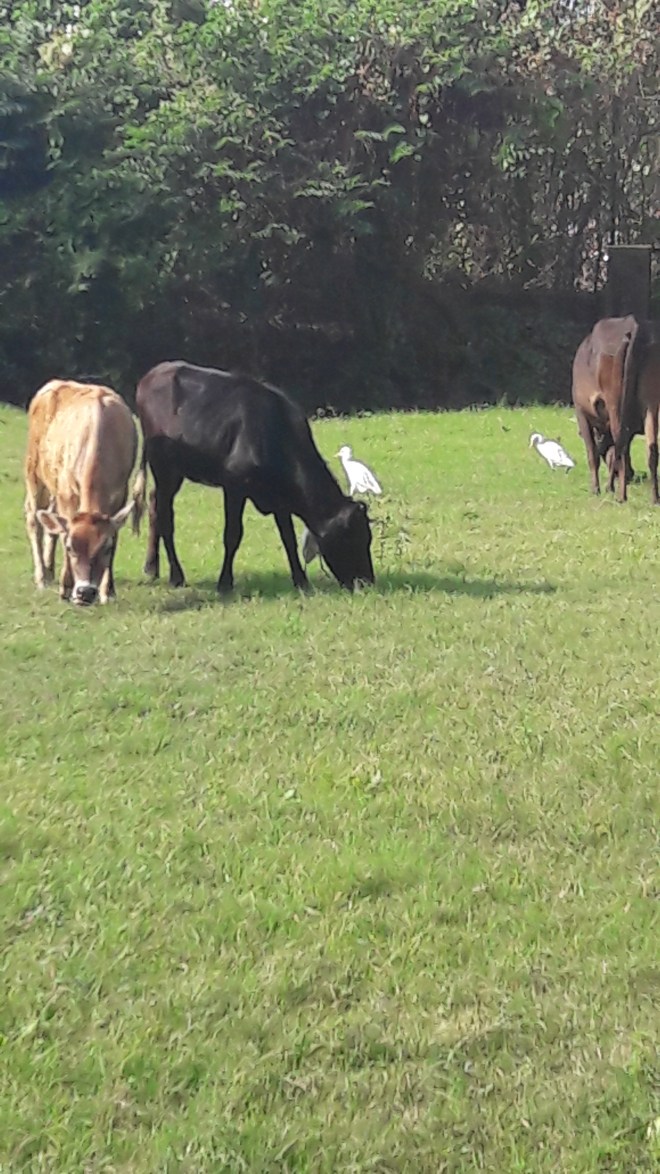
One sunny winter morning, we set to explore the Kolkata suburbs. Err well actually, the boys were on the lookout for a suitable place to reconnect minus the usual noise of their own ‘inhibitory’ pathways. And I, being blessed with no such inhibitions, tagged along for some possible photo ops. And voila there unfolded right before my phone camera a live drama.

brunchThe ladies were out for a bit of a munch at brunch
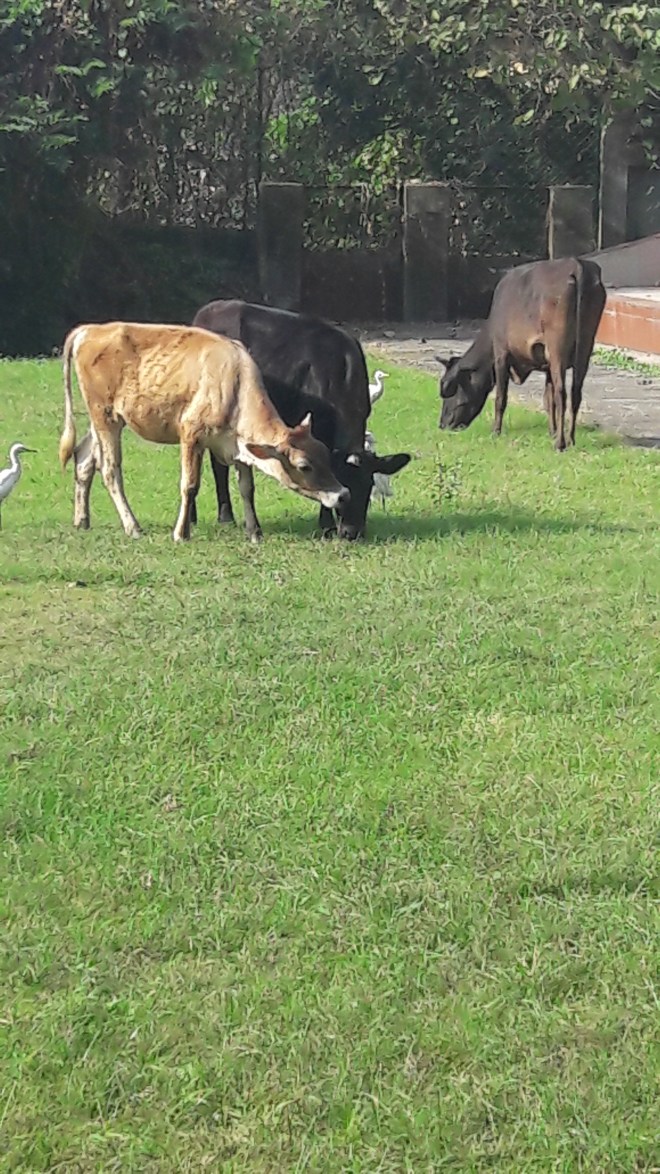
gossipPerhaps share a few confidences away from the old hag and other potential eavesdroppers.
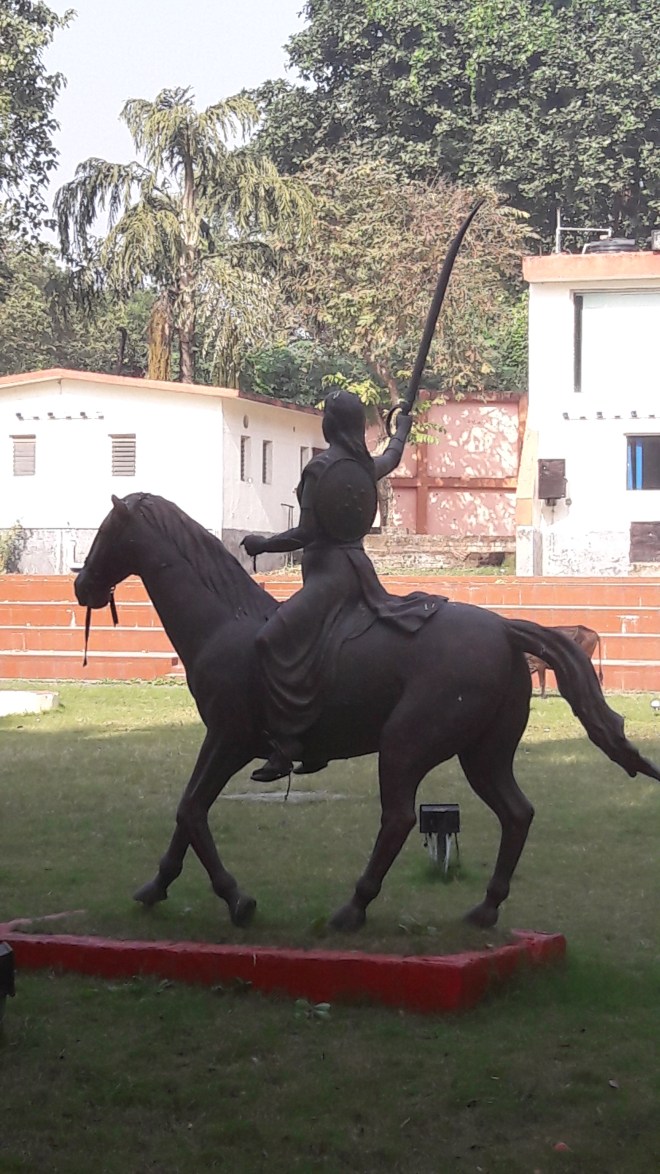
dangerOh but wait – what was that? Danger!!!

retreatTime for a graceful and disdainful retreat – the leading lady led the way, while a tardy youngster grabbed a mouthful for the road.
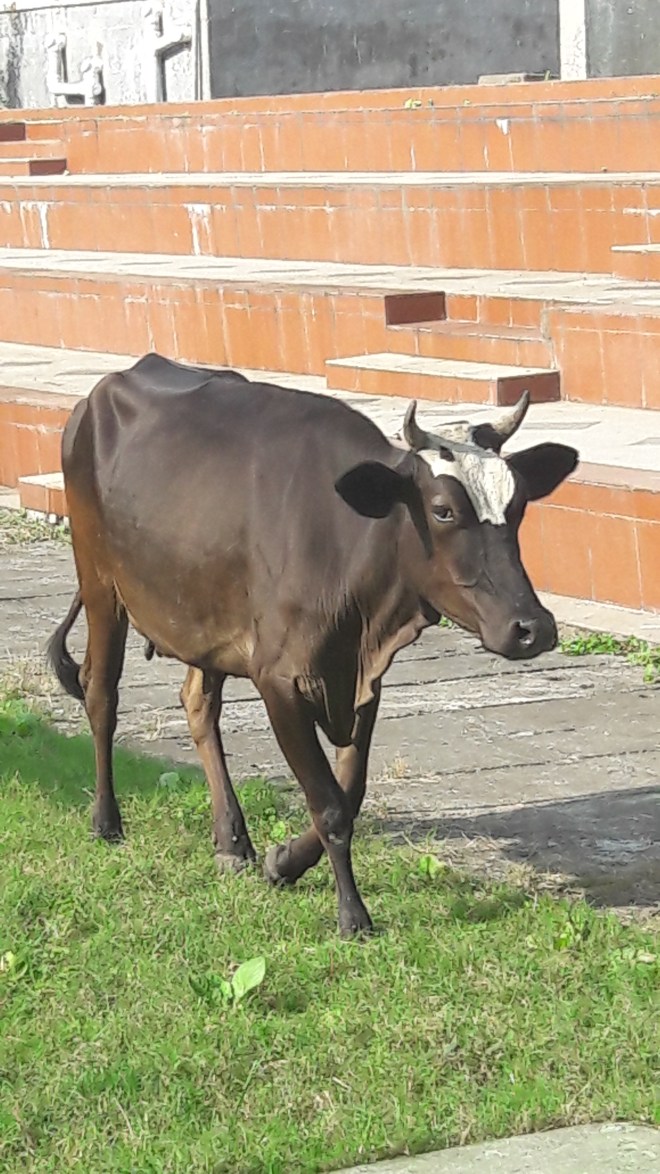
retreat2Feeling brave, I ventured closer. She gave me a beady glare – No interviews or autographs please. I have other urgent business to attend to – she trotted off on the double.
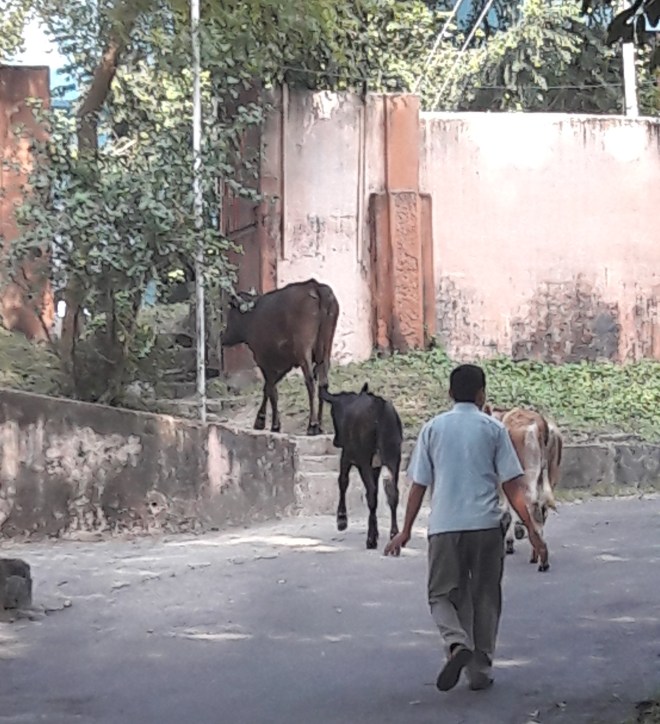
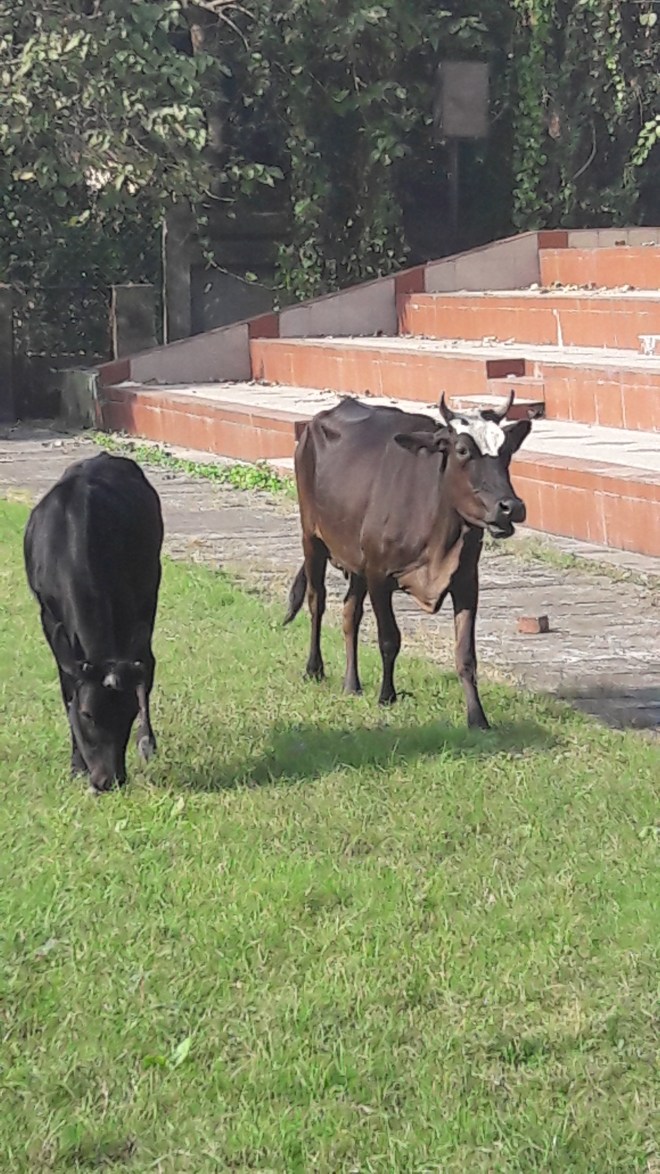
escapeShe has her escape route mapped out and makes a beeline for it. The steps are just something else she has learned to negotiate for a bit of fresh greens.
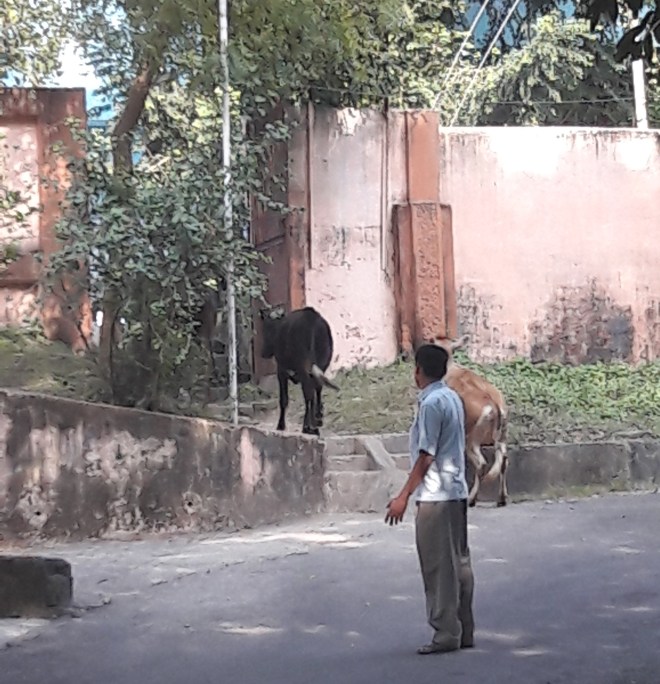
gateKnowing the ways of the mischievous youngsters, the caretaker waits for them to actually leave the premises, lest they make a U-turn.
Apparently, every morning the hungry visitors arrived at the hotel lawns via a circuitous route to mooch around until heckled off the field. The caretaker also shared that the side gate is deliberately left open to enable the free lawnmowers to make a quick gateway 😀

Written for the Daily Post’s Weekly Discover Challenge – Transcript.

Thanks for visiting – do let me know you were her so that I may return the courtesy. 🙂

For readers of Moonshine, here's Chapter 115 and Calvin and Hobbes

SPF: Masked

190-01-january-15th-20171

Masked

Words 201

“Isn’t she tall?” Lakhishree nudged her granddaughter at the airport.

Towering over the crowd, she was a kaleidoscope of colors. Blue jeans, red shoes and a multicolored woolen cap complete with a green pompom jammed over her shoulder length dark blonde hair. Any color missing from the ensemble was taken care of in the muffler draped around her neck. At the counter she fiddled with her unruly hair. Armed with the boarding pass, she turned.

Gia giggled. “She’s a he!”

Obviously a foreigner, he sported a day’s stubble and a toothbrush mustache.

Lakhishree sniffed.

They ran into him again at the coffee shop.

“He’s cute.” Gia said.

“Shush! He’ll hear you.” Lakhishree looked at him critically. “Looks like an out and out junkie.” She spoke in Bengali. “Stay away from him.”

“What!” Gia was flabbergasted. “I was just looking.”

“Well don’t. Who knows…?”

“Relax Granny!”

“Come, let’s go.” Lakhishree hustled Gia.

“Excuse me Madam,” it was the cute junkie, “you dropped your boarding card.”

Mumbling ‘thanks,’ Lakhishree snatched it.

Gia smiled at him.

“Hello.” He smiled back. “I have to confess,” He coughed, “I am a coffee addict.”

With a wink, he loped off.

His Bengali was only slightly accented.

 ***

Written for the Sunday Photo Fiction, a story in 200 words or less, hosted by Alistair Forbes. To read the other stories inspired by this prompt click here

Thanks for reading – any comments?

CB&W: Hampi

Cee’s black and white challenge for this week is Sculptures, Statues and Carvings. I bring two photos, a bit of history and one of (innumerable) favorite mythological stories.

Both, the sculpture and the carving is from the ruined sprawling town of Hampi, a UNESCO World Heritage site at Karnataka, India. It was one of the richest and largest cities in the world during its prime and part of Vijayanagar, the capital of the Vijayanagar Empire.

narasingh2

The Lakshmi Narasimha statue, built in 1528 A.D. is crafted from a single boulder of granite. The statue, which is 6.7 meters tall, is also referred as Ugra Narasimha (or Narasimha in its terrifying form).

Narasimha, as can be seen from the sculpture is half human (nara) and half lion (simha). He has the face and claws of a lion, and torso and lower body of a human.

The sculpture depicts Narasimha sitting on the coils of Adishesha, the king of all snakes, which rises behind him with its seven hoods. The original sculpture had the figure of his consort, Goddess Lakshmi, sitting on his lap. If you look closely, the broken arm of the Goddess can be seen encircling Narasimha’s waist on the right side. The gigantic statue was vandalized and mutilated in 1565 A.D. during the raid by the Mughals. The limbs of the statue were broken and figure of Lakshmi was separated.  The horizontal band around the knees was added later to give support to the sculpture.

narasingh1

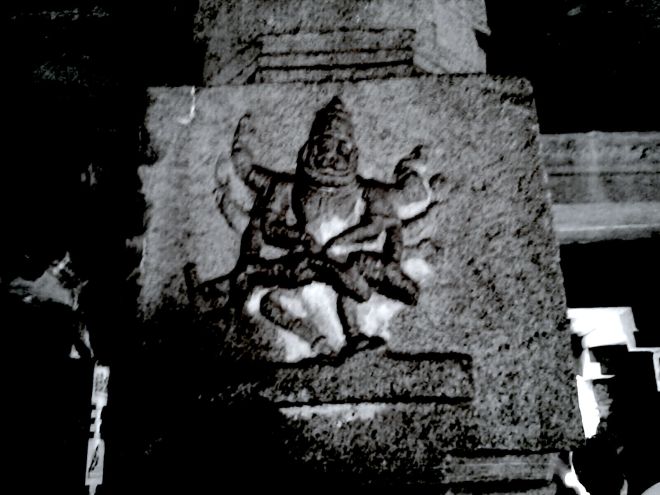
This is another depiction of Narasimha on the wall of a temple at Hampi.There is a fascinating story behind this portrayal – of Narasimha disemboweling a person on his thighs.

But first a quick background.

Lord Vishnu, the Preserver of this world is said to have taken the form of man and descended to earth many a time to destroy evil and restore cosmic order. Rama, Krishna and Buddha are the seventh, eighth and ninth avatars of Vishnu. The tenth and final avatar – Kalki avatar has been foretold to appear at the end of this epoch, riding a white horse, carrying a sword, blazing like a comet. But that is in the future, when the world will end. And begin anew.

Coming to the story of Narasimha, in his third avatar as Varaha (boar), Lord Vishnu killed the demon Hiranayaksha. Wishing to avenge the death of his younger brother, Hiranyakashipu, undertook ages of austere penance to obtain the boon of immortality. But Brahma refused this boon as death is inevitable for whoever is born. Brahma urged Hiranyakashipu to ask for any other boon.

Determined to obtain immortality, Hiranyakashipu tries to trick Brahma into granting him immortality. He laid down certain conditions for his death – he should not die within a house or outside, during the day or during the night, not on the ground nor in the sky. He should not be killed by any weapon, nor by any human or animal, or any entity living or nonliving created by Brahma. He should be invincible to any demigod, demon or any snake. He also demanded sole lordship over all living entities, presiding deities and mystic powers.

Brahma granted him his heart’s desire and vanished.

Thus armed, Hiranyakashipu wrecked havoc in the three worlds and because of his boon, was invincible and unstoppable. By a twist of fate and to his fury, Hiranyakashipu’s son Prahlada was a devotee of Lord Vishnu. Hiranyakashipu’s hatred of the Vishnu ran so deep that he decided to kill his own son. But each time his attempts were foiled by Vishnu’s mystical powers. Hiranyakashipu attempted to browbeat his son into acknowledging his father as the supreme lord of the universe but Prahlada refused saying that Vishnu was the one who was all pervading and omnipresent.

Hiranyakashipu laughed and pointed to a pillar in his palace, “Does He reside here too?”

Prahlada said, “He does.”

Unable to control his wrath, Hiranyakashipu smashed the pillar with his mace in the twilight hour (which is neither day nor night). Narasimha, the fourth avatar of Lord Vishnu, emerged from the pillar. He was neither beast nor human. He dragged Hiranyakashipu to the threshold of the courtyard, (neither indoors nor outdoors). Narasimha put Hiranyakashipu on his thighs (neither the earth nor space) and using his fingernails (neither animate or inanimate) he disemboweled the demon and relieved mankind from Hiranyakashipu’s reign of terror and torture.

Thanks for visiting – hoping that you will leave me a note too 🙂

For readers of Moonshine, here's Chapter 114 and Calvin and Hobbes


WPC: Of Eras Gone By

The theme for the Daily Post’s Weekly Photo Challenge is of photographs with exceptional ambience. I take this as an opportunity to share pictures of a few places with unique atmosphere and character.

indus
Photo (c) Punit Kaur

Dholavira, an archeological site at Kutch district in Gujarat, India, contains the ruins of the Indus Valley Civilization or the Harappan city. This was the Bronze Age civilization (3300-1300 BCE; mature period 2600-1600 BCE) extending from what is today northeast Afghanistan to Pakistan and northwest India. It was one of the three old world civilizations (along with ancient Egypt and Mesopotamia) and also the most widespread. During history lessons at school, I remember getting goose bumps thinking about their unimaginable skills and expertise in a time, which existed before the Vedic period.

Inhabitants of the ancient Indus river valley developed new techniques in handicraft and metallurgy (copper, bronze, lead, and tin). The Indus cities are especially renowned for their urban planning, baked brick houses, elaborate drainage systems, water supply systems, and clusters of large non-residential buildings.

stepwell
Photo (c) Amit Ghosal

Rudabai Stepwell, built in 1499 AD at Adalaj, Gujarat, India by Mahmud Begada for his queen Rudabai. The step well nicely depicts fusion of Indian and Islamic architecture. The step well or ‘Vav’, as it is locally known, is intricately carved and is five stories deep.

stepwell2
Photo (c) Amit Ghosal

Such step wells not only provided water for drinking, washing and bathing but were also venues for colorful festivals and sacred rituals. Listen – can you not hear the echoes of laughter, rush of feet with tinkling anklets and bangles amidst a rustling swirl of colors on the backdrop of love, lust, oppression, greed and intrigues? Or am I being fanciful?


haunted
Photo (c) Papia Chatterjee

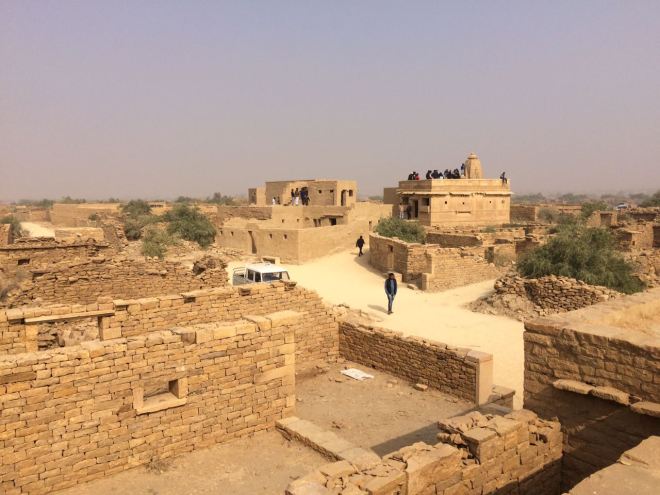
For a spooky ambience, visit the abandoned and haunted village of Kuldhara, Rajasthan, India. Kuldhara was established around the 13th century and was home to the Paliwal Brahmins till about 200 years ago. Legend has it that the unscrupulous and rogue Diwan of Jaisalmer, Salim Singh fell for the beautiful daughter of the village chief. Determined to have her, he threatened to levy huge taxes upon them unless they toed his line.

Equally determined not to yield, one night, all the residents of the village fled, leaving behind their homes and everything within them. There is no information about the whereabouts of the Paliwals. Before leaving, the Paliwals cursed the village which is why, till date, it remains uninhabited by mortal beings. Instead ghosts roam the deserted streets. I believe night stay facility is available for those who wish to experience moving shadows, haunting spirits and other paranormal activities. Game anyone?

 A big thank you to my friend and family for sharing the pictures 🙂 Thanks to you too for dropping by – where would you like to go first?

Psst I think the curse of Kuldhara is affecting my post as well – I had to redo the whole thing again 😦 Fingers crossed

CFFC: Old and New

This week, Cee’s Fun Foto Challenge is all about capturing Old and New. No doubt a very interesting topic but one I was quite resigned to giving it a miss. But then hunting through my archives I managed to scrounge a few photos which I hope will fulfill the requirements of the challenge. With a little bit of license 😉

house

An old abandoned house and a brand new car. Don’t miss the innovative blue and red unnamed indigenous vehicle. But actually what I wanted to capture were two houses – new and old alongside each other but I couldn’t manage it in the same frame.

house2

You don’t have to take my word that the above two houses were alongside each other – the nose of the car in the right corner should be proof enough 😀

houses
A street view in Kolkata

While on the road, I finally managed to capture both an old and new building in the same frame.

cycle

Where’s the new you ask? Focus m’dear focus 😉

cycle2

A brand new padlock 😀

leavesjpg

And finally before I take your leave –  have a look at these leaves, some lush and fresh while others are a crunchy brown.

Thanks for visiting – do let me know which you like best.

Waiting for Spring

jaipur

For Becca’s Sunday Trees -270

Oh I almost forgot, it’s time for this month’s Story Club. Sandeep, who writes amazing poems, has very kindly agreed to host it. His choice of story is The Dream of a Ridiculous Man by Fyodor Doestoevsky. Please do read it and join the discussion, which is to be held soon. Perhaps you could also post your own review and link it here so that we can hop over for a read? Thanks!

An Inconvenient Death

ceayr3
Photo Prompt (c) C.E.Ayr

An Inconvenient Death

 Words 100

 “Where’s my breakfast?”

“Coming!”

A crash.

A wail.

“Forget it.” Bhushan grabbed an apple.

Dangling a toddler, she thrust his lunch box. “Best of luck!”

Dashing out, Bhushan hailed an auto. He wanted to catch the earlier train.

He couldn’t afford to be late, not today.

Pushing and shoving through the broiling jostling crowd, Bhushan boarded the Mumbai local.

He wiped the sweat off his brow and loosened the tie.

Did everyone have appraisal today?

The train lurched to a halt.

Babel broke out.

“What the hell?”

“Guy jumped in front of train.”

“Is this any time to commit suicide?”

***

Note: Based on a true incident narrated by a friend.

Written for the Friday Fictioneers – a story in 100 words or less. Thanks to Rochelle for hosting the challenge and CE Ayr for the photo prompt. To read the other stories inspired by this prompt click here.

Thanks for reading – look forward to your comments and critiques

For readers of Moonshine, here's Chapter 113 and Calvin and Hobbes

WPS: Buried Alive

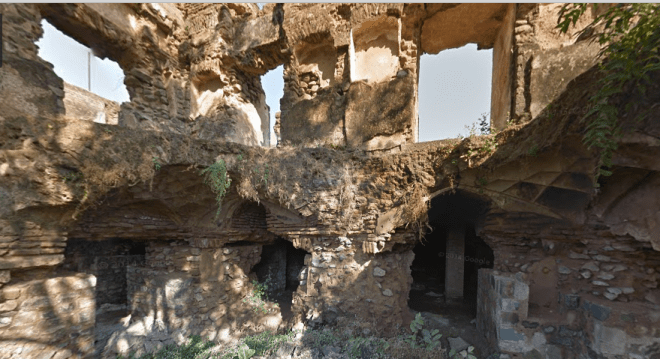
This is my entry to the flash fiction challenge What Pegman Saw inspired by any view of a given location on Google maps. The challenge is to write a story in 150 words or less.This week’s location is of Burhanpur, India. To read the other stories inspired by this prompt click here

shahi-qila

To view image on Google maps, click here

Buried Alive

Words 149

 “Sister?” He whispered. “Sister, it’s me.”

A tinkle and a rustle.

A frail woman emerged from the shadows.

“Did you get any food?” She looked at him hungry eyed.

“A little.” He dug out a bundle from his robes. She fell upon it with eager hands and mouth.

“What news Brother?”

“It is done. The Begum is buried.”

“And the Emperor?”

“Grief stricken.”

“It wasn’t my fault Brother. It was her fourteenth child.”

“If only you had not run away.”

“I panicked Brother. The Emperor’s favorite begum died in my arms. He would have had me buried alive.”

“You should have taken a chance with the Emperor.”

“What do you mean?” She stilled at the bleak look in his eyes.

“We have orders to proceed to Agra.”

“For what?”

“To build a mausoleum for the begum.”

“What about me?”

“You should have taken a chance with the Emperor.”

***

Note: The above is a fictitious account based on the following historical information:- The Mughal Emperor Shah Jahan is believed to have spent a lot of time at the Shahi Qila with his favorite Begum Mumtaz Mahal. She died here giving birth to their 14th child. Mumtaz Mahal was buried here until the Taj Mahal was constructed at Agra. Shah Jahan wanted the Taj Mahal to be built in Burhanpur but had to give up the idea because of lack of availability of white marble in this region.

Thank you for reading – comments and critiques welcome.

SPF: A Toy Story

189-01-january-8th-2017

A Toy Story

Words 199

“I want Dolly.” Lily whined.

“She’s mine.”

“But you don’t like dolls!”

“Rubbish.”

“You don’t.”

“I do.”

“You don’t. Mama!”

“Shut up! You’ll get us into trouble.”

Mama!”

“What?”

“Mama, look Di isn’t giving me my doll.”

“She’s not yours Lily. She’s mine.”

“Mama, Di doesn’t even like dolls.”

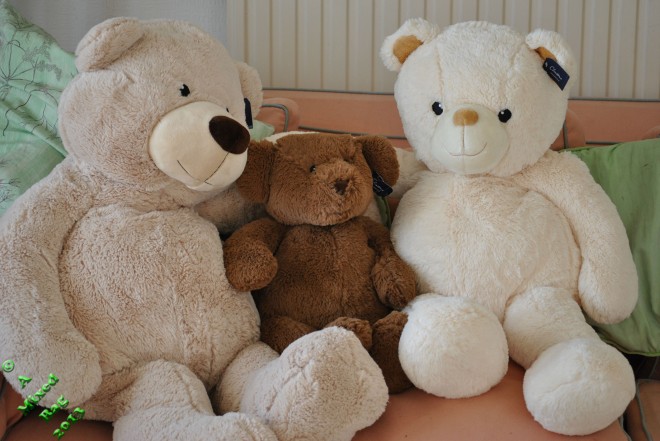
“But Aunt gave Dolly to me and Lily the three bears.”

“I want Dolly.” Lily howled.

“Fine!” Mama gathered up the bears and put them away. “I will gift them to someone else. Share the doll.” She ordered before sweeping away.

“Mine!” Lily grabbed Dolly’s arm.

“Mine!” Di tugged with all her might.

Di stared at the armless doll. “Look what you did!”

“You did it!” Lily threw the arm at Di. It flew out of the window.

“Murderer!” Di shrieked. She dumped Dolly and went for Lily.

The doctor set Lily’s dislocated shoulder.

But Lily was inconsolable. “I am not a murderer Mama,” she sobbed and sobbed.

Di was downcast. She held out Dolly. “You can have her.” She had fashioned a new (albeit floppy) arm with a red sock filled with cotton wool.


Lily brushed the dust off the photo of the three of them. “Miss you Di.”

***

Written for the Sunday Photo Fiction – a story in 200 words or less. Thanks to Alistair Forbes for hosting it.To read the other stories inspired by this prompt click here

Thanks for reading -and leaving me a note 😀

For readers of Moonshine, here's Chapter 112 (posted yesterday!) and Calvin and Hobbes