
It’s a Match
Words 202
Devansh edged towards the balcony. He needed some fresh air. Mom was going to be disappointed – again. Now she would insist that he go to India to find his soul mate.
As if they grew on trees over there.
“…fossilized dreams and aspirations…”
“That’s it! It’s off.”
“Are you crazy? To break off our wedding for such a flimsy…”
“This is a flimsy reason? Do you have any clue, any notion of my emotions, my sentiments? I see no future for us.”
“You’re impossible. I am leaving.”
“You’re still here?”
Rohit brushed past Devansh and vanished.
Devansh hesitated.
Unable to help himself, he picked up a drink and stepped out into the balcony.
“Here, have a drink.”
Mishti glared at him. “Trying to drug me?”
Devansh rolled his eyes. He downed half the glass and held it out to her.
“What happened?” Devansh leaned against the railing.
“That moron…”
“What did he do?”
“He didn’t like my plans for our honeymoon.”
“What plans?”
“A dinosaur expedition. I have been dreaming of it for years. But now all my plans, my money, tickets…”
Devansh’ eyes gleamed. “Maybe we could do it?”
“What? The wedding?”
Devansh coughed. “We could explore that after the expedition.”
***
Written for the Sunday Photo Fiction – a story in 200 words or less. Thanks to Alistair Forbes for hosting and the photo prompt. To read the other stories inspired by this prompt click here.
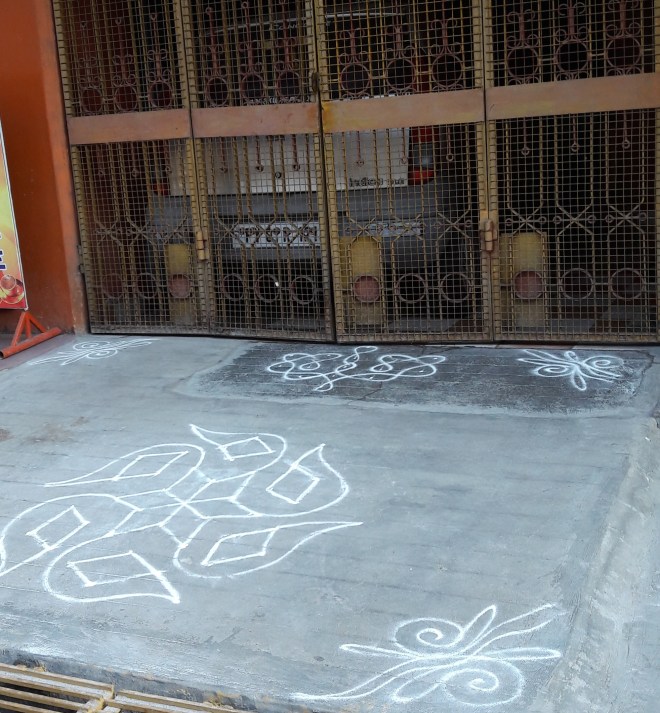
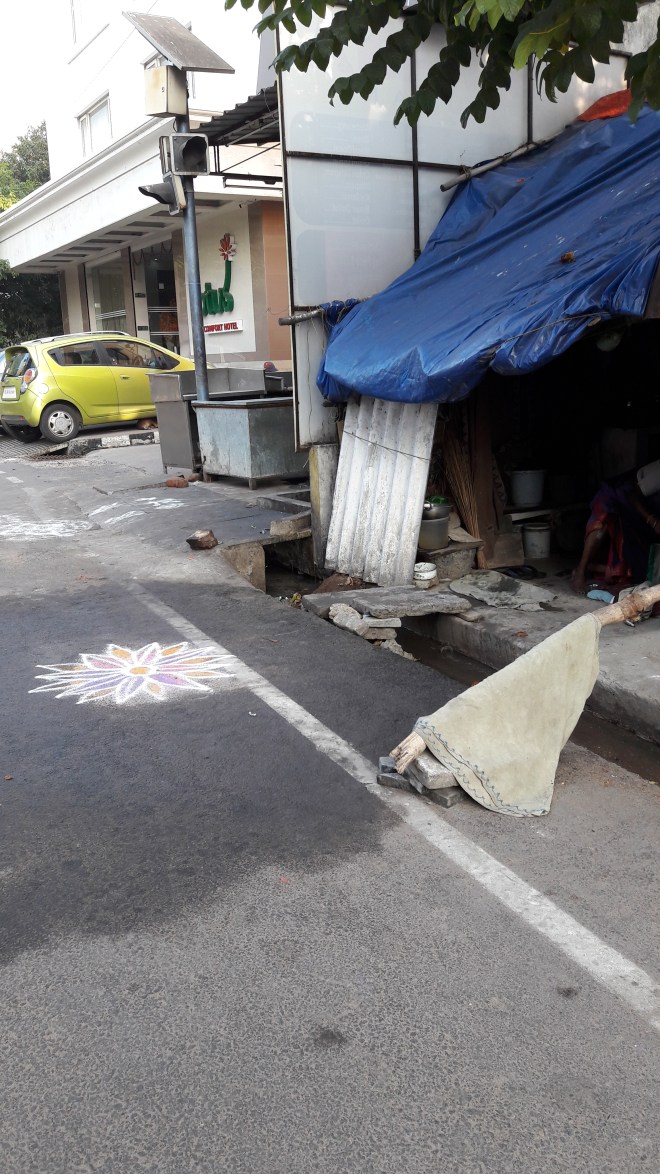 Kolams are not only decorative but are also believed to bring prosperity.
 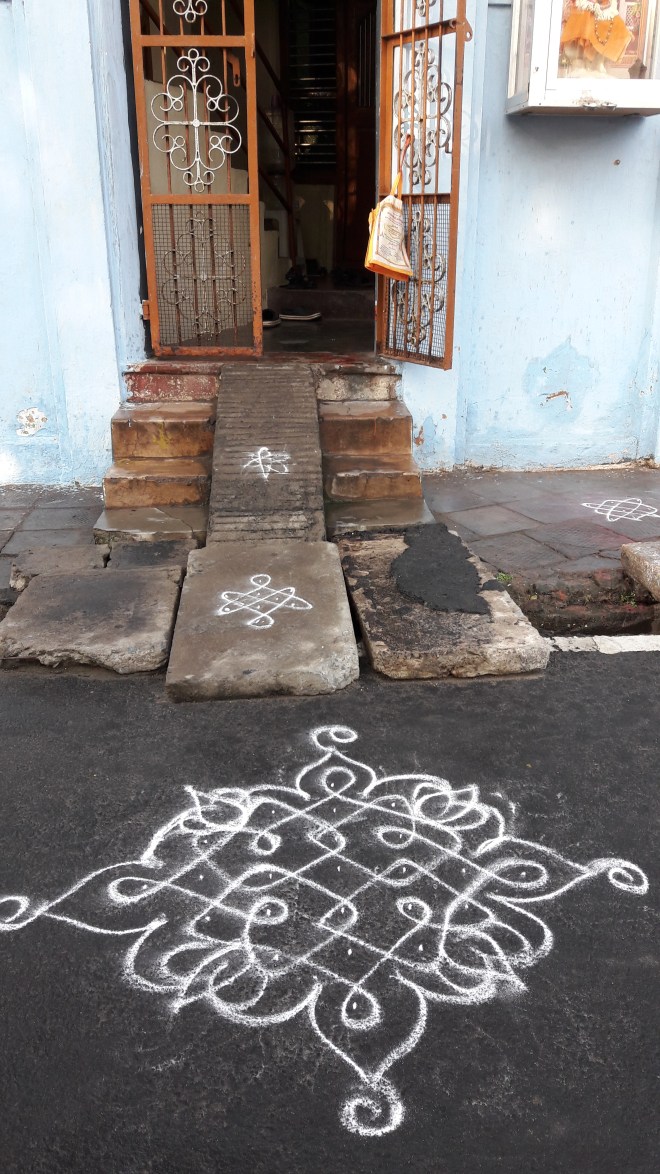 Every morning, women of the house clean their homes, courtyard, road and draw patterns with rice flour. The kolams are generally drawn while the surface is still damp so the design will hold better. As a child I remember watching Aunty as she drew bigger and bigger patterns without moving from her crouched position on the floor with just a flick of her wrist holding the rice powder between her thumb and forefinger. It was like magic.
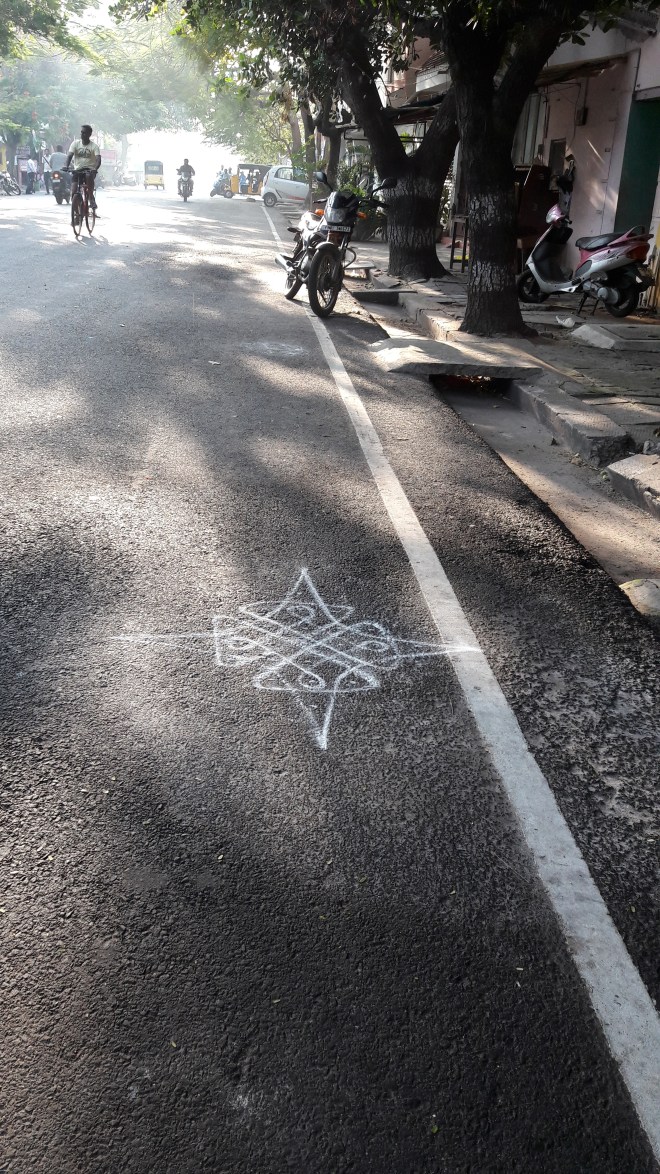 Walking back from the beach after witnessing a breathtaking sunrise, I was taken aback to see kolams on the road. The streets were deserted now but soon they would be bustling with activity. The patterns were sure to be trampled upon – why would anyone deliberately let their work of art be destroyed?
 Stories and more