Hello and welcome to another edition of Friday Fictioneers with Rochelle leading the way, this time with a photo from David Stewart for a story in 100 words. If you want to join in, click here. Thank you Rochelle and David.
FF: The Stuff of Dreams
Words 100
A cheer broke out from the crowd as Parul arrived. She had just won the gold in the 5000m after yesterday’s silver in steeplechase.
“Quite a journey from running in sugarcane fields, training with boys, overcoming societal pressures to the top of the victory stand. Congratulations!”
Still out of breath, Parul smiled. “Thank you.”
“What a thrilling finish! Throughout you were trailing and whoosh – in the last 20 m you overtook the lead. How did that happen?”
“It’s been my dream to join the police. It popped into my head that a DSP post is guaranteed for gold medallists.”
***
Inspired by a true story of Parul Chaudhary, the first Indian woman to win gold at the 5000m race, Asian Games 2023. Click to watch her thrilling win!
It’s time for Colleens #TankaTuesday the weekly challenge (October 22 – November 6). The rules are to to write in any of the 24 syllabic forms of Japanese poetry using a kigo or season word as an inspiration. While there are 24 seasons in Japan, we are allowed to use season words as per our region.
Here’s my tanka for the challenge:
hazy morning
jogging before
Diwali
deciding to wear
a sari
Although Diwali could be the kigo word but since this year it is on 12th of November I thought perhaps it may be too early to use it. Yet it may be noted, everything is geared around Diwali now, particularly shopping. But anyway I have used ‘hazy morning’ as the kigo word as this time of the year is notorious for pollution haze, particularly in Delhi region due to a variety of factors which apparently are beyond correction. I am presuming that most, if not all, will be familiar with Diwali the festival of lights when Lord Rama returned home after spending 14 years in the wilderness and defeating the evil King Ravan. A sari is the traditional unstitched garment that is 6 yards (5.5 meters) long. I am hoping the advantages of opting for such an apparel would be self-evident 😉
Hello hope this week has been treating you well. It’s time for Eugi’s Moonwashed Weekly Prompt challenge. The prompt is Either Or. It can be any variation of the prompt or the image (below).
Once Upon a Time
A world of trees Green, brown and orange Reaching up to wave at blue Skies smudged with white Tall grasses twinkle With drops of dew Shielding centipedes, mites, Leeches, frogs to name a few
Already dark and time for The football match Up on the roof The rats and squirrels Having a field day While in the kitchen Mom plays hockey with a rat or is it a shrew?
Dad practiced duelling snakes while Mom had her dessert under the Watchful eye of a King cobra Bees and wasps swirled bestowing the gift of a plump arm or a misshapen face just like rashes from insects and cacti
Exams denounced Packed off to picnics Streams swirled around our legs All through the night Those dratted parrots pecked at mangoes and summer vacations with afternoon shifts to shoo parrots
Swinging high and higher Climbing guava trees taking home Red bites that turned yellow and black Bleeding gashes wrapped in Crushed marigold leaves For a stye in the eye Seven strokes of mango leaf stem Did the trick
The nearest town of one shop A couple of miles away Never did we ever cross a street Nor venture to shop or crave to eat No TV, no phone no internet All I missed were books Other than those I had Read a gazillion times
Would I go back? Why when the path is ahead Cocooned in the warm clasp of Unfearful memories Bouncing through Life’s myriad adventures Much like the fools that rush in But that is another story…
The photo reminded me of my childhood home (except it wasnt that orange!) and couldn’t help penning a few lines – not quite sure if you can call it a poem. But if you managed to come this far thank you for sticking it out till the end of what is quite a faithful account of my idyllic childhood.
PS: I was unable to format the poem into paragraphs and hence I took the help of colors. Apologies if it is looking weird.
PPS: It was looking even more weird with the alternating colors so used this format (Pullquote). At least the paragraphs are clearly demarcated. Do let me know if you have any suggestions for formats to use. Thank you.
Hello I am back after a week of prayers, celebrations, socializing and gorging 😀 And it’s already time for Colleen’s #TankaTuesday challenge where the rules are to to write in any of the 24 syllabic forms of Japanese poetry using a kigo or season word as an inspiration. While there are 24 seasons in Japan, we are allowed to use season words as per our region.
She leaves
a quietude behind
Vijayadashami
praying for the guns
to fall silent
I have used ‘Vijayadashami’ (literally victory tenth day) as the kigo word here. Vijayadashami (which was on 24th October this year) is celebrated after Navratri and is the 10th day that marks the end of Durga Puja and the celebration of Her victory over Mahishasura (the buffalo demon) and the triumph of good over evil. After the celebrations, there is a hush and lull in the neighborhood.
Vijayadashami is also celebrated as Dussehra, the day when Lord Rama defeated the evil king Raavan, whose effigies are burnt to symbolize the burning of the evils within us as well as the triumph of good over evil.
Thank you for reading, would love to know your comments and suggestion. Have a great weekend.
Hello everyone! After a hectic and enjoyable Durga Puja I am excited to participate in Cee’s Midweek Madness Challenge (CMMC), the topic is October Alphabet with “P” anywhere in the word.
Let me see what I can find 🙂
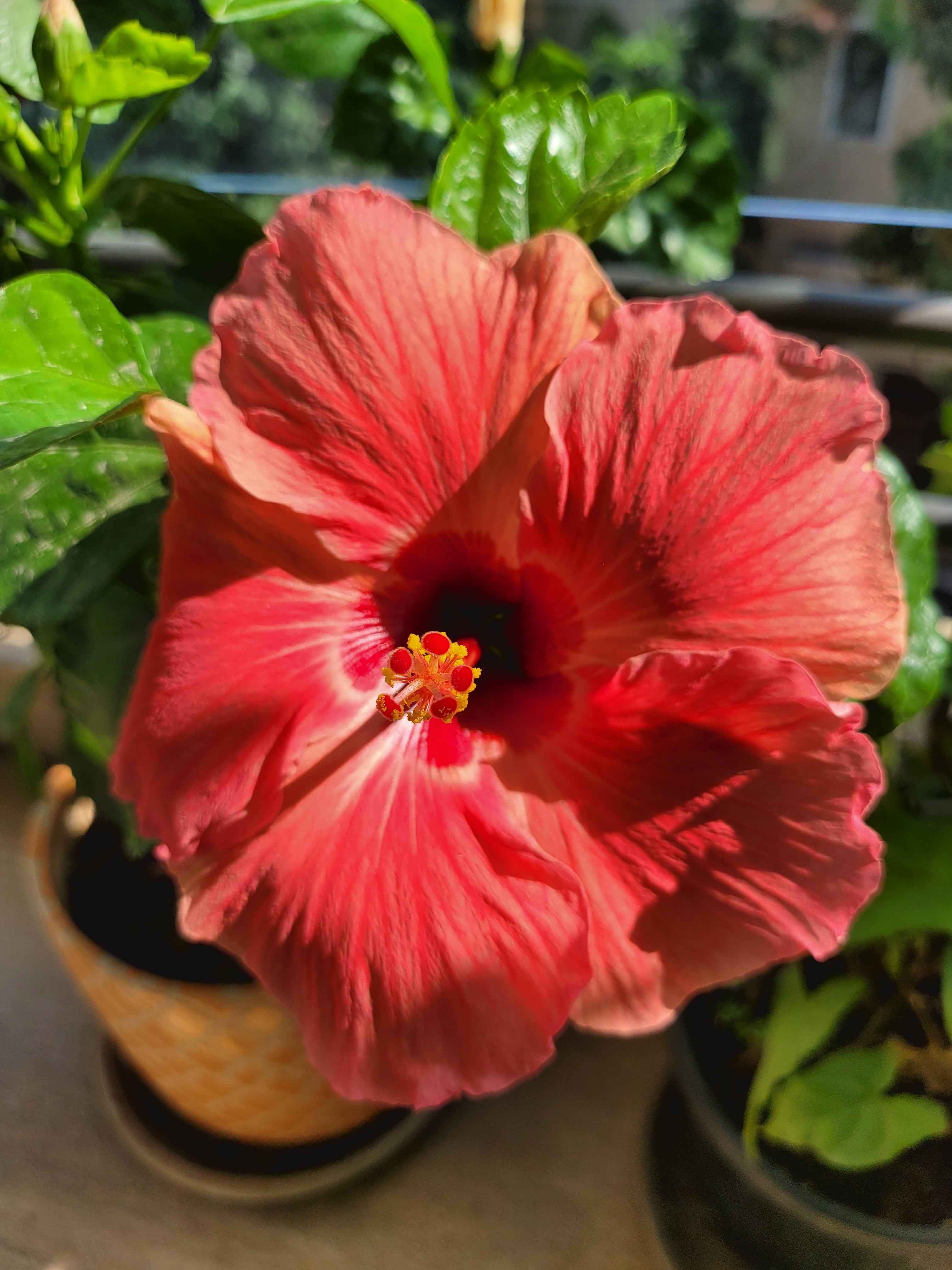
Hibiscus in a flower Pot. Isn’t she gorgeous? The festival honoring and celebrating Goddess Durga known as Durga Puja just got over on Tuesday and of course that is the theme for my post this week but I couldnt resist sharing this beauty which a favorite of Goddess Kali (another form of Goddess Durga) as well. I have discussed about Durga Puja in a couple of my earlier posts but in case you missed it and want to know more, click here
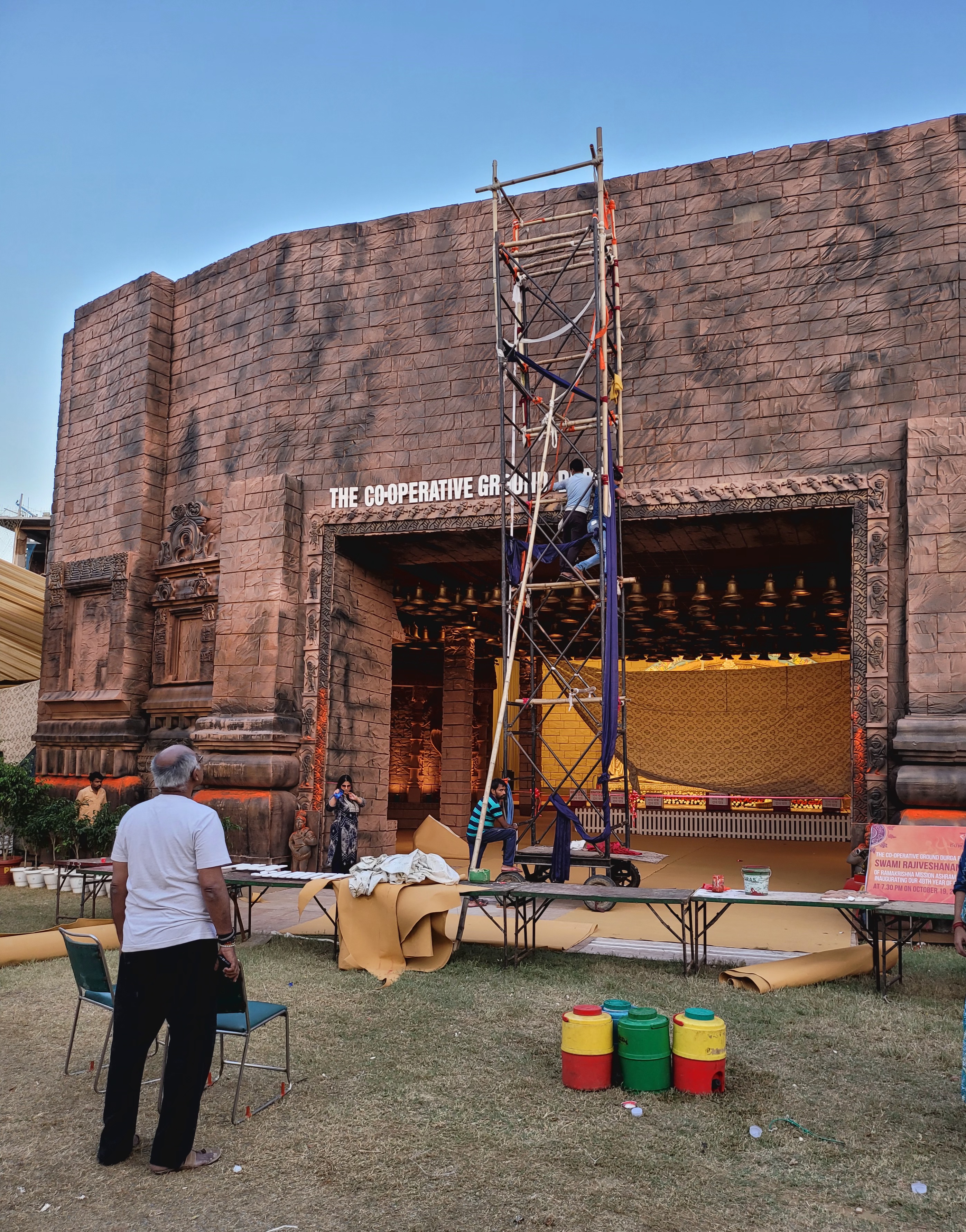
This is the making of the Puja Pandal (a temporary home for Goddess Durga and her children). It is fascinating to see how an empty field is turned into a re-creation of a famous temple (in this case) using nothing but piles of poles, canvas and glue. And all this for just 5 days after which it is dismantaled and put away for until the next occasion with a fresh design. One of the workers was going about with the ‘hyphen’ of the “co-operative”. Possibly there was divided opinion about its inclusion! Incidentally, this is the same pandal that the US ambassador Eric Garcetti visited. You can see the video here. Just a heads up, that though the video is about 3 minutes long, you can get away with watching about half of it as it is repetitive.
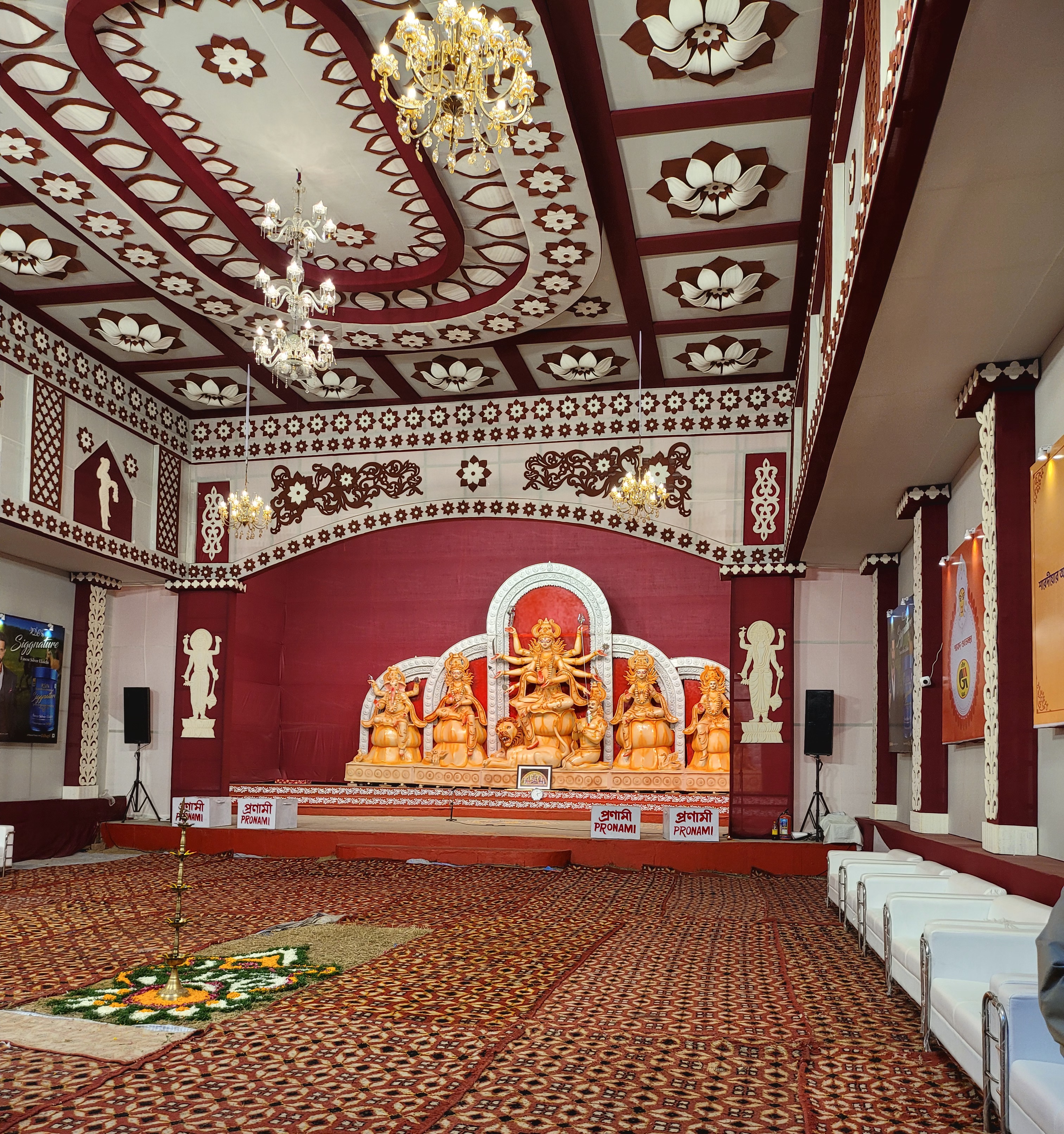
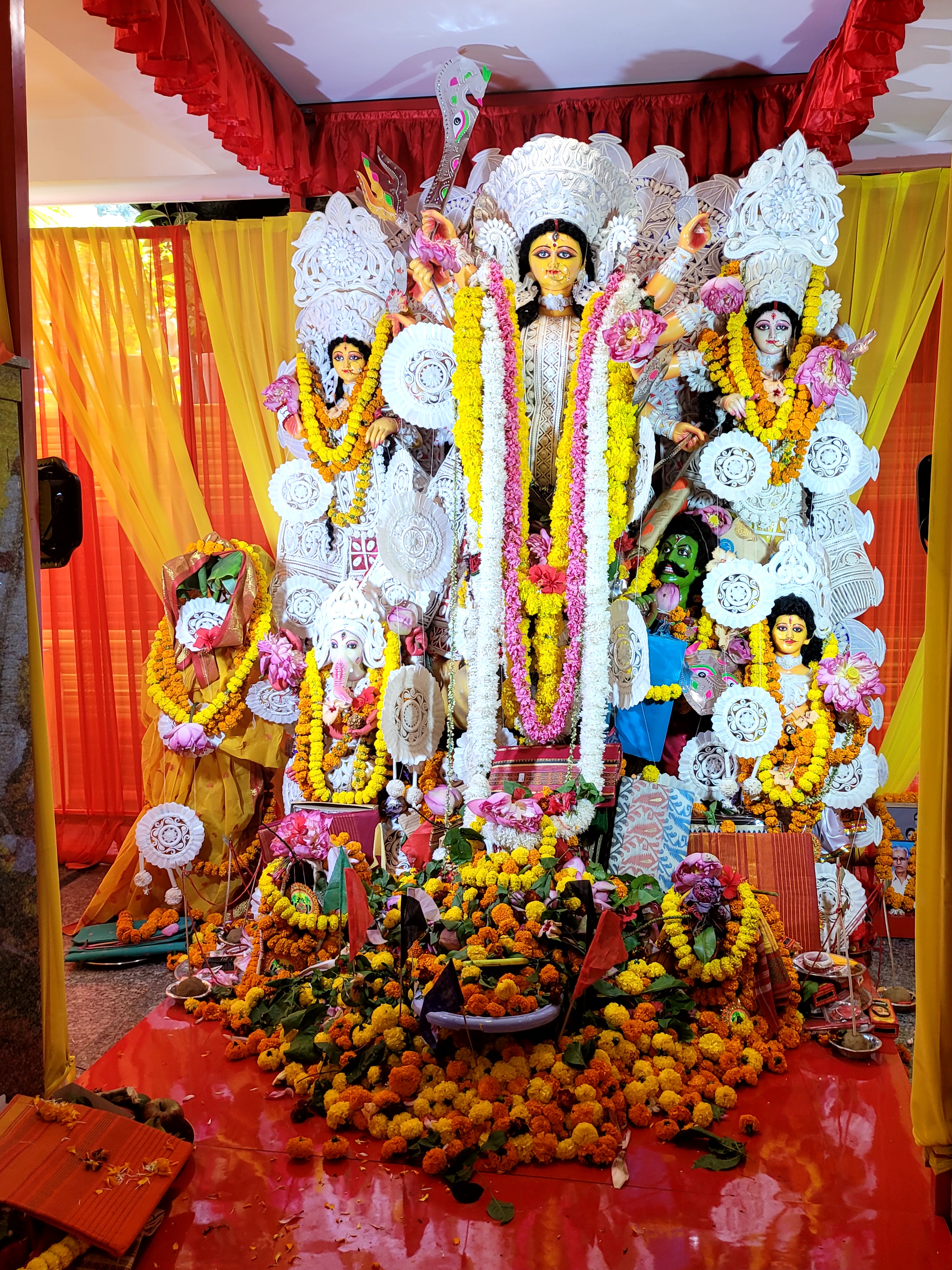
This is another Puja Pandal complete with the Goddess Durga’s idol installed and is another piece of art that will be immersed in water after 5 days of worship. We were lucky to be able to get a glimpse before the madness began.
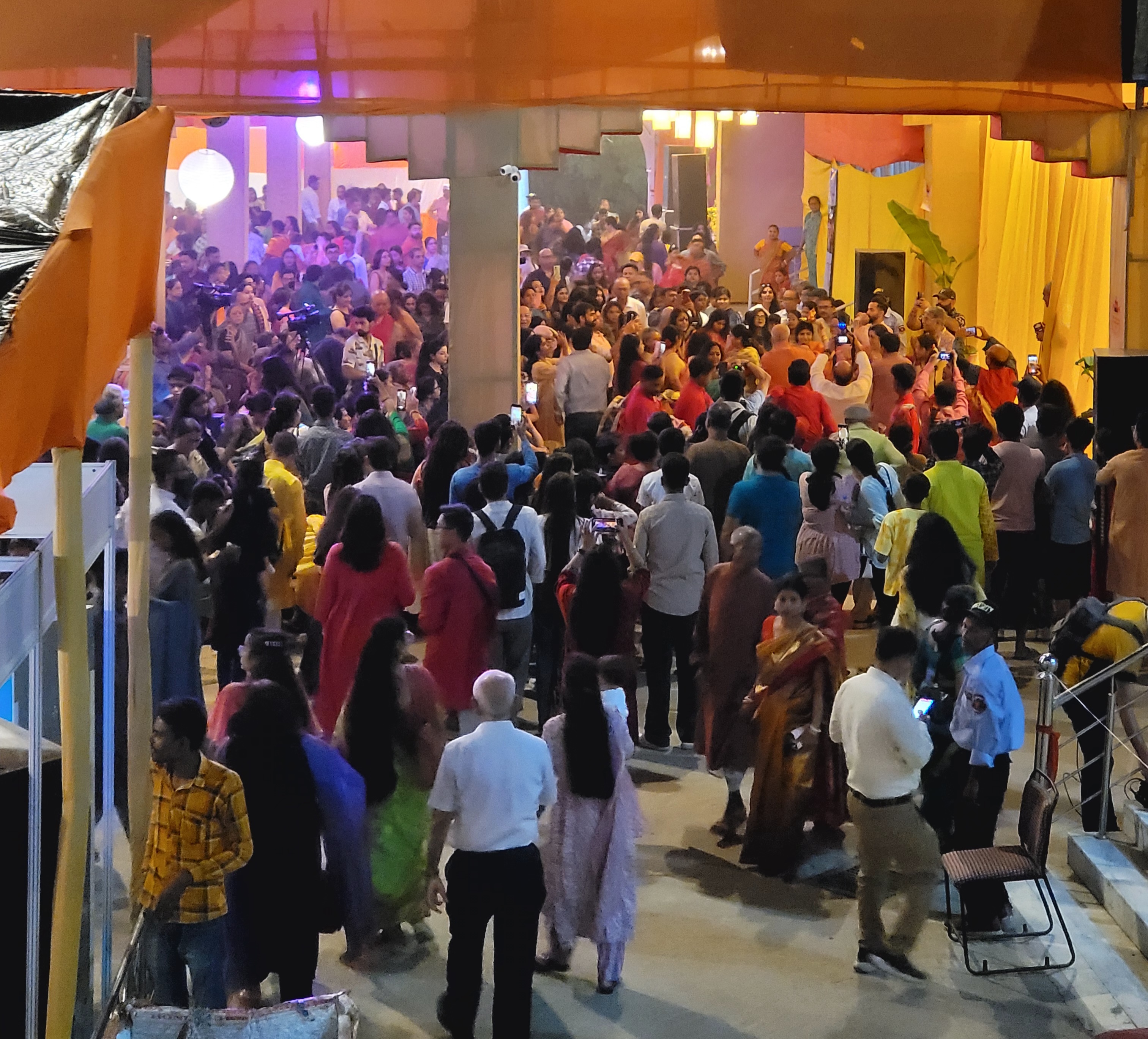
Just a glimpse of the crowd at the Puja Pandal before the festival had begun!
While most Durga Puja are a community event, She is also worshipped individually by people at their home. This year, I was lucky enough to be able to visit one such Puja. I am sharing a small translation of the Sanskrit mantra which I hope and pray Mother Goddess is kind enough to bless us all with. If you are interested, you can read about the full chant here.
To that Goddess Who in All Beings is Abiding in the Form of Peace, Salutations to Her, Salutations to Her, Salutations to Her, Salutations again and again.
Hello! It is time for Colleen’s #TankaTuesday challenge where the rules are to to write in any of the 24 syllabic forms of Japanese poetry using a kigo or season word as an inspiration. While there are 24 seasons in Japan, we are allowed to use season words as per our region.
But before I begin, I am very chuffed that Colleen was kind enough to choose my previous entry as the poem of the week and couldnt resist sharing. Yayy and thank you again Colleen 🙂
Now off to the tanka of this week. First the tanka and then the explanatory note. Perhaps, some of you may not need the note 🙂
Navratri
going to office on
an empty stomach
they join the
bhandara queue
I have used Navratri (literally nine-nights) as the ‘kigo’ word for this tanka. In India, we are currently celebrating Navratri and today is day 3 of the festival. Navaratri is a bi-annual Hindu festival observed in honour of the Mother Goddess Durga and many devotees keep a fast during this period. A bhandara is a mass feast given to the needy by the Hindus, particularly in North India on auspicious occasions such as the Navratri.
Here’s wishing you all a very auspicious and happy Navratras to you and yours. 🙏
Hello! Here’s another tanka for Colleen’s #TankaTuesday challenge where the rules are to to write in any of the 24 syllabic forms of Japanese poetry using a kigo or season word as an inspiration. While there are 24 seasons in Japan, we are allowed to use season words as per our region.
First the tanka and then the explanatory note. Perhaps, some of you may not need the note 🙂
freshly showered
leaves wave to the blue skies
-Durga Puja celebrations
jeans don’t button up
even upon lying down
I have used Durga Puja as the kigo word. Like I mentioned in my earlier post, Navratri (or nine nights) festival in honor of Goddess Durga is being celebrated this year from 15th to 24 October. During this period, Hindu devotees worship Goddess Durga but the manner of celebration is diverse and unique in different parts of the country. This includes, but is not restricted, to dandiya, kanyapujan (little girls are worshipped as the Goddess) and Durga Puja. Durga Puja is a socio-religious celebrations that is mostly undertaken as a community but may also be done individually. It is associated with not only religious activities but also a platform for showcasing art, culture, and new clothes, cars, TVs and what have you while gorging on a variety of mouth-watering delicacies, including those served free. You may read more about Durga Puja here.
Perhaps, even ‘freshly showered’ could be considered the kigo word. Unlike the West, here in India, this is not the fall season. In fact, this is a time that is right after the monsoons which is a boon to the trees wilting in the scorching summer heat. They are now at their cleanest, greenest and happiest. With the monsoons withdrawing, the skies are blue (for once – Touch wood!!!) the breeze cool, and a palpable sense of excitement in the air. Even Mother Nature is celebrating the imminent arrival of the Mother Goddess (Durga Puja) in her inimitable way.
Did this work? Did you need the explanatory note? Looking forward to reading your reactions. Have a super day.
Hello and welcome to Dawn’s Festival of Leaves challenge. Anything to do with trees, as you perhaps may know by now, I simply cannot resist 🙂
Let’s see what I can find, this week:
This was in the cacti section. I had never seen leaves of this color before. Have you?
“They tell you to turn into a new leaf and then complain about your faded colour.” – Nitya Prakash
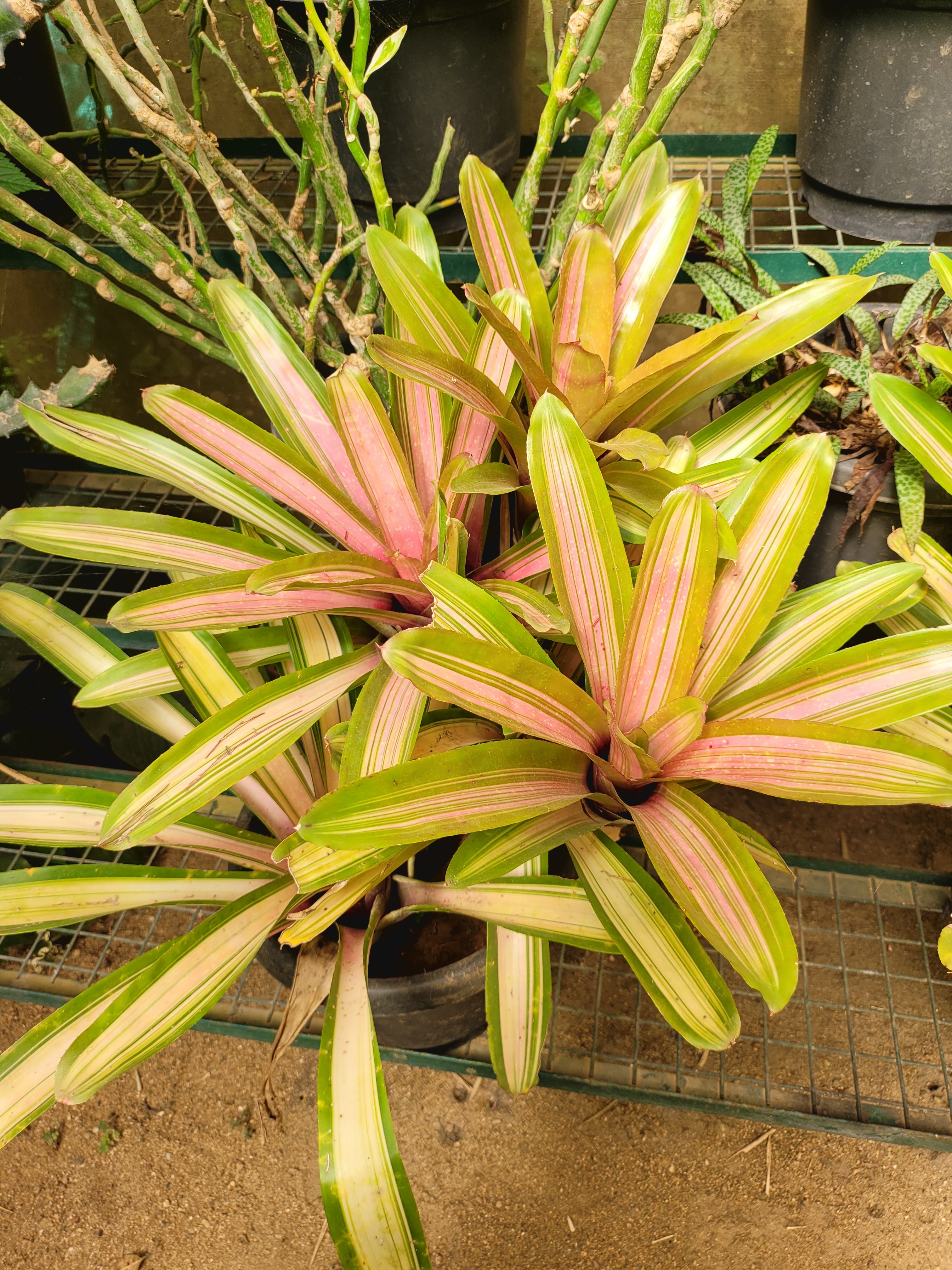
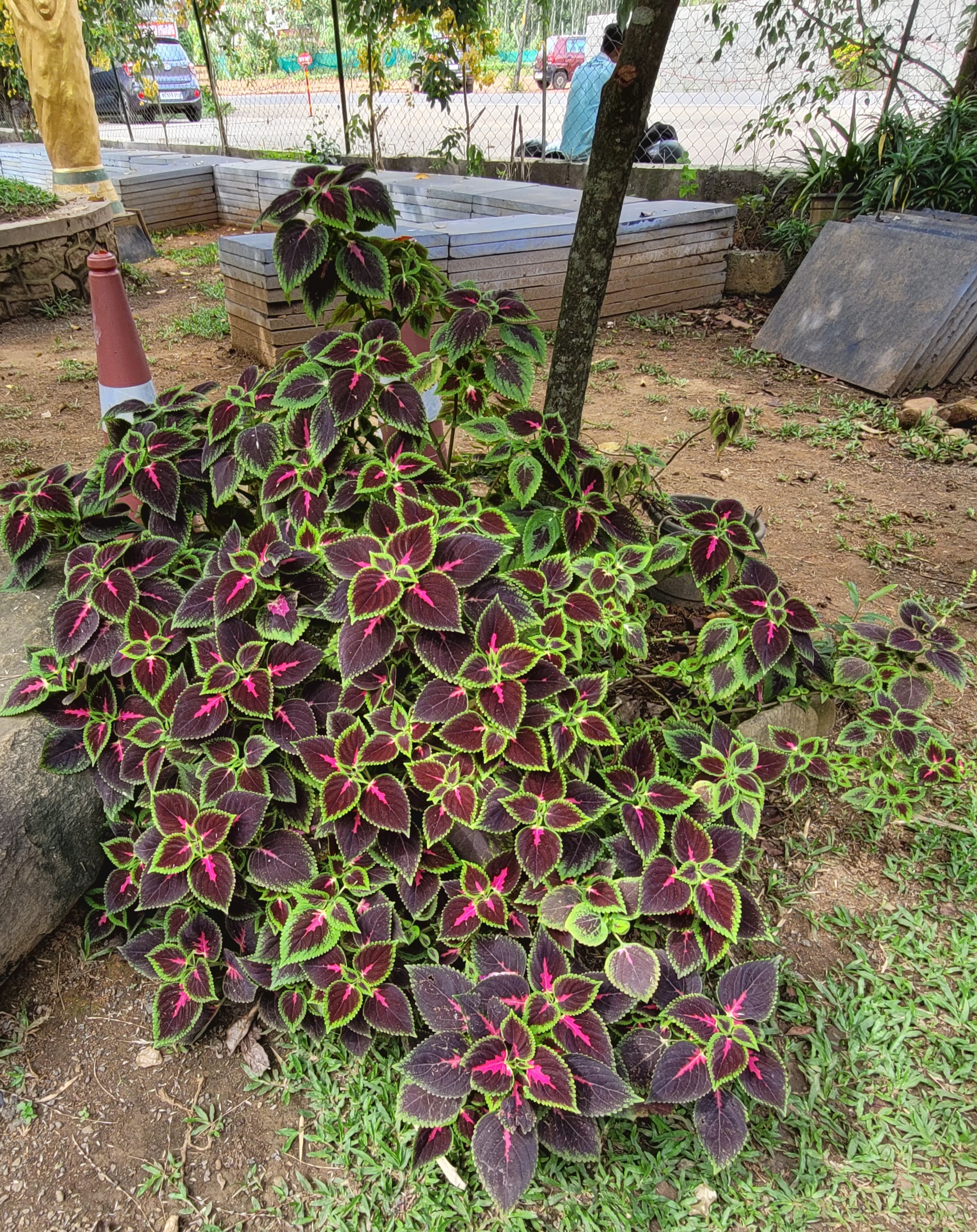
I would have never thought a combination of pink and green would look good but they gel well don’t they?
“Let your life lightly dance on the edges of time like dew on the tip of a leaf.” – Rabindranath Tagore
There are even brown leaves – who would have thought!
“Art is the flower. Life the green leaf.”- Charles Rennie MacKintosh
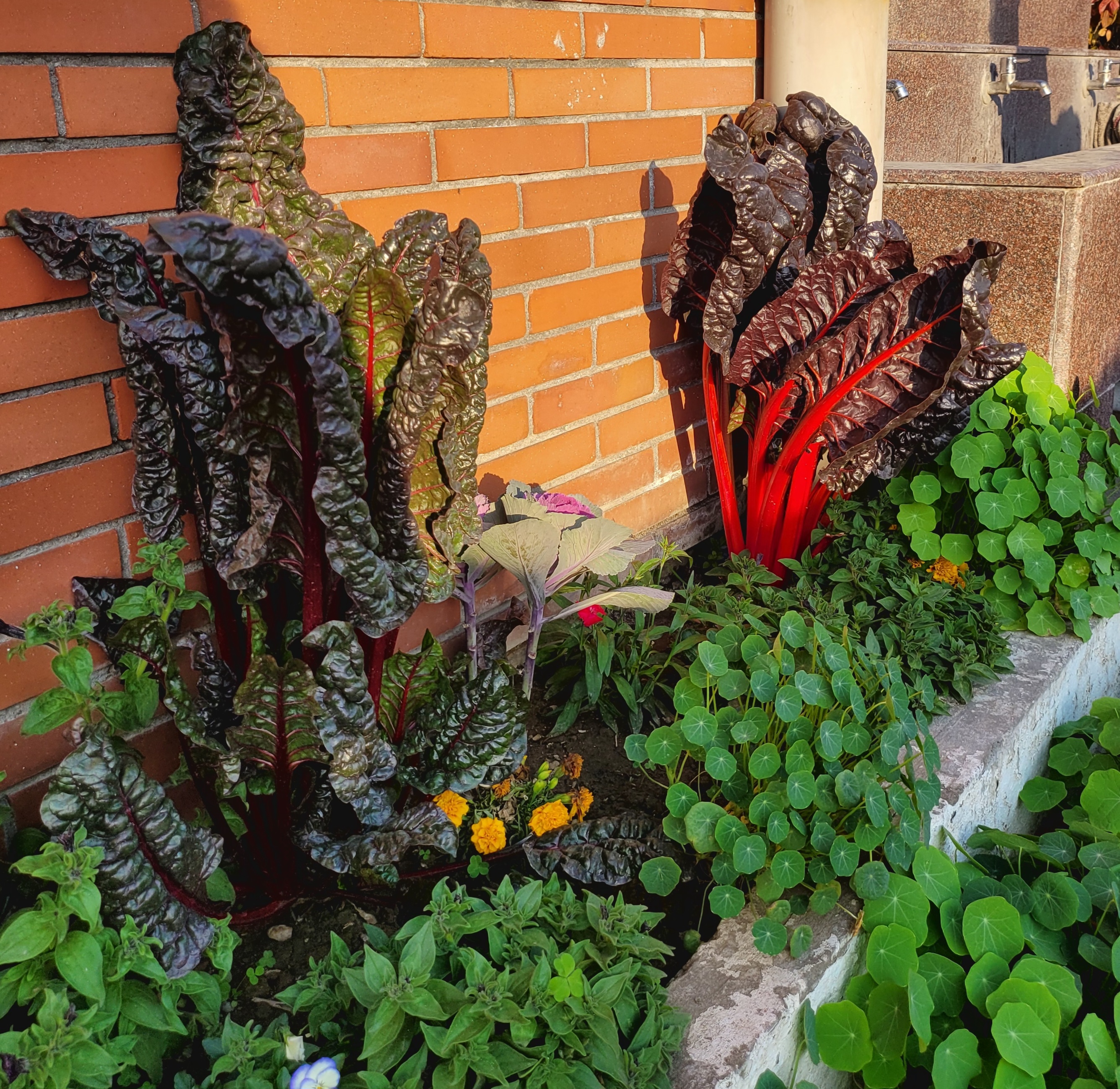
with red stems! These are really eye-catching aren’t they. Not quite sure what they are called. Do you know?
“Open the bloom of your heart and become a gift of beauty to the world.”– Bryant McGill
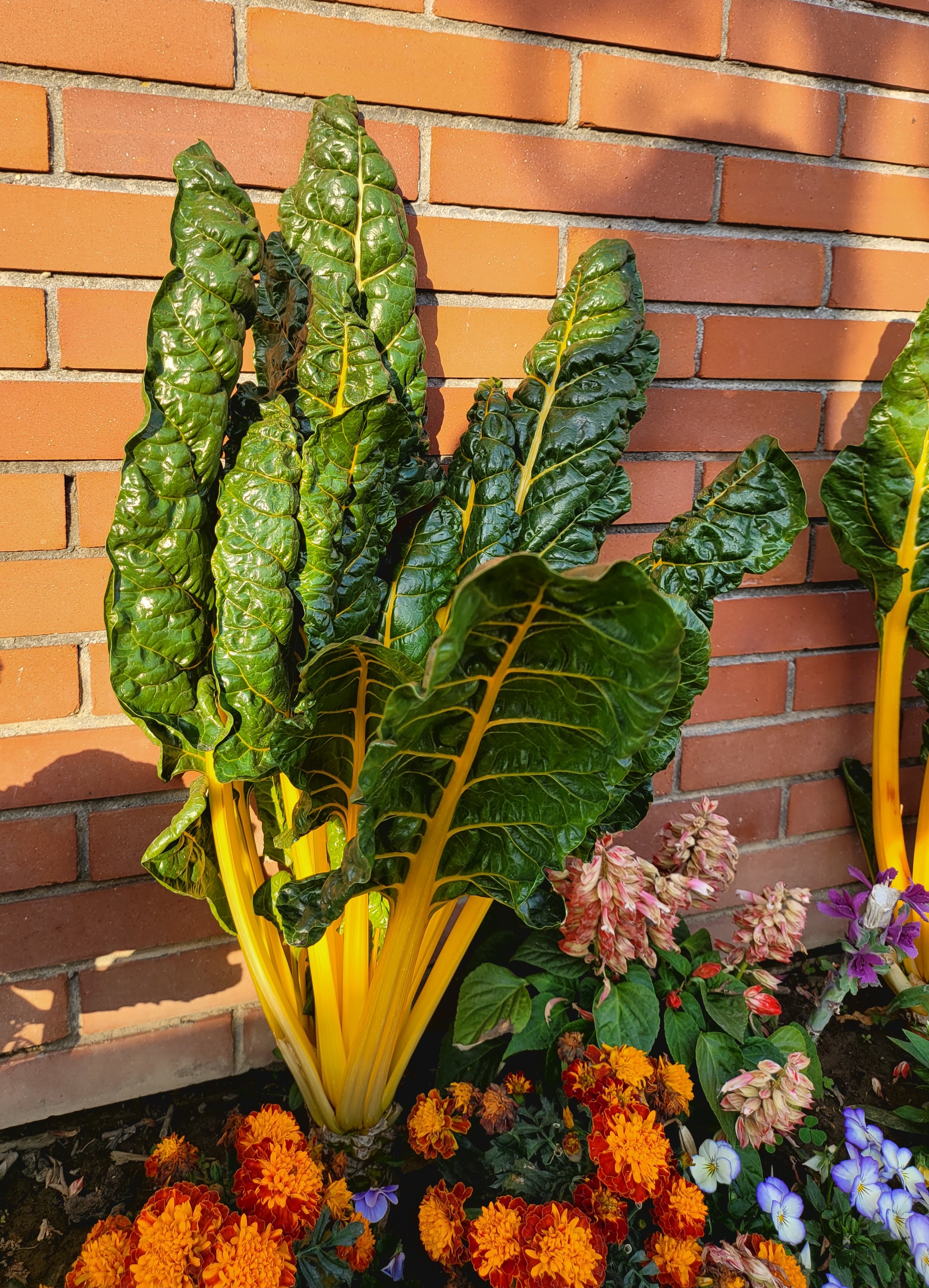
Monstrous leaves, aren’t they? Dont miss the bright yellow stems, almost as if they are mocking the traditional plants 😀
“Flowers always make people better, happier and more helpful; they are sunshine, food and medicine for the soul.” – Luther Burbank
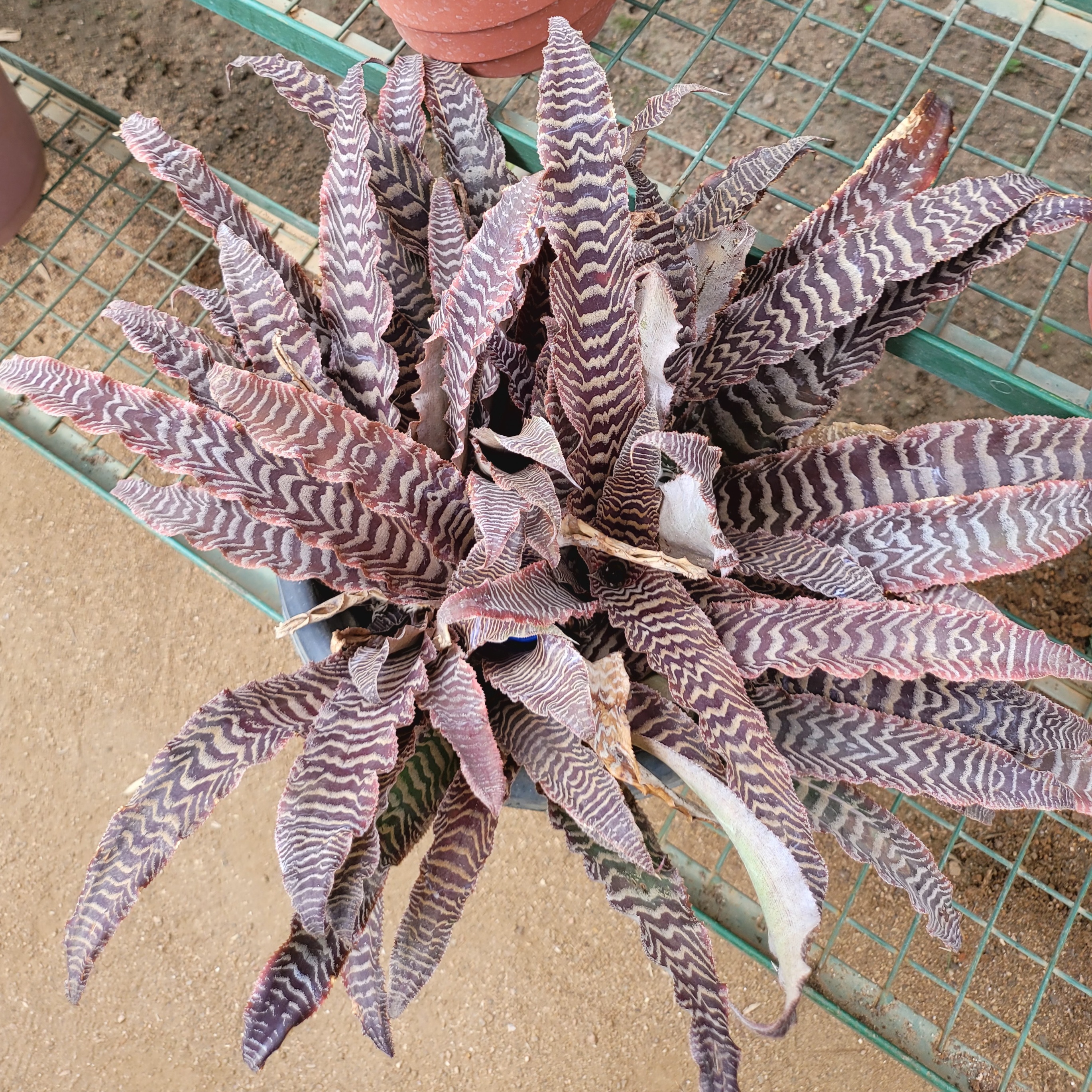
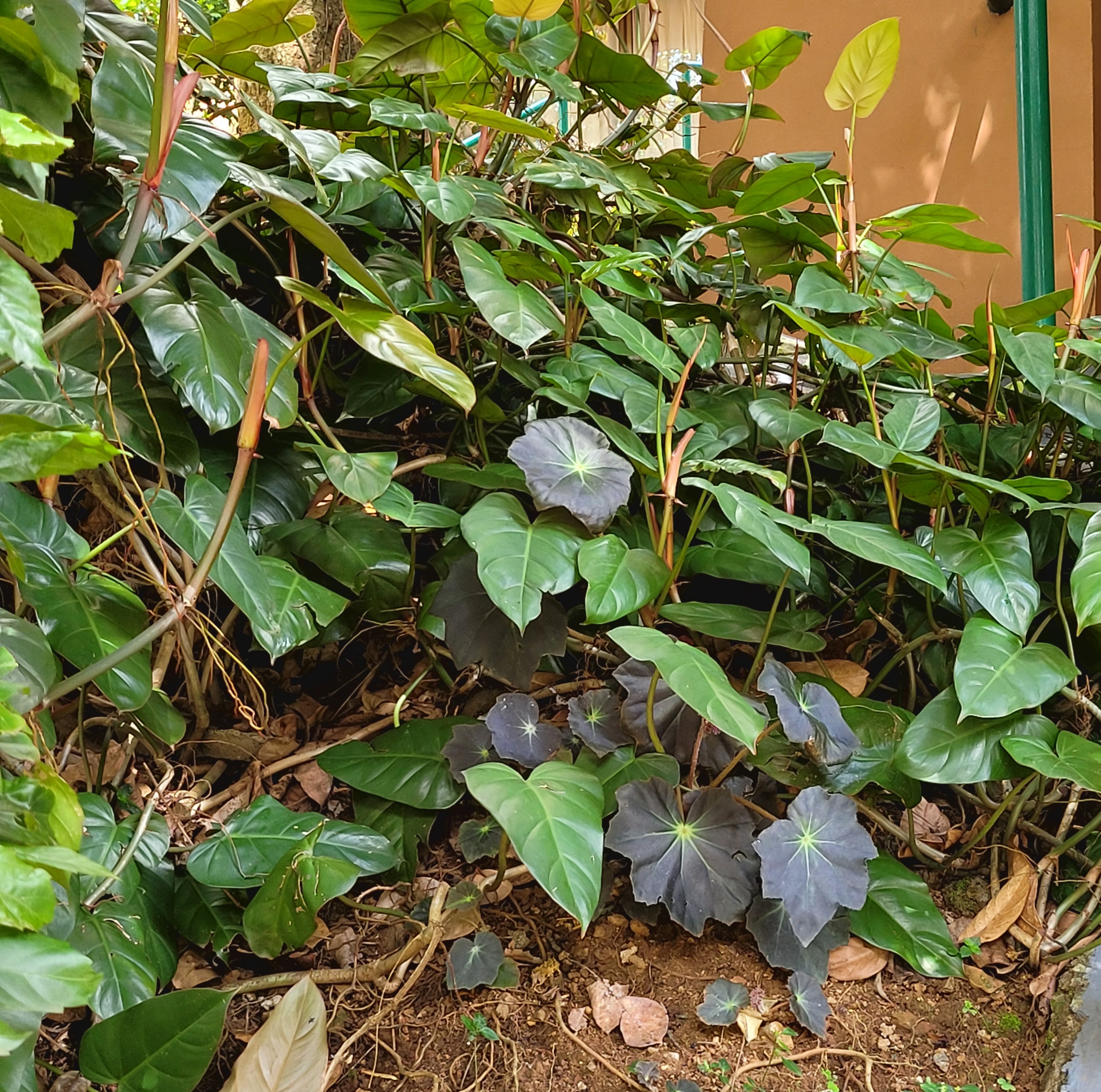
Don’t they look like flowers? The purple leaves were actually bluish in color, when seen with the naked eye. Their shape is also so unique.
“If you look the right way, you can see that the whole world is a garden.”– Frances Hodgson Burnett
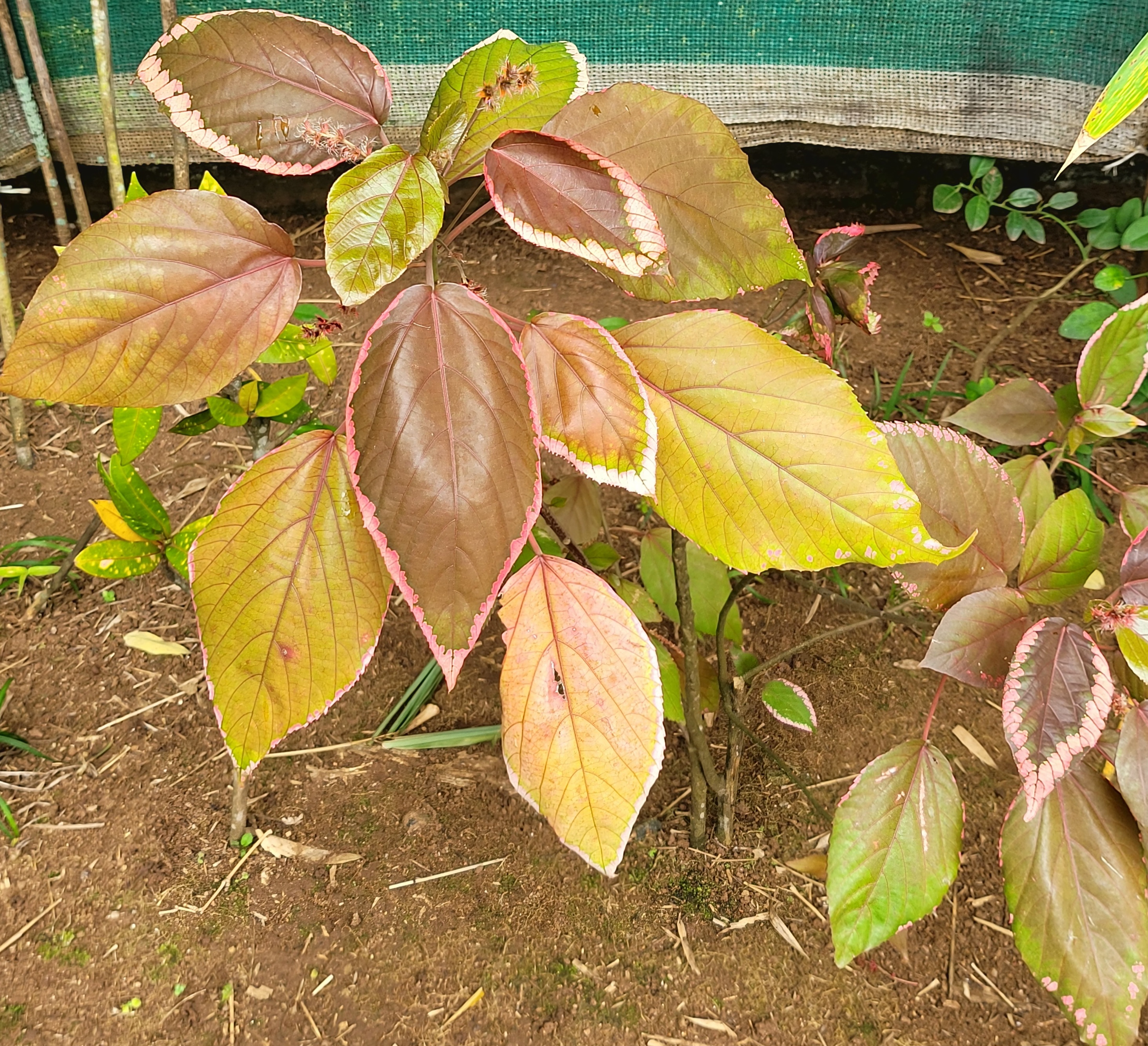
Brown pink and green! I can’t help but wonder how they manage photosynthesis and why the need for such colorful leaves. I did a little bit of research, and as I remembered (ahem) only the green part can do photosynthesis. The tiny green porton is enough for its sustenance. But what about the other leaves and the bare trees? Apparently sunlight penetrates the thin outer bark it can be enough for photosynthesis. You can read more here. I am not very convinced, but perhaps you can tell me more 🙂
“Life is a party; dress like it, dance like it, and make every moment count.” Audrey Hepburn
I found these leaves to be very interesting. It wasnt very clear if it was a creeper or part of the tree
“Why not show off if you’ve got something to show?” J Jones
Well, what do you think? Can you make out?
“It is better to aim high and miss than to aim low and hit.” Les Brown
And this is the showstopper. I couldn’t take a pic initially, then I waited to click it on the return journey. Isn’t it precious? Just like life.
Hello, here’s my attempt at XingfuMama’s Pull Up a Seat Photo Challenge. This challenge is about a seat, a place to perch. This might be a chair, a bench, a wall, a pew…maybe even a log or a rock. These spots can be artfully designed, quirky or very plain, sometimes they have a view, sometimes you meet someone else who needs a rest.
So, without any further ado, if you are comfortably seated, off we go:
The chairs, I presume were once upon a time a bright orange to match the flowers but under the scorching sun faded to a pale pink. Or perhaps, they turned pale with envy…
The envious man grows lean at the success of his neighbor. Horace
Recently I had the opportunity to watch a live Kathakali performance. This is a traditional dance form originating probably in Kerala in Southern India. It is a “story game” genre of art, usually drawn from folk stories, religious texts and Hindu epics. It is characterised by the elaborately colourful make-up and costumes and performed traditionally only by males. You can read more about it here.
I was seated in the front row and the ‘lady’ on the left performed a sequence (while seated on the stool) wherein ‘she’ put a baby to sleep. Once, the imaginary baby was asleep, ‘she’ tiptoed away only to stop and request me, with only ‘her’ eyes expressions, and gestures to keep an eye on the baby. I played along and raised a hand to ‘assure’ her but ‘she’ instantly stopped and ‘asked’ 4 kids! I shook my head, and raised one finger. She then proceed to ask if they were married, or studying or working. It was amazing!
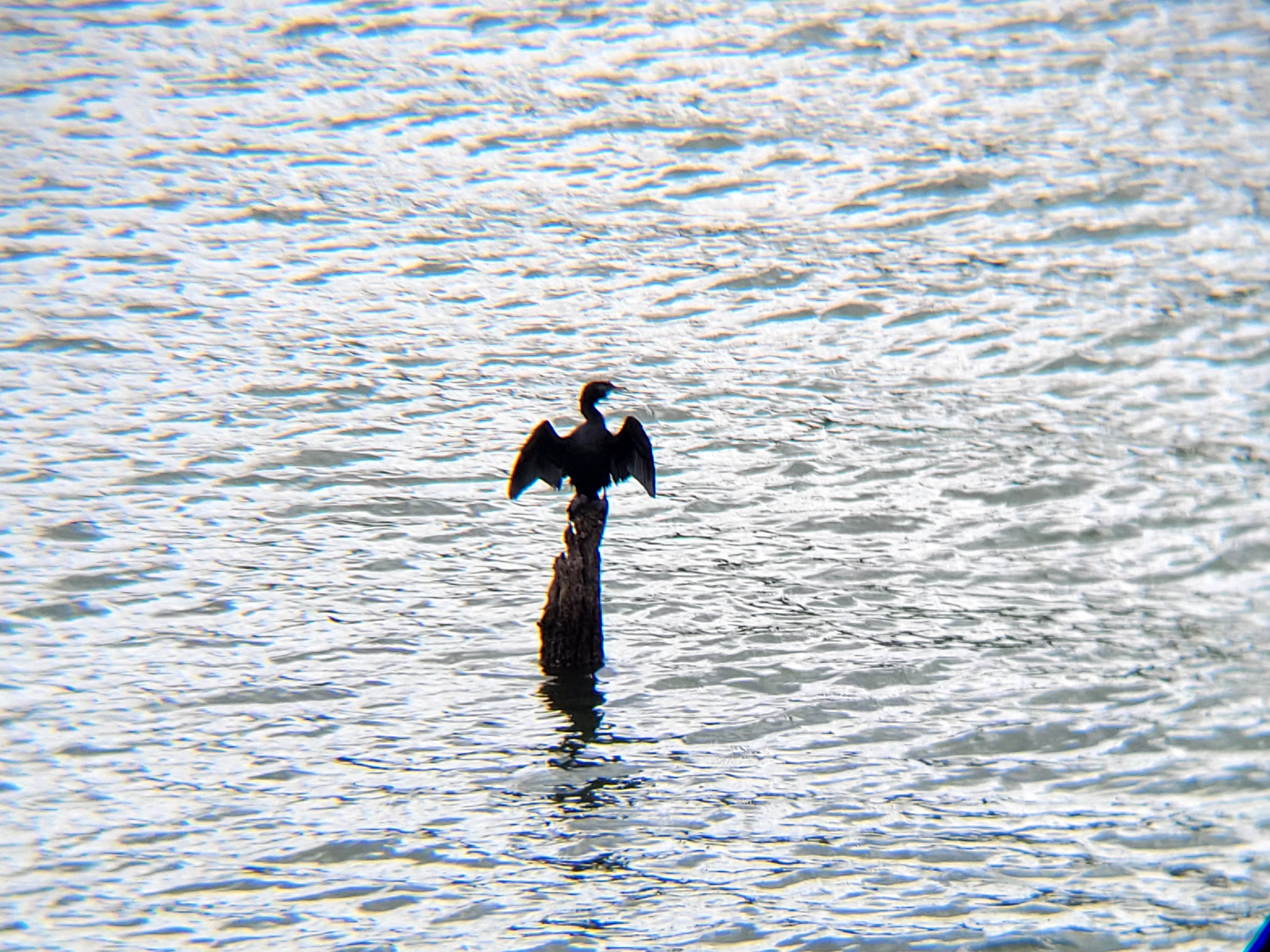
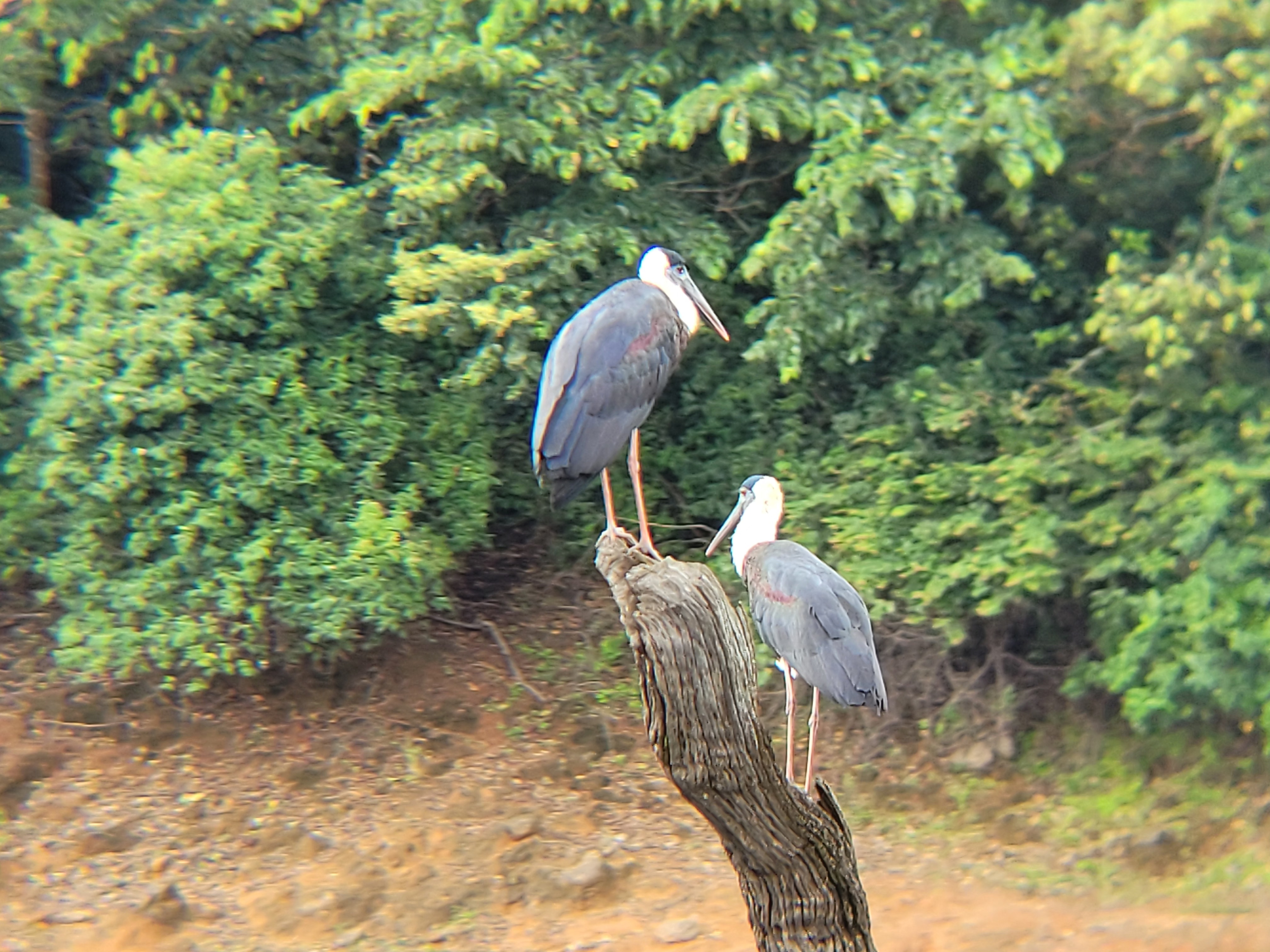
At the Kochi harbor, while on a morning walk, we spotted these birds, perched at a vantage point waiting for breakfast to be delivered.
This one is in a hurry, probably late for work 😀 This was taken while on a boat ride on the river Periyaar.
This picture was taken by the kind boatman as we weren’t allowed to move about on the boat. They don’t seem to be in any hurry. In fact, they seem ready for bed after a satisfying meal 😀
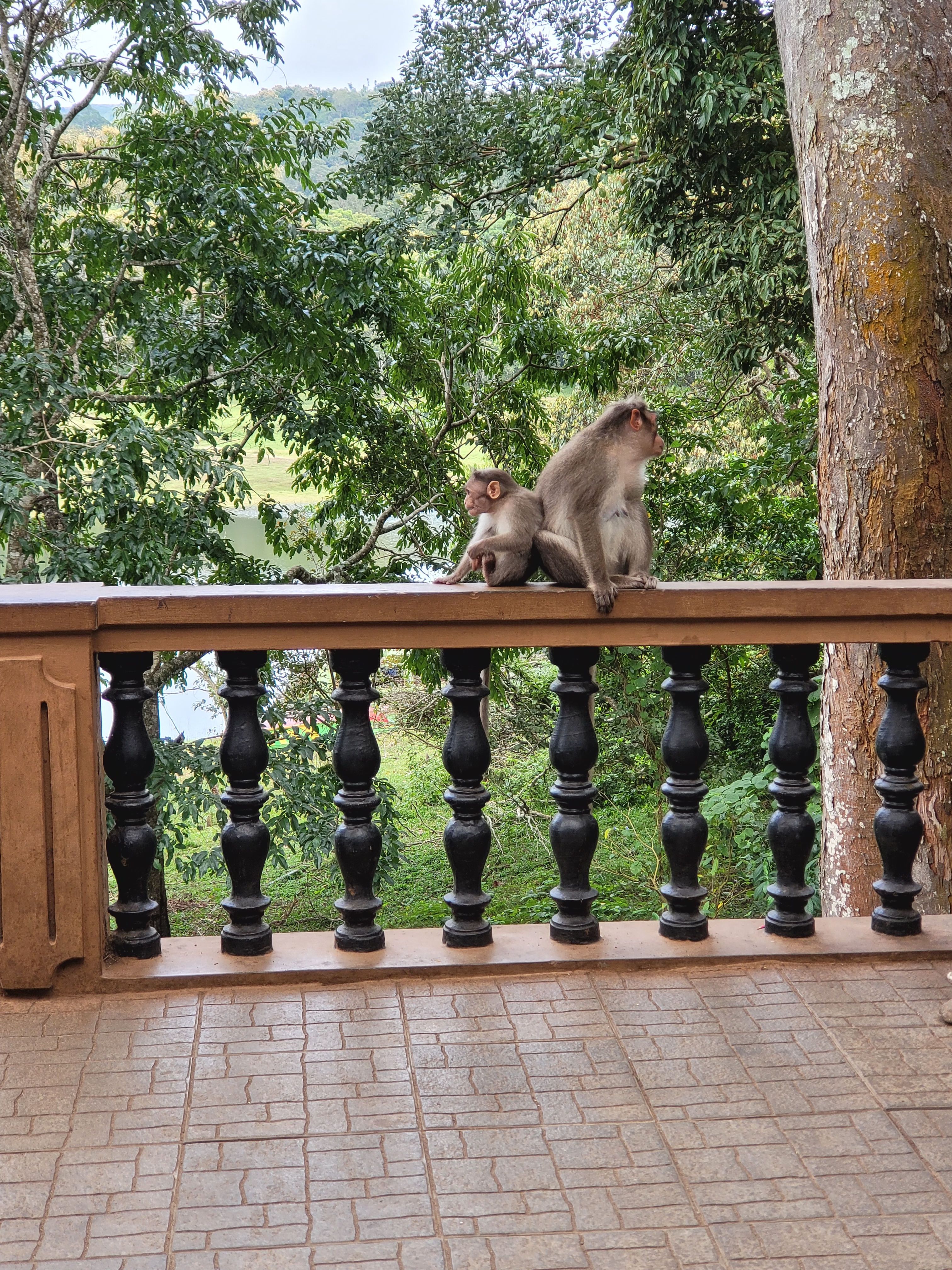
We were waiting for the boat, I wonder what they were waiting for – breakfast in someone’s pocket perhaps?
That’s it from me. I hope I didnt break any rules. Which one did you like the best?
Good day! Another attempt to write tanka while participating in Colleen’s #TankaTuesday challenge where the rules are to to write in any of the 24 syllabic forms of Japanese poetry using a kigo or season word as an inspiration. While there are 24 seasons in Japan, we are allowed to use season words as per our region.
I am trying out a tanka and have used ‘Dandiya’ as the kigo word here. Dandiya Raas is a folk dance of western India mostly in the states of Gujarat and Rajasthan. This popular socio-religious dance is performed during the Navaratri (literally – Nine Nights) festival in honor of Goddess Durga who is believed to visit her home on Earth along with her children and their unique animal companions, (but that’s another story for another day, perhaps). This festival usually occurs in the period of late September to late October with the actual dates varying from year to year. Dandiya is performed in memory of Goddess Durga’s victory over Mahishasura (literally – buffalo demon) and the colorful sticks (called dandia) used in the dance represent her sword.
I took this image from this site just to give you a better idea. I hope the kigo word is acceptable?
And the tanka is
trees
swaying in the breeze
dandiya practice
he joins up unaware
of her fracture
Initially I thought of going for just the haiku (the first 3 lines) then felt it could be a tanka as well. Also the explanation seemed a bit disproportionate to the kigo description. Still is actually 😀
That’s it folks. Do let me know your thoughts, comments and tips. Have a great day and thank you Colleen for the challenge.






 Stories and more