It’s finally here my first A to Z blogging challenge and I am super-excited! My theme for the challenge is Indian weddings and I request you all to join the celebrations 🙂
Alta, a red dye, is considered to be one of 16 elements of make up also known as solah shringar. It symbolizes fertility and prosperity and constitutes an essential component of the Bengali bride’s make up. Alta is used to adorn the hands and feet of the Bengali bride. In fact, all married women from West Bengal are expected to wear alta on the occasion of any religious festival or wedding. As a child, I remember my mother putting alta with the help of a swab of cotton wrapped around a thin stick before Durga Puja. We would watch fascinated (and clamor to be similarly treated) as she put her foot on a newspaper and brush the color around her feet. But she didn’t color her hands – instead she would put a dot on the base of her hand to complete the ritual.
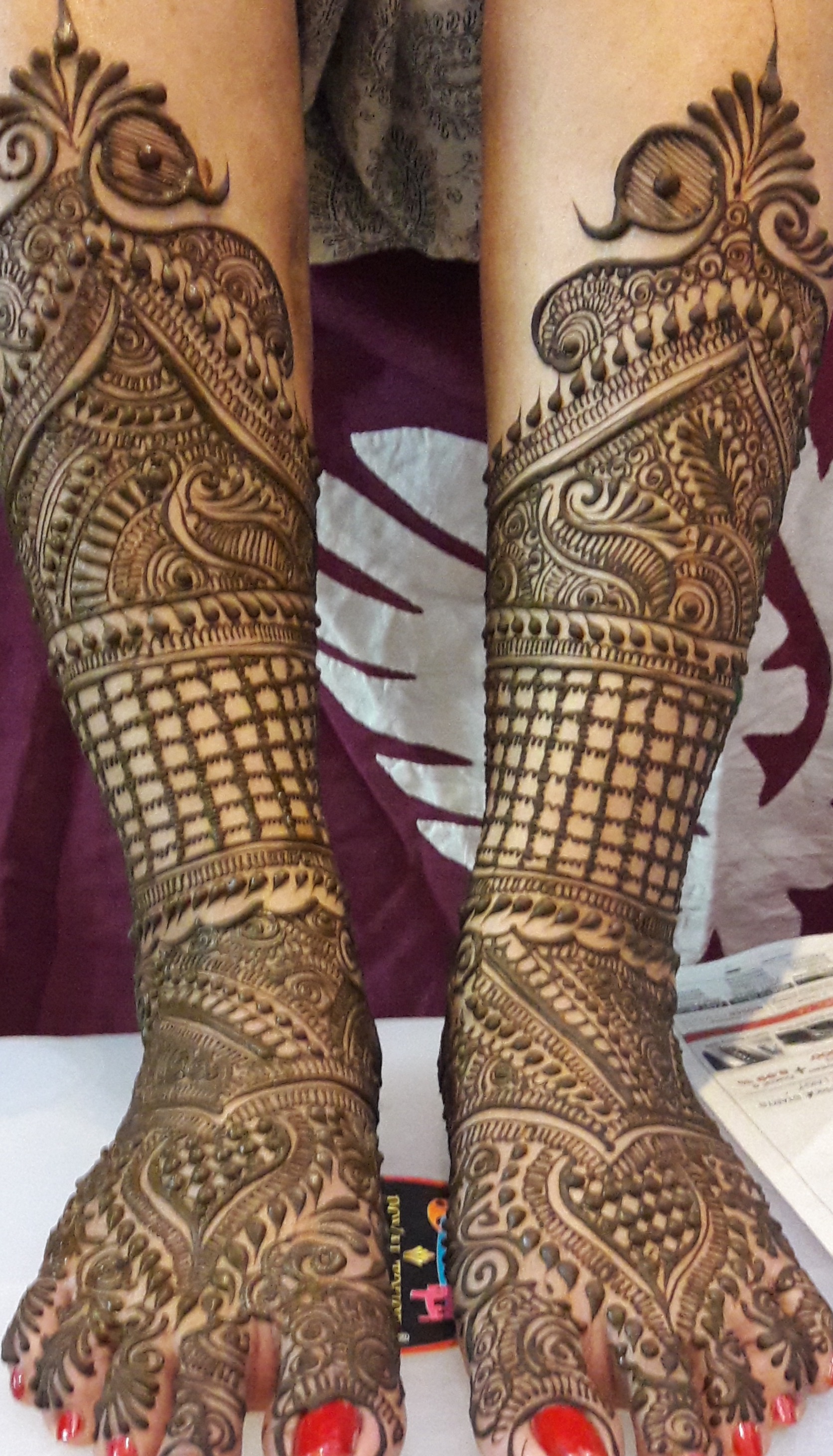
Traditionally made from betel leaves, alta is believed to have a cooling effect. Alta stains and dries quickly. Mehendi or paste prepared from henna leaves is the preferred decorating agent particularly in North India. But nowadays, brides from all parts of the country regardless of tradition prefer to decorate their arms and feet with mehendi in an elaborate custom.
In some parts of India, before entering the house of her in-laws, the new bride steps into a plateful of alta and then walks ahead with her right foot first leaving imprints of her feet on the floor of her house. This symbolizes the entry of Devi Lakshmi, the Goddess of Wealth, into her new home along with the bride.
Thank you for visiting 🙂 See you tomorrow and dont forget to leave me a note 🙂
Quote for the day: What you’ll need most is courage. It is not an easy path that you’ve set your foot upon:- Larry Wall
For more information about the blog please click here and for the readers of Moonshine, here’s Chapter 49.

 Stories and more
Ahhh…..A for alta. Nice. I had no idea that it was made from betel leaves. I thought it was a chemical dye! Looking forward to this education from A to Z.
LikeLiked by 1 person
Same here! Learnt some but got more confused and entangled 😀
LikeLike
What a lovely post. I’m from South India and I was adamant in adorning my feet and hands with mehendi for my wedding. I am a classical dancer and is used to wearing alta for my performances. Such fond memories. Thanks for sharing, Mam.
Visit to read Army Wife Tales at Tale of Two Tomatoes
Also drop in to check 26 Chicken Recipes at Something’s Cooking
LikeLiked by 1 person
All the best good start , knew mehndi but Alta new for me will try putting it one of these days
LikeLiked by 1 person
Thanks for dropping by 🙂
LikeLike
ALL the best good start
LikeLiked by 1 person
Thanks”
LikeLike
I first came across “Alta” when my son was in primary school and they had to use it for decorating their hands for some play. I was excited to know that there is something so much more simpler to use than the elaborate henna paste that I was familiar with. I just love getting henna on my hands and feet. Strangely enough, during my wedding there was no time at all to do this leisurely and I ended up quickly putting a large dot with little ones around it with henna paste.
Lovely theme, Dahlia. A to Z is going to be so much fun! Thank you!
LikeLiked by 1 person
Thank you Vidya for sharing your memories – yeah that’s the way we put henna in our childhood (dots and more dots!) and only alta no mehendi for my wedding 🙂
LikeLike
Never knew the name ‘Alta’. Betel leaves sure has medicinal properties. Here, after a meal, betel leaves wrapped with areca nut and slaked lime are eaten…. people relish it so much!!
Looking forward to reading more such interesting rituals on Indian weddings!!!
LikeLiked by 1 person
Yeah Svkuki paan is a much sought after post prandial must have for many of us too 🙂 glad you liked!
LikeLike
great start–already I’ve learned something! Cheers!
LikeLiked by 1 person
Thanks Gail
LikeLike
I love alta, even though we do not put it in North India but have used it sometimes. Lovely post.
Could you add your twitter handle to your sharing buttons? I could not find any.
*Inderpreet/EloquentArticulation*
LikeLiked by 2 people
Hello Inderpreet! Thanks for dropping by and for the kind words. Included twitter handle as suggested and here it is as well @mysilverstreaks
LikeLiked by 1 person
Fascinating! I love it when I learn something new!
LikeLiked by 1 person
Thank you – happy that you dropped by 🙂
LikeLike
That’s some new and nice information on alta. Had never heard or seen a bride adorning alta in my part of the country. It’s always been mehendi I believe. And what a transformation…from being organic then to chemical now….
LikeLike
Dancers also put alta on their hands and feet – I am sure you must have seen/used it? Perhaps you know it by some other name…
LikeLike
It’s known by the same name…We do use alta for dance performances…and at times when there is a time crunch or when we feel it’s getting messy we compromise by using a marker pen 🙂
LikeLiked by 1 person
Hahaha – sounds just like some WW MM!
LikeLike
Great post! I’ll be learning a lot!
LikeLiked by 1 person
Thanks! I hope so 🙂
LikeLiked by 1 person
That’s a great theme to write on. I was going to do Indian weddings earlier, but I couldn’t get all the topics for it. So I changed my theme. It’s going to be fun reading your posts on it and comparing notes.
– Chicky @ http://www.mysteriouskaddu.com
LikeLiked by 1 person
Great! Look forward to interacting and some fun!
LikeLike
This is wonderful, Dearie! I’ve heard of Henna art before and this is just as stunning!
Brava! Brava! *applause*
🌹🌹🌹🌹🌹🌹
Sir Leprechaunrabbit
@leprchaunrabbit
yourrootsareshowingdearie.wordpress.com
LikeLiked by 1 person
Thank you, all I did was click the pic – the henna artist deserves all the applause. Her fingers worked magic, unhesitating, unerring and swift.
LikeLiked by 1 person
Now that was very interesting, thank you.
LikeLiked by 1 person
Looking forward to learning all about Indian weddings : ) Great first post!
LikeLiked by 1 person
Thank you so much for stopping by the other day – and welcome to your very first A to Z Challenge 🙂
I look forward to following you daily through April. Great starting post.
LikeLiked by 1 person
I like your theme. It’s interesting to read about the indian wedding. I once saw a documentary of a German marrying in India, but they didn’t explain much. So I am very happy to learn more during the month of April.
LikeLiked by 1 person
This is fascinating and educational. I’m sure to learn a lot over the month.
LikeLiked by 1 person
nice theme.. i like alta.. granny always applies it on my feet whenever i visit her…
LikeLiked by 1 person
Thanks for dropping by 🙂
LikeLike
lovely its such amazing to learn these… 😀 🙂
LikeLiked by 1 person
I am aware of Alta, as being a classical dancer ( Kathak) Alta is really important for adorning hands and legs. I am a south indian born and bred in north and I got familiarised with Alta as a kid because of my bengali neighbours and after that during dance classes. In south here, Alta water was used as my grand mother told me once ( they said dye from betal leaves) but now it has been replaced by ‘kum-kum’ and vermillion were dissolved in water to create this dye. Thus though their use has been marginalize, alta still find a place in dressing table of a women today too.
LikeLiked by 1 person
Thanks for sharing your experiences 🙂
LikeLike
I can see that I am going to enjoy reading about various customs through this a to z journey. Interestingly, I started with ‘Chura’ – something I am very familiar with.
Alta – I have seen it in movies and otherwise, but didn’t know what it was called.
So, thanks 🙂
–Nimi
http://www.NimiArora.com
LikeLiked by 1 person
Thanks Nimi – glad to have you on board 🙂
LikeLike
What beautiful feet! Thank you for sharing that tradition. I love the idea of putting footprints in the house. 🙂
LikeLiked by 1 person
Thanks for visiting Marsha 🙂
LikeLike
My pleasure! 🙂
LikeLiked by 1 person