Month: October 2016
Friday Food: Veggies
Y at Priorhouse has started a new challenge (thankfully a monthly challenge!) – Food. And this month the topic is veggies.
For this challenge, I chose something that doubles as a fruit and a vegetable. Technically it is a fruit but most people in India cook and eat it as a vegetable. Handling, cutting and dicing the raw fruit is a sticky, messy, dicey business and one must remember to lather the hands (and knife) with oil otherwise you are likely to be stuck forever and ever 😀
Okay, any idea what I am talking about? Difficult if you are not from this part of the world. This fruit is native to South and Southeast Asia and is believed to have originated in the Western Ghats of India.
Okay without any further ado – have a look:
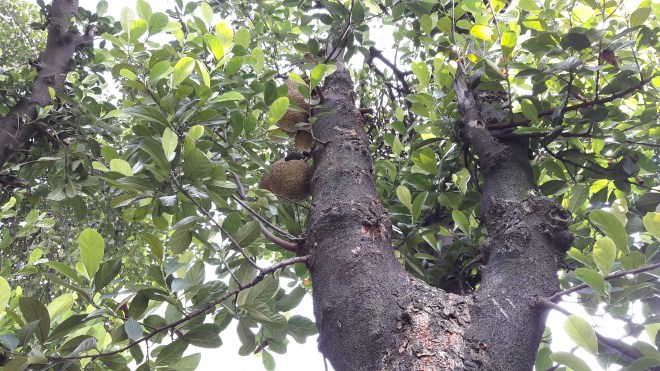
Can you make out anything? Okay another closer shot for you.

Yep that’s the jack fruit

See the white gooey stuff near the neck? That is the stuff to watch out for, when handling the raw fruit.
When ripe, it is extremely sweet and fleshy. It has a distinct all pervading odor which can be rather overpowering. Keeping the ripe fruit in the refrigerator can be risky as everything is likely to reek of jack fruit. The inside of the jack fruit is composes of pods or bulbs each of which holds a seed. The seeds are cooked and eaten as well, though they are covered with a thick inedible cover which has to be removed.
While the vegetable avatar is quite popular all over the country and is available as chips, the fruit version (at least as far as I know) is consumed only by the Bengali community in India – anyone care to correct me? There are two varieties of the fruit pods. One is small, fibrous, soft, mushy and terribly sweet. If one is not careful while eating this, it can slip down the throat and cause choking – been there done that! I prefer the other variety which is crisp and chewy and is also less sweet.
By the way, the jack fruit is the national fruit of Bangladesh.
Hope you liked my offering for this month’s food – happy eating 🙂
Story Club #4: Games People Play
Welcome to the fourth round of the Story Club. As announced earlier, Ramya is hosting this month’s story. Her choice of story is “In a Grove” by Ryunosuke Akutagawa. If you haven’t read it yet, it’s not too late. Read it here and join the discussion.
This week’s story is a treat to read and on a topic that has always fascinated me. How interpretation of scenarios/events differ according to mindsets and perceptions. Take for instance, the flash fiction challenges based on a photo prompt. Yet, amazingly, the stories that come up are as diverse as can be.
This is exactly what this story discusses – how different people perceive and narrate a scene leaving the reader thoroughly confused as to what exactly had happened. What I found most intriguing about this story is can the ghost’s version be relied upon? Is that the ‘real’ truth? Or is the medium including his or her own perception of the ghost’s narration? What do you think?
In a Grove is an out and out whodunit without the denouement. And it goes without saying that the author has done a great job – he has entertained and left a permanent impression by virtue of his style of telling a tale.
Interestingly, Akutagawa had a highly publicized dispute with Jun’ichirō Tanizaki over the importance of structure versus lyricism in story. Akutagawa argued that structure, how the story was told, was more important than the content or plot of the story, whereas Tanizaki argued the opposite. Six months ago, I would have vehemently supported Tanizaki but now I am not so sure. Although I am not willing to completely give up on the supremacy of the plot in a story but I do get what Akutagawa was rooting for. Whom do you support?
Ryunosuke Akutagawa (1 March 1892 – 24 July 1927) is considered to be the Father of Japanese short stories. Akutagawa’s mother passed away soon after his birth due to mental illness and his maternal uncle brought him up. Akutagawa was very concerned about inheriting his mother’s illness. His apprehensions, hallucinations and subsequent nervousness drove him to suicide at 35 years of age. During a very short span, Akutagawa wrote over 150 short stories. He also wrote haiku under the penname Gaki, but not many seem to have been translated to English.
Rashomon was Akutagawa’s first short story. Interestingly, the famous Japanese filmmaker, Akira Kurosawa’s acclaimed film Rashomon is based on the plot of In a Grove rather than that the short story, Rashomon, from where he takes only a few scenes and of course the name of his movie.
Credit goes to both Akutagawa and Akira Kurosawa for highlighting the concept of mutually contradictory accounts of a single event which is a common occurrence in real life, such as journalism and law. This concept is now popularly called “The Rashōmon Effect.”. Several movies also explore this concept – Gone Girl (Hollywood) and Talvar (Bollywood) come instantly to the mind. As do Agatha Christie murder mysteries. But I have to admit I couldn’t quite connect the Rashomon Effect to Star Trek – anyone kind enough to explain?
That’s enough from me for this Story Club and over to Ramya’s blog for her analysis and views on the story of the month – In a Grove.
Thanks for reading. If anyone wishes to join the Story Club (including this one) most welcome. Just post a review and link back to this post. Or you could host the next month’s Story Club 🙂
Rules are simple:
- Advance announcement of name of short story, one that is freely available on the net.
- Story maybe a folktale or in the local language. But an English translation should be freely available on the net. Or participant could post the translated version along with his or her review.
- Bloggers should post on their blog while non-bloggers may email me – mysilverstreaks@gmail.com
- The basic idea is to gain from each others rich heritage of literature and be able to understand a little bit more than before.
- And of course have fun!
You can read the other Story Club posts here. If you have any questions, feel free to email me at mysilverstreaks@gmail.com.
The Loner
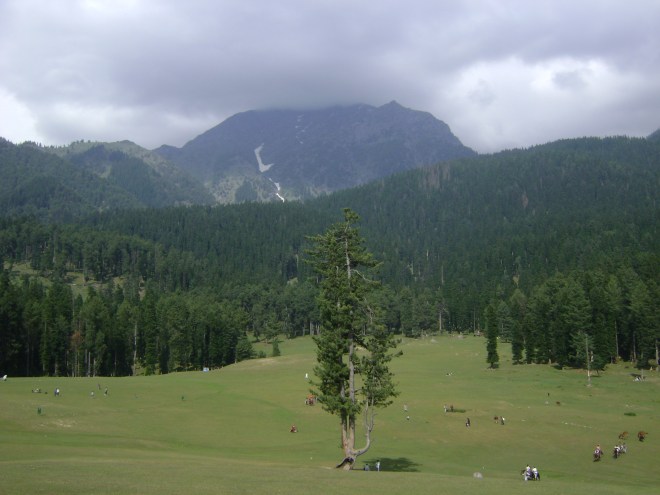
I don’t want to be alone, I want to be left alone – Audrey Hepburn
For Becca’s Sunday Trees – 257
FFfAW #84: The Visitation
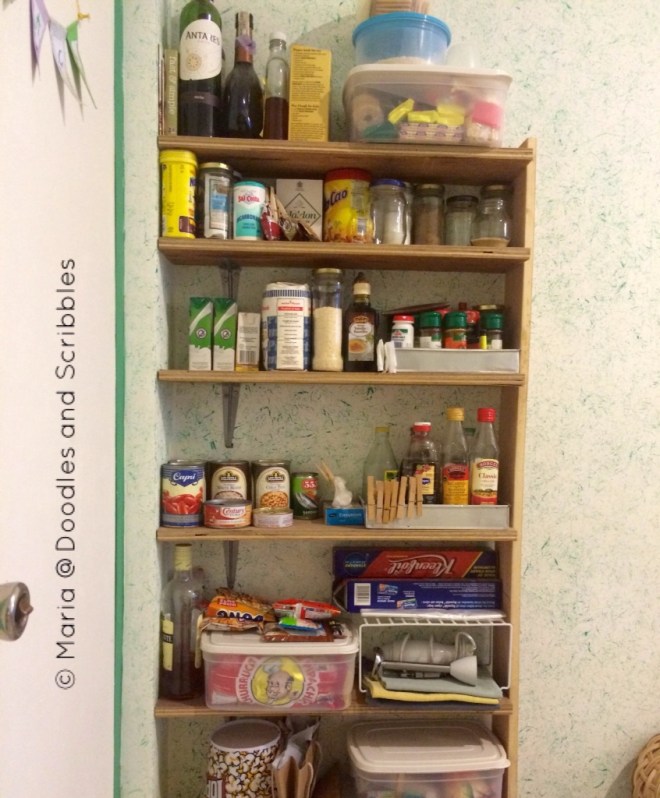
The Visitation
Words 175
“Ready Mala?” Rahul called. “Ma’s online.”
Mala applied sindoor, pasted a bindi and decorously draped a scarf over her head.
“Namaste Mother.” She folded her hands and greeted her mother-in-law from halfway across the world.
“Sacrilege! Your arms are bare!”
“The bangles make such a racket in the library…”
“Is the auspicious tinkle of bangles a racket? If the tinkle is silenced…” She choked.
“Ma!” Rahul butted in. “Let me show you our apartment.” Mala nudged him. “We just shifted, so it’s a bit messy.”
“Is that the kitchen? Where are the spices, pulses? All I can see are sauce bottles…alcohol?”
“That’s wine.”
“Alcohol. This is why I was against you going abroad.”
“Look Ma, canned beans. Ready to eat, no need to cook…”
“What! No cooking? No wonder you are all skin and bones.”
“I am fine Ma.”
“Forget bangles, she can’t cook for you or control your drinking. How will she bring up her children? Look after us?”
“Ma please…”
“Book my tickets. I will teach her how to run a home.”
***
Written for PJ’s Flash Fiction for Aspiring Writers (a story in 100 -175 words) on the photo prompt provided by Maria of Doodles and Scribbles. Thanks Maria for the photo and PJ for hosting (and welcome back!).
A/N For those who are not familiar, in India, sindoor or vermilion is applied on the parting of the hair by married women. They are also expected to adorn themselves with other symbols of their wedded status (bindi – usually a red dot at the center of the forehead and bangles, toe rings etc). Unmarried girls may wear the bindi and bangles but not the sindoor. Traditionally, widows were expected to wear only white and shun all jewelry and color. Things are changing rapidly and today it is common to see widows wearing colored dresses and/or jewelry, yet attitudes and mindsets need a major overhauling.
And an announcement!
It’s Story Club time. This month, the story club is being hosted by Ramya and the story this month is “In a Grove” by Ryunosuke Akutagawa. Ramya will be posting her views and analysis of the short story on Monday, 17th October 2016. Do read the story (link given above) and drop in for a read here and there. But even better, post your own views and link it to the Story Club #4 post (to be posted on Monday) so that we can all head over for a read. Comments and views in the Reply box are also welcome. Anyone interested in hosting the next story club -please raise your hand 😀 If you wish to know how the Story Club works, click here or you can email me at mysilverstreaks@gmail.com.
Thank you for visiting – have a grand weekend 🙂
SPF: The Misfit Miss

The Misfit Miss
Words 201
“Trupti is such a tomboy.”
“Ouch! Don’t pull my cheeks.”
“What do you want to be when you grow up?”
“I want to be a horse rider.”
“She is joking. She wants to be a teacher. Right Trupti? Sit properly.”
“Yes Mother.”
“You are late. Where were you?”
“Playing cricket.”
“Hoyden! What will people say?”
“Why should I care about people?”
“When you live in a society, you have to care about people. Especially girls.”
“Then I don’t want to be a girl.”
“Can I go and see the late night show with my friends?”
“No.”
“Why not? Sameer goes. And he is 4 years younger.”
“Don’t argue.”
“Why not?”
“Good girls don’t argue.”
“I don’t want to be a good girl.”
“Mind your tongue. Your husband will thrash you.”
“If he does, then I will thrash him too.”
“Oh God, please give this girl some sense.”
“I have a lot of sense. It’s other people who talk nonsense.”
“Such arrogance is not seemly for a girl.”
“Why not?”
“How will you adjust with your in-laws?”
“Why can’t they adjust?”
“Girls are expected to adjust.”
“That’s not fair!”
“Why can’t you be like everyone else?”
“But that would be so boring.”
***
Written for the Sunday Photo Fiction – a story in 200 words or less based on the photo prompt. For more stories on this prompt click here
For readers of Moonshine, here's Chapter 92 and poor Calvin :D
Glimpses of Durga Puja
Durga Puja is easily the most important festival of the Bengali community of India. Goddess Durga, the ten-armed goddess, is revered as the Mother of the universe and the Power (Shakti) behind the work of creation, preservation, and destruction of the world.
Durga Puja (or the worship of Goddess Durga) is not just a religious event it is also a social and cultural festival, where the community suspends all routine activity to collectively submerge itself in worship, art, music, dance and of course food. Interestingly, artists put their all to recreate their vision of the Mother and after the celebrations, the idol, a work of art, hard labor and reverence is immersed in the waters. This is believed to symbolize the formlessness of the Supreme Being, impermanence of life and the cycle of birth and re-birth and the importance of non-attachment.
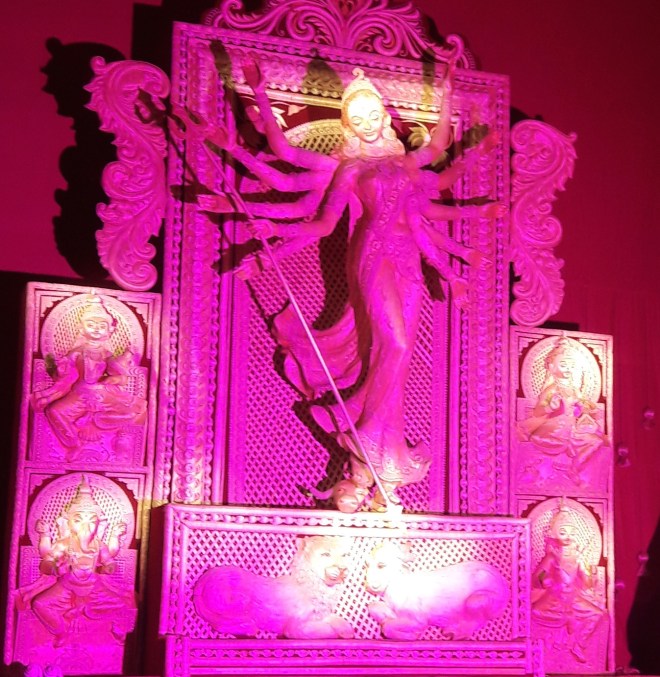
It is almost impossible to capture the enthusiasm, beauty, innovation, vision, passion and creativity of the myriad artists (not to mention the tireless audience) who make Durga Puja such a vibrant festival yet I couldn’t resist sharing a few images:
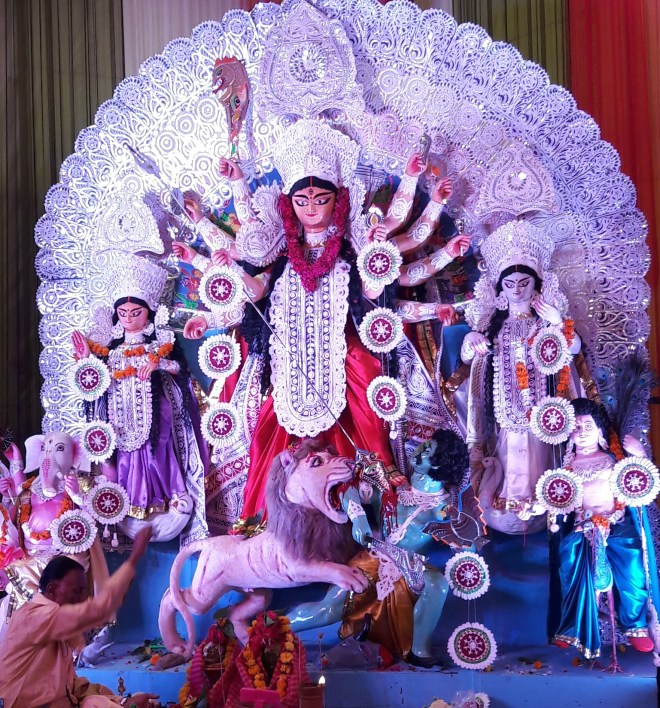
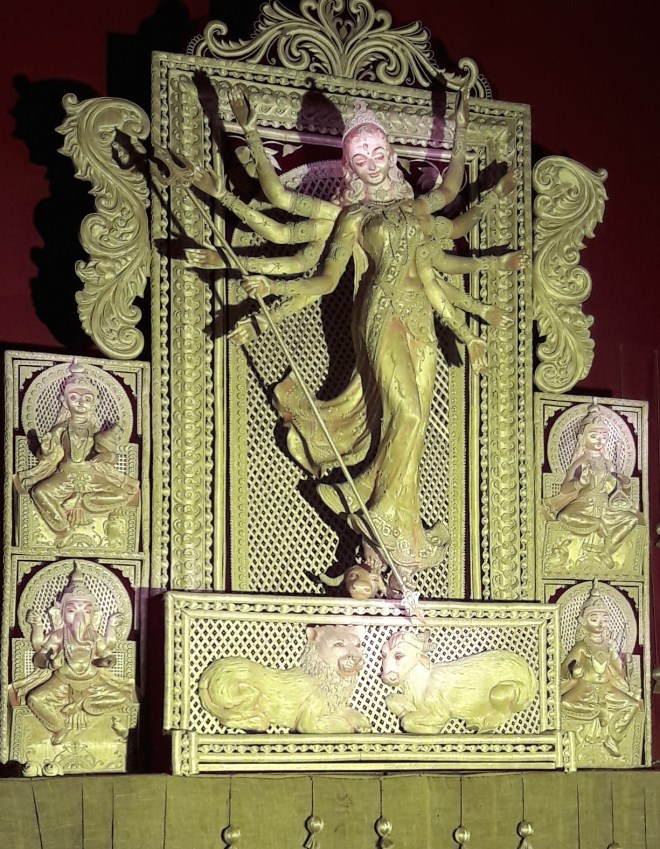
Just add a dash of color

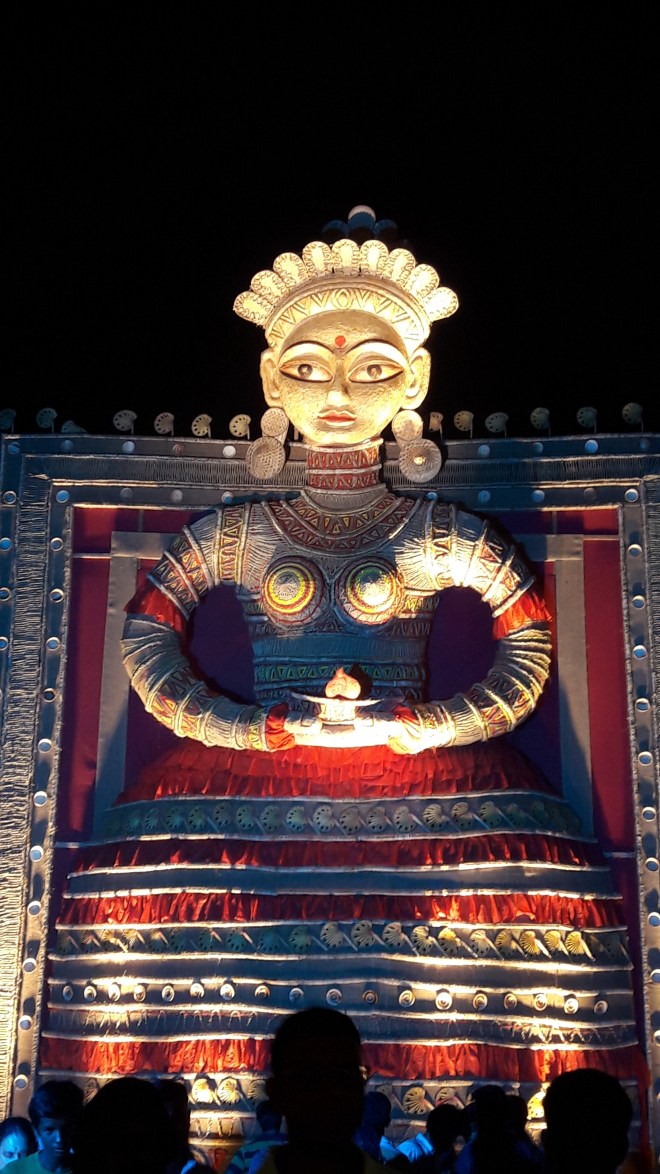
A closer look at the skirt material

An artist creates a painting of the Goddess on stage during a sitar recital


And the Dhaaki (drummer) without whom Puja could never be Puja

Already waiting for the the next Durga Puja 😀
If, like me, you are hungry for more, feast your eyes on more such gorgeous visual delights – click here
Thank you for visiting.
For readers of Moonshine, here's Chapter 91 and Calvin
CFFC: Hoping to See Red
Cee’s fun foto challenge for this week is Dark Red. Here is my eclectic collection of reds.
On the sea:

and on air

On the ground
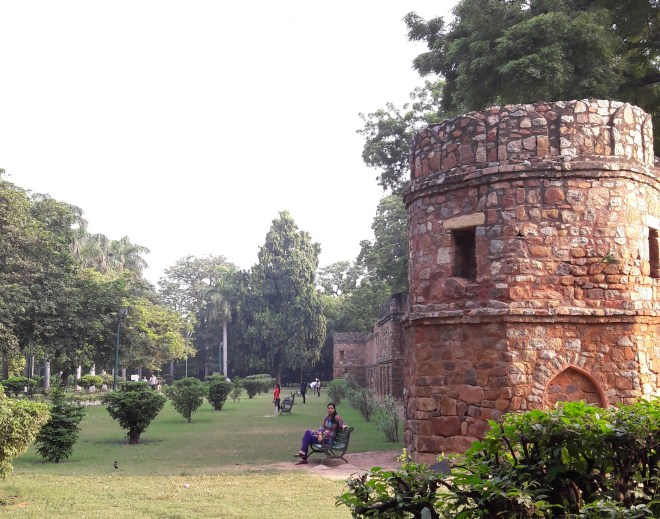
and another aiming for the sky
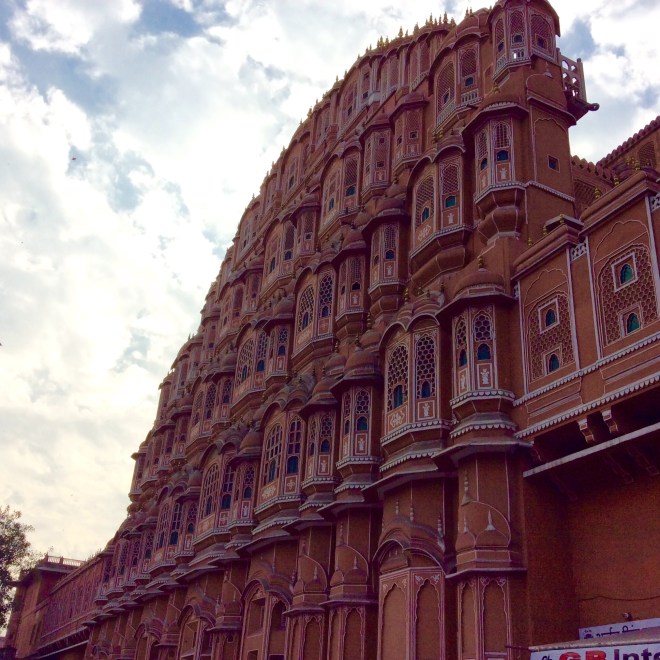
And of course, flowers


But my favorite red these days is undoubtedly this one 😉 😀

I take your leave until Wednesday. Mother Goddess is dropping in for a brief visit, bringing with her much joy, cheer, festivities, and feasting 🙂
Wishing you all a very happy and auspicious Durga Puja.
If you miss me (well I can hope!) you can explore my blog. Click here for more info About this Blog or simply browse the photos indexed in the Clicks and Pics page or read the short stories listed in Bunch of Short Stories.
Do let me know you were here 🙂
Protected: Unsullied
COB #39: Splash of Silver
Ready to walk the ramp and show off her fall colors 😀
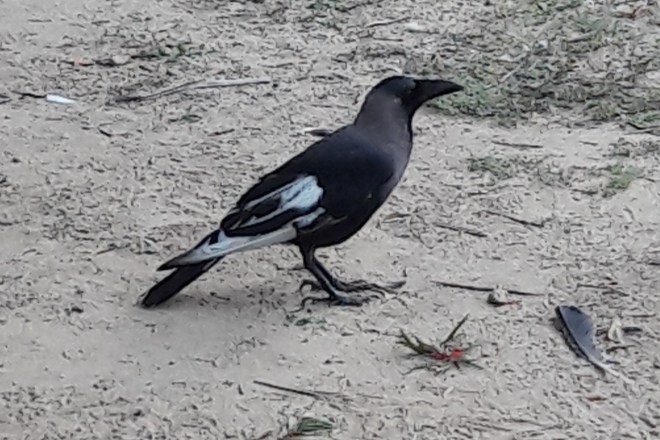
Premature greying or did she snitch a jar of Fair and Lovely 😉
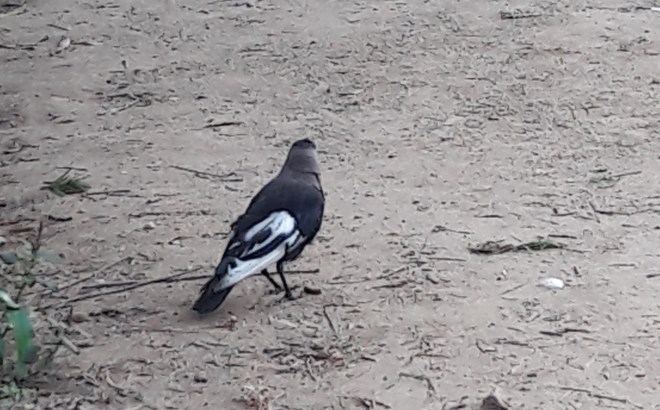
Visit Cee’s page for more odd ball photos.
 Stories and more