Yajna is a Vedic tradition and literally means “sacrifice, devotion, worship, offering.” Yajna refers to the ritualistic offerings made in front of a sacred fire accompanied with the chanting of mantras. Fire is central to all Vedic rituals and Agnidev or god of Fire is considered only next to Indradev or King of the gods. Agni is present during all phases of life such as the lighting of a lamp during prayers, the yajna at weddings and finally, cremation upon death.
Yajna’s have been conducted since Vedic times as it was believed that offerings made to Agnidev or god of Fire would be carried to all the other gods and in return they would be granted boons and success in their ventures. This ritual is believed to serve as a means of spiritual exchange between gods and human beings. Interestingly all vedic chants and mantras related to offerings to Agnidev end with the word Swaha.
Swaha is Agnidev’s wife and it is believed if that she too is not invoked, the gods will refuse to accept the offerings. Hence Swaha is given prime importance similar to Agnideva during yajnas and similarly yajnas are done by a couple. When Lord Ram banished his wife Sita (could do another A to Z challenge on that) he was asked to remarry before the Ashwamedha Yajna. But he refused to do so and instead performed the rites with a statue of Sita by his side.
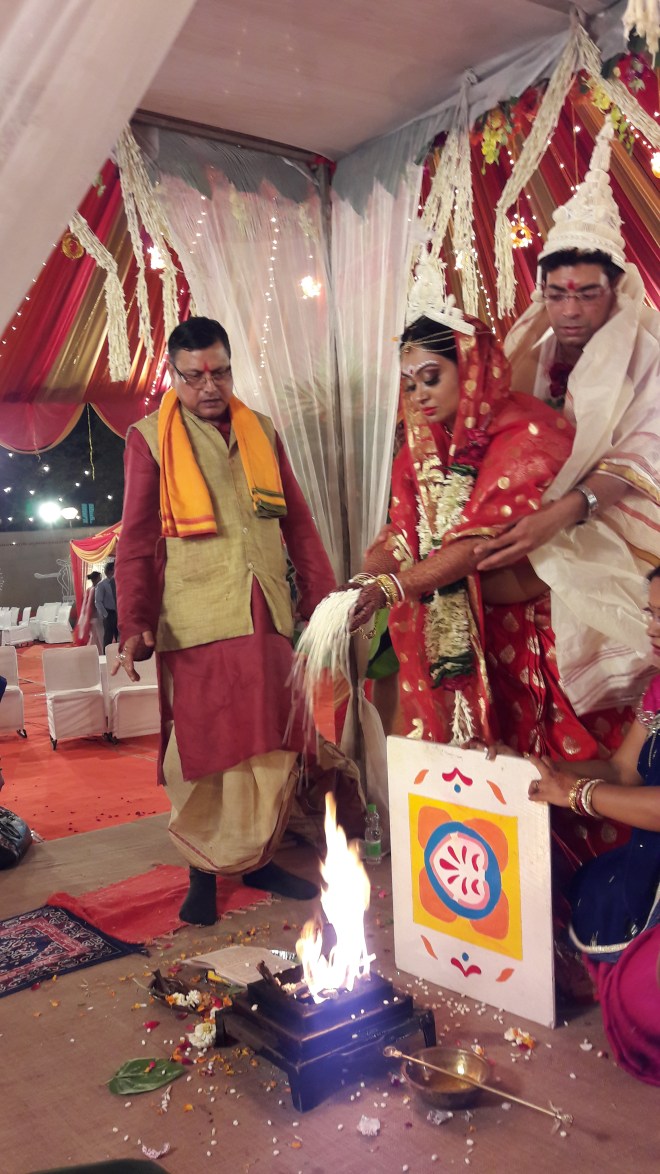
The Vedic yajna ritual is performed in the modern era in a square altar called Vedi set in a mandapa or mandala or kundam, wherein wood is placed along with oily seeds and other inflammable material. It is worth mentioning that the groom’s family brings the wood required for the wedding yajna. This is believed to signify the upper hand of the groom’s side in the entire ritual. As described earlier, most rituals and vows between the bride and groom are made in front of the fire, and the marriage vows are undertaken while circumambulating the consecrated fire. During the Bengali wedding ceremonies, the bride and groom, together, make an offering of khoi (puffed rice) to the fire.
Quote of the day: “Love is like a friendship caught on fire. In the beginning a flame, very pretty, often hot and fierce, but still only light and flickering. As love grows older, our hearts mature and our love becomes as coals, deep-burning and unquenchable”. Bruce Lee
All but over…

 Stories and more
Very interesting note on Swaha being Lord Agni’s wife. The other meaning of Swaha (which is the only meaning I knew till I read this post) is the ‘end of the mantra’. Tomorrow is, perhaps, the Swaha for this series. You really kindled the curiosity for understanding marriage rituals! Agni Dev must be very happy! Swaha!
LikeLiked by 1 person
😀 Appreciate your company on this journey besides your comments are such a treat to read 🙂
LikeLiked by 1 person
That was quite surprising…’Swaha’ being the name of Agnidev’s wife…had always known it to be the end word in a mantra as it signifies offering oneself(swa) too to the havan along with all other offerings….but it’s always good to know another version..and that too such as this 😀
LikeLiked by 1 person
Funnily enough, I only knew Swaha as Agni’s wife and not as the end of mantra 😀
LikeLike
OK. I am curious. Who is the couple getting married?
LikeLiked by 1 person
Not me in case you were thinking that! 😀 Actually it was a close friend’s daughter’s wedding.
LikeLike